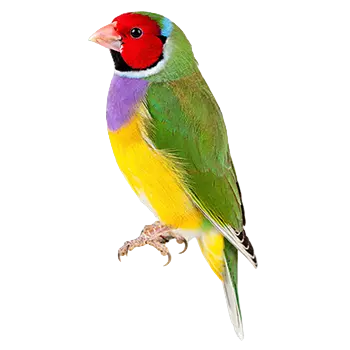

Gouldian Finches are granivores whose wild ancestors subsist primarily on grass seeds harvested during the Australian wet and dry seasons. In captivity this translates to a diet built around high-quality seed mixes, but the nutritional picture is more nuanced than simply filling a dish with millet. Gouldians have a faster metabolism relative to their body mass than many larger cage birds, which means even brief periods of nutritional inadequacy can lead to visible declines in feather condition, breeding success, and overall vitality. Understanding their macro- and micronutrient requirements is the first step toward selecting the right products.
Protein demands fluctuate throughout the year. During the molt and the breeding season, Gouldians require significantly more protein than during their resting phase. In the wild this need is partially met by consuming insects, but captive birds rarely hunt, so the protein gap must be closed through egg food, sprouted seeds, and protein-enriched supplements. A baseline diet that provides roughly twelve to fifteen percent protein is adequate for maintenance, but breeding and molting birds may need that figure to climb toward eighteen to twenty percent.
Fat is an essential energy source, but Gouldians are small birds that can develop hepatic lipidosis if chronically overfed oily seeds like niger or flax. A balanced seed mix keeps total fat content moderate, with oilier seeds offered in controlled portions rather than as free-choice staples. Essential fatty acids, particularly omega-3 and omega-6, support feather structure and the vivid pigmentation that makes the species so striking, so they should not be eliminated but rather managed.
Calcium and iodine are the two minerals most frequently deficient in seed-based finch diets. Calcium is critical for egg-laying hens and for proper bone development in chicks, while iodine supports thyroid function and helps regulate the molt cycle. Without deliberate supplementation through cuttlebone, mineral blocks, or liquid additives, seed-only diets will almost always fall short of the recommended levels for both minerals.