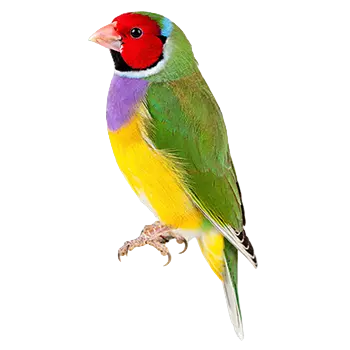

Gouldian Finches interact with toys very differently than parrots or other hookbill species. They are not natural chewers or destroyers, and they rarely manipulate objects with their feet. Instead, Gouldians engage with their environment primarily through flight, perching, visual curiosity, and foraging. Understanding this distinction is essential for selecting toys that your birds will actually use rather than ignore entirely.
In the wild, Gouldians spend the majority of their active hours foraging for seeds across open grasslands and light woodland. This means their strongest instinctual drive centers on searching for food, exploring new surfaces and textures, and moving through space. Toys and enrichment items that tap into these natural behaviors — foraging devices, varied perching surfaces, and novel visual stimuli — will see far more engagement than bells, mirrors, or hanging chew toys designed for parrots.
Social interaction is itself a form of enrichment for Gouldians. A single finch in a cage with expensive toys will often be less stimulated than a pair of finches in a cage with no toys at all. The birds preen each other, vocalize back and forth, engage in subtle dominance displays, and synchronize their daily routines in ways that provide constant mental engagement. Toys and enrichment should complement this social stimulation rather than attempt to replace it.
Because Gouldians are relatively shy and cautious birds, new items introduced to the cage may initially cause alarm rather than curiosity. A new toy placed directly next to a favorite perch can disrupt established routines and stress the birds. The best approach is to introduce new enrichment items gradually, placing them near the cage exterior first so the birds can observe them from a safe distance before moving them inside.