
Monitoring Needs

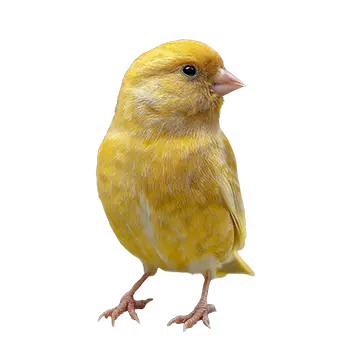
The Fife Fancy Canary is a small, sensitive bird whose health and behavior are closely tied to environmental conditions. Temperature, humidity, light cycles, and air quality all influence the bird's metabolism, molting schedule, breeding readiness, and vocal performance. Unlike larger companion birds that may tolerate a wider range of conditions, a canary weighing just twelve to sixteen grams has minimal physiological reserves. Conditions that would merely inconvenience a larger parrot can push a Fife Fancy into genuine distress within hours.

Traditional canary keeping relied on the keeper's instincts, experience, and manual observation to maintain proper conditions. An experienced breeder could read the bird's posture, feather condition, and singing patterns to detect environmental problems before they became critical. This observational skill remains valuable, but modern monitoring technology adds an objective data layer that catches subtle trends human senses miss. A gradual temperature drift of a few degrees over several days, a slow decline in humidity, or a creeping rise in airborne particulates may escape notice until the bird shows symptoms, at which point the damage is already underway.

For show breeders managing multiple Fife Fancies across a dedicated bird room, monitoring technology transitions from a convenience to a practical necessity. Conditions in different areas of a room can vary meaningfully based on proximity to windows, heating sources, and ventilation points. A cage near a window may experience temperature swings and light exposure patterns very different from a cage in the room's interior. Multi-point monitoring reveals these micro-environmental differences and allows the keeper to position birds strategically or address problem zones.

The technology landscape for avian monitoring has expanded considerably in recent years. Products originally developed for reptile keeping, home automation, mushroom cultivation, and indoor agriculture have proven directly applicable to bird rooms. Smart sensors, programmable timers, and connected monitoring platforms allow keepers to track conditions remotely, receive alerts when parameters exceed safe ranges, and accumulate data over time for seasonal analysis.

What to Look For

When evaluating monitoring technology for a Fife Fancy Canary setup, accuracy and reliability should take precedence over features and connectivity. A basic digital thermometer-hygrometer that reads temperature within one degree and humidity within three percent is more valuable than a feature-rich smart sensor that drifts by five degrees. Accuracy specifications should be stated in the product documentation, and units from reputable instrumentation brands generally outperform generic alternatives regardless of price point.

Connectivity features add genuine value when they provide remote monitoring and alerting capability. A sensor that pushes temperature or humidity data to a smartphone application allows the keeper to monitor conditions while away from home and receive immediate notification if the environment moves outside safe parameters. For bird rooms that are climate-controlled, an alert indicating that the heating has failed or the air conditioning has shut down during a summer afternoon can mean the difference between a minor inconvenience and a catastrophic loss.

Power reliability is an often-overlooked consideration. Battery-powered sensors offer placement flexibility but require regular battery checks and replacement. Sensors with low-battery alerts prevent gaps in monitoring caused by dead batteries. Mains-powered devices eliminate battery concerns but depend on household power and may lose data or stop monitoring during outages. The most robust approach uses mains-powered sensors with battery backup, ensuring continuous monitoring regardless of power interruptions.

Ease of calibration and maintenance matters for long-term accuracy. All sensors drift over time, and the ability to recalibrate a device against a known reference extends its useful life and maintains data quality. Some smart sensors offer automatic calibration routines or periodic accuracy checks against internal reference standards. Manual calibration using a known accurate thermometer or a saturated salt solution for humidity testing is straightforward but requires the keeper to remember to perform it regularly.

Environmental Monitors

Temperature and humidity monitoring forms the baseline of any technology-assisted canary care setup. The Fife Fancy thrives in ambient temperatures between sixty and seventy-five degrees Fahrenheit, with humidity levels between forty and sixty percent. Combined thermometer-hygrometer units, available as both standalone devices and connected smart sensors, provide continuous readouts of both parameters from a single device. Placing one sensor at cage level gives the most relevant reading, since temperatures at floor level and ceiling level in the same room can differ by several degrees.

Smart home temperature and humidity sensors from established home automation platforms integrate with broader smart home ecosystems, allowing automation such as activating a humidifier when humidity drops below forty percent or triggering a fan when temperature exceeds seventy-five degrees. These integrations are most useful in dedicated bird rooms where the environmental systems serve the birds rather than human comfort preferences. In shared living spaces, the bird's environmental needs may conflict with the household's climate preferences, and manual management of the cage's micro-environment may be more practical than whole-room automation.

Data logging capability elevates a simple monitor into a diagnostic tool. Sensors that record temperature and humidity readings at regular intervals and store them for later review allow the keeper to identify patterns that instantaneous readings cannot reveal. A room that reads seventy degrees during the day may drop to fifty-five degrees overnight if the heating cycles off. A humidity level that holds steady at fifty percent in winter may spike to seventy percent during summer months. Reviewing logged data over weeks and months reveals these cyclical patterns and guides seasonal adjustments to the bird room environment.

Multi-zone monitoring becomes valuable for keepers with more than one or two cages. A system with multiple sensors reporting to a single hub or application provides a consolidated view of conditions across the entire bird room. Identifying that the cages nearest the window experience wider temperature swings, or that the cages above the humidifier receive excessive moisture, allows the keeper to reposition birds or equipment for more uniform conditions. Some platforms display sensor data on a single dashboard with configurable alert thresholds for each zone.

Lighting and UV Systems

Lighting technology is one of the most impactful technological investments for Fife Fancy Canary keepers. The bird's hormonal cycles, molt timing, breeding readiness, and singing behavior are all regulated by photoperiod, the ratio of light hours to dark hours in each day. In the wild, these cycles follow the natural progression of the seasons. In captivity, artificial lighting gives the keeper precise control over photoperiod, enabling managed breeding schedules, controlled molting, and optimization of the rest period.

Full-spectrum avian lighting that includes ultraviolet A and ultraviolet B wavelengths provides physiological benefits beyond simple illumination. Birds perceive ultraviolet light as part of their visible spectrum and use it to identify food ripeness, assess the condition of potential mates, and navigate their environment. UVB exposure also enables the synthesis of vitamin D3 through a photochemical reaction in the uropygial gland oil that the bird spreads across its feathers during preening. Vitamin D3 is essential for calcium metabolism, and birds deprived of UVB exposure are at higher risk for calcium deficiency even when dietary calcium appears adequate.

Programmable timers connected to the lighting system automate photoperiod management with precision that manual switching cannot match. A timer set to provide fourteen hours of light during breeding preparation and gradually reduced to ten hours for the rest period replicates the natural seasonal transition that triggers appropriate hormonal responses. Dawn and dusk simulation, in which the lights ramp gradually from dim to full intensity and back, is preferable to abrupt on-off switching that startles the birds and does not replicate the natural light transitions their physiology expects. Several avian-specific lighting controllers offer programmable dawn and dusk ramp periods of fifteen to thirty minutes.

Bulb placement and distance affect UV intensity at the cage level. UVB output decreases rapidly with distance, and a bulb mounted too far from the cage may deliver negligible UV to the bird despite appearing brightly lit. Manufacturers specify the effective distance range for UVB exposure, typically eight to twelve inches from the bulb surface to the nearest perch. Mounting fixtures that position the bulb above the cage at the correct distance, with a reflector to direct output downward, maximize UV delivery. Bulbs should be replaced according to the manufacturer's schedule, usually every six to twelve months, because UV output degrades well before visible light output diminishes noticeably.

Air Quality and Filtration

Air quality monitoring and management is an area where technology provides measurable health benefits for canaries. The avian respiratory system is far more efficient than the mammalian system, extracting a higher percentage of oxygen from each breath through a unidirectional airflow mechanism that also makes birds far more vulnerable to airborne toxins, particulates, and irritants. A Fife Fancy Canary breathing contaminated air absorbs harmful substances more rapidly and in greater proportional volume than a human in the same room.

Particulate matter from feather dust, seed husks, and household sources accumulates in bird rooms and can cause chronic respiratory irritation. Air quality monitors that measure particulate levels, typically reported as PM2.5 and PM10 concentrations, give the keeper objective data on airborne particle loads. Levels that would be unremarkable in a general household context may be problematic in a room housing birds with their heightened respiratory sensitivity. Monitoring particulate levels before and after different activities, such as cage cleaning, seed handling, and vacuuming, reveals which routines generate the most airborne debris and may benefit from procedural changes.

HEPA air purifiers rated for the room's square footage significantly reduce airborne particulates and improve air quality for both the birds and their keeper. A true HEPA filter captures ninety-nine point ninety-seven percent of particles at zero point three microns, effectively removing feather dust, mold spores, and many airborne allergens. The purifier should be positioned to draw air from the area around the cages without creating a direct draft on the birds. Ozone-generating purifiers and ionizing models should be strictly avoided, as ozone is toxic to birds at concentrations well below the threshold that would concern a human.

Volatile organic compound detection adds another layer of air quality awareness. VOC monitors can detect the off-gassing from new cage materials, cleaning products, paint, furniture, and household aerosols that may release chemicals harmful to avian respiratory systems. The infamous toxicity of overheated polytetrafluoroethylene coatings on non-stick cookware, which has killed countless pet birds, is a volatile compound exposure that a sensitive monitor positioned near the bird room would detect and alert on before lethal concentrations were reached. While no technology replaces the fundamental precaution of eliminating these products from the home, a VOC monitor provides a backup layer of detection.

Cameras and Remote Observation

Camera systems serve multiple purposes in Fife Fancy Canary care, from security and behavior monitoring to breeding observation and health surveillance. A compact wireless camera positioned to view the cage area allows the keeper to check on the bird remotely during work hours, travel, or overnight. Modern home cameras with high-definition resolution, night vision capability, and two-way audio provide a comprehensive remote observation platform that would have been prohibitively expensive and technically complex just a decade ago.

For breeding Fife Fancies, a camera positioned to view the nest cup provides invaluable insight into the breeding process without the repeated disturbance that physical nest checks cause. A camera with sufficient resolution and proximity reveals whether eggs are being incubated, whether chicks have hatched, and whether the hen is feeding normally, all information that would otherwise require opening the cage and lifting the hen from the nest. Motion-activated recording captures events that occur outside the keeper's direct observation, including nighttime activity, early morning feeding, and interactions between the hen and any cage mates.

Time-lapse functionality, available on many smart cameras and easily configured through companion applications, compresses hours or days of activity into reviewable clips that reveal behavioral patterns invisible during real-time observation. A time-lapse view of a Fife Fancy's daily routine shows feeding frequency, perching preferences, activity levels at different times of day, and subtle changes in behavior that may indicate developing health problems. A bird that gradually reduces its movement over several days, shifts its perching location, or changes its feeding pattern tells a story through time-lapse that momentary observations would not construct.

Audio monitoring and recording technology serves a specialized but significant purpose for Fife Fancy keepers interested in song quality and development. Digital recorders or camera systems with quality microphones can capture the bird's song for review, comparison, and training purposes. Recording a young male's developing song over time documents his progress and can help identify influences from training recordings or nearby birds. Show breeders may use recordings to evaluate song quality as part of their breeding selection process, pairing birds whose song characteristics complement the desired standard.

Smart Timers and Automation

Smart plugs and programmable timers are among the most affordable and impactful technology investments for canary keeping. A smart plug connected to the cage light, humidifier, or air purifier transforms a manually controlled device into an automated system that operates on a precise schedule without daily intervention. The consistency that automation provides is particularly valuable for photoperiod management, where even small daily variations in light timing can disrupt the hormonal cycles that govern molting and breeding.

Wi-Fi-enabled smart plugs that integrate with voice assistants and smartphone applications allow the keeper to control devices remotely, set complex schedules with different settings for different days, and create conditional automations that respond to sensor data. A humidifier that activates automatically when the bird room humidity sensor reads below forty percent and deactivates when it reaches fifty-five percent maintains optimal conditions without any manual intervention. Similarly, a heating device controlled by a smart thermostat can maintain a consistent overnight temperature in the bird room independent of the household heating schedule.

Seasonal schedule management benefits enormously from smart timer platforms that allow multiple saved schedules. A keeper can create distinct lighting programs for breeding preparation, active breeding, post-breeding rest, and molting periods, then switch between them with a single tap rather than manually reprogramming timers at each seasonal transition. Some platforms allow gradual transitions between schedules, automatically adjusting wake and sleep times by a few minutes each day over a period of weeks to simulate the natural progression of day length.

Power failure management is a critical consideration for any automated system. Smart plugs that resume their programmed schedule after a power interruption are essential for maintaining lighting and climate control consistency. Devices that default to an off state after power restoration may leave the bird in darkness or without temperature management until the keeper manually intervenes. An uninterruptible power supply for critical systems like heating, lighting, and air filtration provides a buffer during short outages and gives the keeper time to respond during extended power failures.

Always consult a qualified professional before making any health-related decisions. This content is provided for informational reference only and should not replace professional guidance specific to your animal.