
Play Style and Behavior

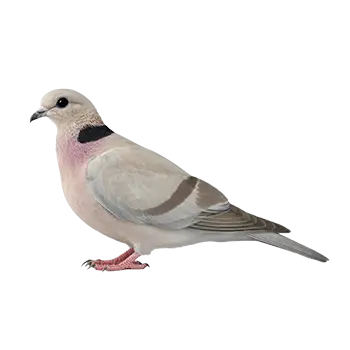
Ring-necked Doves interact with their environment quite differently from parrots and other hookbills. They do not climb, hang upside down, or manipulate objects with their feet. Instead, doves are ground-oriented birds that explore by walking, pecking, and nudging items with their beaks. Understanding this fundamental difference in play style is essential for selecting toys that your dove will actually use and enjoy.

Doves are curious but cautious. They tend to approach new objects slowly and may ignore a new toy for days or even weeks before investigating it. Sudden introductions of large, brightly colored, or noisy toys can actually frighten a dove rather than engage it. Patience is key when introducing enrichment items, and placing new objects near the cage before putting them inside allows the bird to observe and grow comfortable at its own pace.

Social interaction is arguably the most important form of enrichment for Ring-necked Doves. These are flock birds that thrive on companionship, whether from another dove or from their human keeper. A dove housed alone will benefit enormously from daily out-of-cage time spent near its owner, gentle handling, and verbal interaction. Toys supplement social engagement but cannot replace it.

Many dove keepers find that their birds are most active and playful during the morning and late afternoon hours, with a quieter period around midday. Scheduling enrichment activities and toy rotations around these natural activity peaks ensures the bird gets the most benefit from the stimulation you provide.

Foraging and Food-Based Enrichment

Foraging enrichment taps into one of the Ring-necked Dove's strongest natural instincts: searching for food on the ground. In the wild, doves spend a significant portion of their day walking and pecking through grass, soil, and leaf litter to find seeds. Replicating this behavior in captivity is one of the most effective ways to keep a dove mentally engaged.

Simple foraging setups work best for doves. Scattering seed across a shallow tray filled with clean paper strips, dried leaves, or untreated wood shavings encourages the bird to sift and search rather than eating passively from a dish. This low-tech approach adds time and mental engagement to the feeding process without requiring complex puzzle mechanisms that doves typically lack the dexterity to operate.

Foraging mats designed for birds are another excellent option. These fabric or rubber mats have pockets, folds, and textured surfaces where seeds can be tucked away for the bird to discover. Look for mats made from bird-safe, washable materials that can be sanitized regularly. Some keepers use sections of clean artificial turf for the same purpose, sprinkling seeds into the grass-like fibers.

Rotating foraging substrates keeps the experience fresh. One day you might offer seeds in a bed of crumpled paper, the next in a shallow dish of clean sand, and another scattered across a flat cork surface. This variety prevents the dove from habituating to a single foraging method and maintains the cognitive challenge that makes foraging enrichment valuable.

Mirror and Visual Enrichment

Mirrors are one of the most popular and engaging toys for single Ring-necked Doves. Doves are social birds, and a mirror can provide the illusion of a companion, prompting cooing, head-bobbing, and courtship displays. For a solo dove, a small, securely mounted mirror can reduce feelings of isolation and provide interactive stimulation throughout the day.

However, mirrors should be used thoughtfully. Some doves become obsessively attached to their reflection, treating it as a mate and becoming frustrated or stressed when the reflection does not reciprocate courtship behaviors. If you notice your dove spending excessive time at the mirror while neglecting food, water, or rest, it may be best to remove the mirror or limit access to certain times of day.

Beyond mirrors, doves respond to other forms of visual stimulation. Positioning the cage where the bird can observe household activity, watch birds through a window, or see a fish tank provides passive enrichment that engages their attention. Some keepers play nature documentaries or videos of outdoor bird scenes, which can hold a dove's attention, though the bird should always have the option to look away.

Small, colorful objects placed on the cage floor can also attract a dove's curiosity. Smooth glass marbles, wooden beads, or small bells that the bird can nudge with its beak offer gentle tactile and visual interest. These items should be large enough that the bird cannot swallow them and should be checked regularly for damage or sharp edges.

Swings, Ladders, and Movement Toys

Swings designed for small to medium birds can be a wonderful addition to a dove's cage. Many Ring-necked Doves enjoy the gentle rocking motion of a swing and will use it as a preferred perching spot once they become comfortable with it. Choose a swing with a wide, flat perch rather than a thin dowel, as doves have flat-gripping feet that are better suited to broader surfaces.

Ladders are less intuitive for doves than for parrots, since doves do not naturally climb. However, low-angled ramps and wide-runged ladders placed at gentle inclines can encourage a dove to walk up and down, providing mild exercise and variety in movement. Avoid steep vertical ladders, which doves will typically ignore entirely.

Platform-style toys that create elevated walking surfaces within the cage align well with a dove's ground-oriented nature. Flat wooden shelves, natural cork platforms, or wide branches mounted horizontally give the bird additional territory to explore and patrol. Doves often enjoy walking the perimeter of a platform and surveying their surroundings from a slightly elevated vantage point.

When introducing any movement-based toy, stability is important. A swing or platform that wobbles excessively or feels insecure will deter a cautious dove from using it. Ensure all toys are firmly attached to the cage and test them by hand before offering them to your bird. A dove that has a frightening experience with an unstable toy may refuse to approach it again.

Bathing and Water Play

Bathing is a natural and enjoyable activity for Ring-necked Doves that doubles as enrichment. Most doves relish the opportunity to splash in a shallow dish of lukewarm water, fluffing their feathers and dipping their bodies to distribute moisture throughout their plumage. A dedicated bathing dish is one of the simplest and most appreciated enrichment items you can provide.

The ideal bathing dish is shallow, stable, and wide enough for the dove to stand in comfortably. Ceramic or heavy stoneware dishes work well because their weight prevents tipping. The water level should be no deeper than about an inch, just enough for the bird to wade in and splash without any risk of submersion. Offer the bath during the warmer part of the day so the bird has time to dry fully before the cooler evening hours.

Some doves prefer mist bathing to standing water. A gentle spray from a clean plant mister set to a fine mist can simulate light rain, and many doves will spread their wings and fluff their feathers to enjoy the sensation. Always use lukewarm water and mist from above, allowing the bird to move away if it prefers not to participate. Never spray a dove directly in the face.

Bathing frequency varies by individual preference and environmental conditions. Some doves want to bathe daily, while others may only show interest a few times a week. During dry winter months or in arid climates, more frequent bathing opportunities help maintain feather condition and skin hydration. Remove the bathing dish after the bird has finished to prevent it from being used as a toilet or from making bedding soggy.

DIY and Budget-Friendly Options

Many of the best enrichment items for Ring-necked Doves cost little or nothing to make at home. A crumpled ball of plain, unprinted paper placed on the cage floor gives a dove something to nudge, peck at, and push around. Cardboard tubes from paper towel rolls can be placed on the floor for the bird to walk through or peck apart, providing both physical and mental stimulation.

Creating a simple foraging tray requires nothing more than a shallow baking dish, some shredded paper or dried herbs, and a scattering of seed. This setup mimics ground foraging and can keep a dove occupied for extended periods as it sifts through the material to find food. Dried chamomile flowers, rose petals, or lavender buds mixed into the foraging substrate add scent-based enrichment that many doves find appealing.

Natural branches from bird-safe trees make excellent free perches and chewing surfaces. Apple, pear, willow, and birch branches can be collected, scrubbed clean, and dried before placing them in the cage. The natural bark texture provides foot exercise, and doves will sometimes peel small bits of bark as a mild foraging activity. Always verify that the wood species is non-toxic to birds and that the branches have not been treated with pesticides.

Rotation is the simplest budget-friendly enrichment strategy of all. Rather than buying a constant stream of new toys, maintain a collection of five or six items and swap two or three in and out of the cage each week. Items that have been out of the cage for a week feel novel again when reintroduced, giving you the benefit of new stimulation without ongoing expense.

Always consult a qualified professional before making any health-related decisions. This content is provided for informational reference only and should not replace professional guidance specific to your animal.