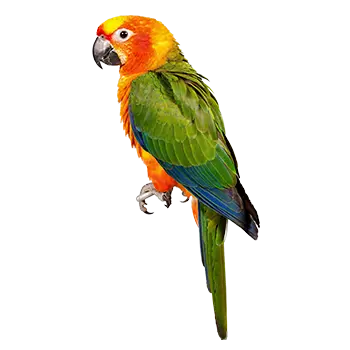

Play Style & Enrichment Needs

Jenday Conures are among the most playful and inquisitive parrots in the conure family, combining strong chewing instincts with a love of physical activity and problem-solving. In the wild, they spend hours foraging, manipulating objects with their beaks and feet, and engaging in social play with flock members. In captivity, toys serve as essential substitutes for these natural behaviors, and a Jenday without adequate enrichment will often develop destructive habits, excessive screaming, or feather-damaging behaviors.

Understanding your individual bird's play preferences is the key to selecting toys that will actually get used. Some Jendays are aggressive chewers that demolish wooden toys within hours, while others prefer manipulating small parts, ringing bells, or working through puzzle mechanisms. Observe which types of toys your bird gravitates toward and build your rotation around those preferences, while still introducing new categories periodically to broaden the bird's experience.

Enrichment should extend beyond the cage. Out-of-cage playtime on a tabletop play gym or freestanding play stand is essential for a Jenday's mental and physical wellbeing. These structures typically include perches, ladders, swings, and toy hooks that give the bird a dedicated space to explore during supervised free time. Play gyms also provide an excellent opportunity for one-on-one interaction, which strengthens the bond between bird and owner.

Rotate toys on a regular schedule, ideally swapping out two or three items each week. A toy that has been out of the cage for a couple of weeks often generates renewed excitement when reintroduced, effectively giving you double the value from each purchase. Keep a storage bin of inactive toys ready for rotation, and retire any items that show signs of excessive wear, sharp edges, or entanglement hazards.

Foraging & Puzzle Toys

Foraging toys are arguably the most important category of enrichment for Jenday Conures because they replicate the mental challenge of finding food in the wild. Simple foraging toys hide treats inside compartments, behind doors, or within shreddable materials that the bird must work through to reach the reward. More advanced puzzle toys require the bird to unscrew caps, slide panels, pull levers, or solve multi-step problems to access food.

Start with basic foraging toys if your bird is new to the concept. Wrap treats in paper, tuck food into the spaces of a wiffle ball, or weave leafy greens through the cage bars. Once the bird understands the principle that effort leads to a food reward, gradually introduce more complex commercial foraging systems. Rushing to advanced puzzles can frustrate a bird that hasn't learned the basics, leading to toy avoidance rather than engagement.

Acrylic foraging boxes and wheels are popular options that allow you to see the food inside while the bird works to extract it through various openings or mechanisms. These toys are durable, easy to clean, and can be refilled repeatedly. Look for designs with adjustable difficulty levels so the toy grows with your bird's problem-solving abilities rather than becoming too easy after a few sessions.

Natural foraging opportunities can be created alongside commercial toys. Pinecones stuffed with seeds, small cardboard boxes filled with shredded paper and hidden treats, and vine balls wrapped around food are all inexpensive ways to create foraging challenges. These homemade options are especially useful because they can be made in batches and are meant to be destroyed during play, so there is no concern about long-term durability.

Chew Toys & Destructibles

Chewing is a fundamental need for Jenday Conures, not just a pastime. Their beaks grow continuously and require regular wear through gnawing and shredding. Providing appropriate chew toys prevents the bird from redirecting its chewing instinct toward cage bars, perches, furniture, or its own feathers. A steady supply of destructible toys should be considered a basic necessity rather than a luxury.

Wood is the classic chew toy material, and softwood blocks, slats, and beads are ideal for Jenday-sized birds. Balsa, pine, birch, and yucca are all safe and popular choices that provide satisfying resistance without being too hard for the bird's beak. Avoid hardwoods intended for large macaws, as they can be frustratingly difficult for a medium-sized conure to break down. The goal is for the bird to experience the satisfaction of destroying the toy, not to preserve it indefinitely.

Leather strips, palm leaf shredders, seagrass mats, and woven corn husk toys offer different textures that appeal to birds with varied chewing preferences. Vegetable-tanned leather is safe for birds, but chrome-tanned leather is not, so always verify the tanning process before offering leather toys. Natural fiber toys are generally safe and provide excellent shredding satisfaction, though they should be inspected for any metal components like zinc-coated clips or rings.

Expect to replace chew toys frequently. A dedicated Jenday chewer can demolish a wooden toy in a few days, and that is perfectly normal and healthy behavior. Budget for toy replacement as an ongoing cost of bird ownership rather than expecting toys to last for months. Buying components in bulk, such as wooden blocks, leather strips, and safe hardware, and assembling your own toys can significantly reduce costs while letting you customize toys to your bird's preferences.

Swings, Ladders & Climbing Toys

Jenday Conures are athletic climbers that enjoy navigating complex vertical environments. Swings are a cage staple that provide gentle motion stimulation and a favorite resting spot for many conures. Choose a swing sized appropriately for your bird, with a perch diameter that allows comfortable gripping. Swings made from natural wood and rope are preferable to plastic versions, which can become slippery and offer less tactile interest.

Ladders and rope bridges encourage climbing and add dimensional complexity to the cage interior. Wooden ladders with rungs spaced for conure-sized feet work well both inside the cage and on external play stands. Rope ladders and bungee-style perches add an element of instability that challenges the bird's balance and coordination, providing a physical workout that static perches cannot match.

Ring toys, chain links, and hanging acrobatic toys appeal to the Jenday's love of dangling and swinging from objects. Many conures enjoy hanging upside down from ring toys or weaving through linked chains, which exercises different muscle groups and satisfies their natural acrobatic tendencies. Look for toys made from stainless steel or nickel-plated hardware, as zinc and lead components are toxic.

Play gyms and tabletop stands designed for medium parrots provide an essential out-of-cage enrichment zone. A good play gym includes multiple perch levels, toy attachment points, food cup holders, and a tray for catching debris. Some models feature built-in ladders, swings, and bridges that create a self-contained playground. Position the play gym in a social area of the home where the bird can be near family activity during its out-of-cage time.

Sound & Sensory Toys

Jenday Conures are vocal, curious birds that respond enthusiastically to toys that produce sound or visual stimulation. Bells are a perennial favorite, and most conures develop a relationship with their bell toys that involves ringing, tapping, and vocalizing in response. Choose bells made from stainless steel with a solid construction that prevents the clapper from being removed and swallowed. Jingle-style bells with small openings should be avoided, as toes and beaks can become trapped.

Musical toys and noise-making devices designed for birds provide auditory enrichment that can keep a conure entertained for extended periods. Some toys produce sounds when manipulated by the bird, such as squeakers embedded in chewable housings or rattle-style toys filled with beads. These cause-and-effect toys are particularly engaging for intelligent birds like Jendays, who quickly learn to produce their desired sounds on demand.

Reflective and colorful toys attract attention through visual stimulation. However, mirrors deserve special consideration. While some conures enjoy mirrors as social substitutes, others develop unhealthy attachment or aggression toward their reflection. If you introduce a mirror toy, observe your bird's behavior carefully over the first few days. Signs of obsessive interaction, regurgitation toward the mirror, or increased aggression toward household members suggest the mirror should be removed.

Texture variety is an underappreciated form of sensory enrichment. Toys that combine different materials like wood, rope, leather, acrylic, and metal in a single design stimulate the bird's tactile senses and maintain interest longer than single-material toys. Jendays explore objects extensively with both their beaks and feet, so multi-textured toys provide a richer sensory experience and encourage longer, more engaged play sessions.

DIY & Budget Options

Creating homemade toys is an excellent way to supplement commercial options while keeping enrichment costs manageable. Many safe and engaging toys can be made from everyday household materials. Empty toilet paper and paper towel rolls can be flattened, cut into rings, and linked together to create paper chains, or stuffed with treats and folded shut for simple foraging toys. Plain white paper, brown paper bags, and undyed cardboard boxes are all safe for shredding and exploration.

Natural materials sourced from your own property can provide free enrichment. Branches from safe, untreated trees such as apple, willow, and maple can be cut to size, scrubbed clean, and baked at a low temperature to kill any insects or parasites before being offered as perches or chew toys. Pinecones collected from pesticide-free areas can be cleaned and presented with seeds pressed into the crevices for a natural foraging toy.

Kitchen items like stainless steel measuring spoons, wooden clothespins without springs, and clean popsicle sticks can be repurposed as bird toys. Thread popsicle sticks and wooden beads onto a piece of vegetable-tanned leather or untreated cotton cord for a simple stringing toy. Always avoid items with paint, varnish, adhesives, or small removable parts that could be swallowed.

Online communities and forums dedicated to parrot care are rich sources of DIY toy ideas, with detailed instructions and safety information. Building toys at home also allows you to tailor each creation to your bird's specific preferences. If your Jenday is a foot toy enthusiast that loves manipulating small objects on the cage floor, you can create an entire collection of appropriately sized foot toys from wooden beads, leather knots, and short sections of safe rope. The time invested in crafting toys also deepens your understanding of what your bird enjoys and needs.

Always consult a qualified professional before making any health-related decisions. This content is provided for informational reference only and should not replace professional guidance specific to your animal.