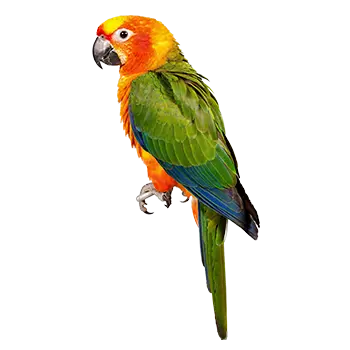

A well-fitted avian harness allows you to take your Jenday Conure outdoors safely, providing the bird with fresh air, natural sunlight, and mental stimulation from new environments. Bird harnesses consist of a lightweight strap system that fits around the body and attaches to a leash, preventing the bird from flying away while allowing full wing movement. Proper fit is essential — a harness that is too loose can be escaped or entangled in, while one that is too tight restricts breathing and circulation.
Training a Jenday to accept a harness requires patience and positive reinforcement over weeks or even months. Begin by introducing the harness as an object for the bird to investigate and chew on without any attempt to put it on. Gradually progress to draping it over the bird's body, then briefly fitting it with treats and praise before removing it. Forcing a harness onto an unwilling bird creates lasting negative associations that make future training much more difficult.
Flight suits are an alternative to traditional harnesses that some owners prefer. These are fabric garments that fit snugly around the bird's body and include a leash attachment point. Flight suits also incorporate a small pouch that functions as a diaper, making them practical for indoor use when you want to let the bird sit on your shoulder or furniture without worrying about droppings. Not all birds tolerate the more comprehensive coverage of a flight suit, so individual temperament plays a role in which option works best.
When taking your harnessed Jenday outdoors, always be aware of environmental hazards including predatory birds, dogs, cats, pesticide-treated lawns, and extreme temperatures. Even a securely harnessed bird can be injured if a hawk swoops at it, so remain vigilant and keep outdoor sessions in controlled, familiar environments. Never leave a harnessed bird unattended, and always maintain control of the leash.