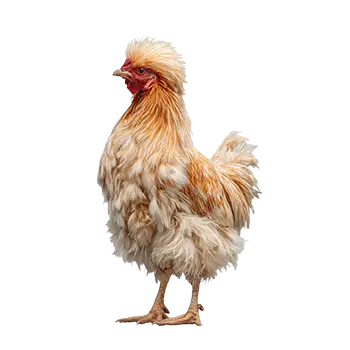

Cochin Bantams carry a set of nutritional requirements shaped by their defining physical characteristic: an extraordinarily dense, full-body plumage that extends down over the legs and feet. Maintaining this feathering demands a steady supply of sulfur-containing amino acids, particularly methionine and cystine, which are the primary structural building blocks of keratin. A feed that falls short on these amino acids will show its effects in broken, dull, or slow-growing feathers long before other deficiency symptoms appear.
Because Cochin Bantams are true bantams weighing roughly a pound and a half, their total daily feed intake is modest compared to standard-sized chickens, typically between one and a half and two and a half ounces of feed per day depending on the season and whether the bird is in lay. This small intake volume means that the nutrient density of whatever feed they consume matters considerably. A feed formulated for large-breed layers may have adequate percentages of protein and calcium on paper, but the bantam eating half the intended serving gets half the actual nutrients. Choosing feeds with high nutrient density per ounce is more important than for larger breeds.
Calcium and phosphorus balance is critical for laying hens, even though Cochin Bantams are relatively modest egg producers. Their small eggs still require shell formation, and calcium pulled from feed or skeletal reserves must be replenished consistently. A calcium-to-phosphorus ratio of approximately two to one supports shell quality without interfering with the absorption of other minerals. Free-choice oyster shell offered separately from the main feed allows individual birds to regulate their calcium intake based on their laying status.
Seasonal nutritional shifts matter more for heavily feathered breeds than for their lighter-feathered counterparts. During the annual molt, protein requirements spike as the bird replaces every feather on its body, and the Cochin Bantam has substantially more feather mass to regenerate than a similarly sized breed with standard plumage. Many experienced keepers switch to a higher-protein feed or supplement with protein-rich foods during the molt to support this intensive rebuilding process.