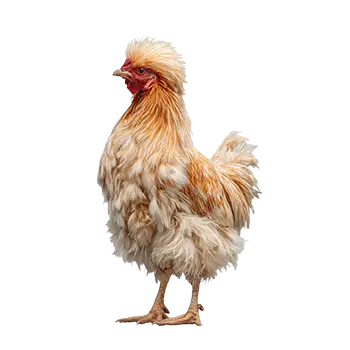

Cochin Bantams have housing needs that differ from standard-sized chickens and even from many other bantam breeds, driven primarily by their profuse leg and foot feathering and their limited flying ability. The dense plumage that extends down over the shanks and toes makes this breed exceptionally vulnerable to wet, muddy conditions. Sustained contact with damp bedding or saturated ground leads to matted, soiled foot feathers that create a breeding ground for bacterial and fungal infections. Every housing decision for Cochin Bantams should prioritize dryness as the single most important environmental factor.
Space requirements for Cochin Bantams are moderate by poultry standards. Each bird needs a minimum of two to three square feet of interior coop space and eight to ten square feet of outdoor run space, though more is always better. Despite being small birds, Cochins are round-bodied and wide relative to their height, so narrow doorways and tight corners that a leaner bantam breed might navigate easily can cause feather damage and stress in Cochins. Interior layouts should allow birds to move freely without constantly brushing against walls or each other.
Ventilation is a critical and frequently underestimated aspect of Cochin Bantam housing. Good airflow at roof level removes ammonia fumes from droppings, excess moisture from respiration, and stale air without creating drafts at bird level. Cochin Bantams are reasonably cold-hardy thanks to their heavy feathering, but they are far less tolerant of damp, stagnant air than of low temperatures. A coop that is well-ventilated but draft-free at roost height provides the best environment for feather health and respiratory wellness year-round.
Predator protection must be designed to account for the Cochin Bantam's near-total inability to escape by flight. Standard-sized chickens and lighter bantam breeds can flutter to safety on fences, rooftops, or tree branches when threatened. Cochin Bantams, weighted down by their body proportions and foot feathering, are essentially ground-bound. Every element of the housing structure, from the run fencing to the coop door latches, must assume that these birds cannot evade a predator and must rely entirely on the physical barriers their keeper provides.