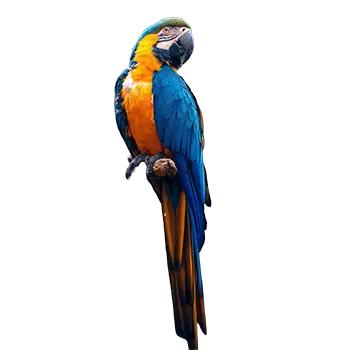

Why Enrichment Matters

Blue and Gold Macaws possess cognitive abilities that place them among the most intellectually demanding companion animals. In the wild, these birds spend the majority of their waking hours engaged in complex foraging behavior, social interaction within flock dynamics, and exploration of their environment across territories that may span dozens of square miles. A captive macaw that lacks adequate mental and physical stimulation will redirect its considerable intelligence toward undesirable behaviors, including feather destruction, excessive screaming, repetitive stereotypic movements, and aggression.

The connection between enrichment deprivation and behavioral pathology in large parrots is well documented in avian behavioral literature. Feather-destructive behavior, one of the most common and difficult-to-reverse problems in captive macaws, frequently originates from boredom and environmental impoverishment rather than medical causes. Once established, these behaviors become self-reinforcing habits that persist even after enrichment is improved, making prevention through consistent environmental enrichment far more effective than treatment after the fact.

Toys and enrichment devices serve as proxies for the natural challenges that wild macaws encounter daily. A foraging toy that requires the bird to manipulate a mechanism to access food replicates the problem-solving demands of extracting palm nuts from fibrous husks. A destructible wood toy satisfies the instinctive need to chew and process plant material with the powerful beak. A puzzle that changes configuration each time it is reloaded provides the novelty and unpredictability that keeps a macaw's mind actively engaged.

Effective enrichment is not a single toy hung in a cage but a comprehensive strategy that encompasses multiple types of stimulation, regular rotation to maintain novelty, and adaptation to the individual bird's preferences and developmental stage. A well-enriched macaw displays active curiosity, sustained engagement with its environment, confident body language, and sound feather condition. These indicators of psychological wellbeing are as important as physical health metrics in assessing overall quality of life.

Foraging Toys and Puzzle Feeders

Foraging toys represent the single most important category of enrichment for captive Blue and Gold Macaws because they transform the passive act of eating from a dish into an active, time-consuming challenge that engages the bird's intelligence and physical dexterity. Wild macaws may spend six to eight hours daily searching for, accessing, and processing food. A companion macaw with food freely available in an open dish completes its feeding in minutes, leaving hours of empty time that would otherwise be filled with foraging activity.

Commercial foraging toys for large parrots range from simple concealment devices to complex multi-step puzzle systems. At the entry level, acrylic foraging wheels and boxes with adjustable openings require the bird to rotate, tip, or reach through barriers to access food placed inside. These devices are excellent starting points for birds new to foraging challenges, as they provide visible food rewards with manageable difficulty. As the bird masters each configuration, the difficulty can be increased by reducing opening sizes, adding internal baffles, or using opaque rather than transparent materials.

Multi-step foraging systems challenge macaws to complete a sequence of actions to reach a food reward. These may involve unscrewing bolts, pulling chains, lifting covers, sliding panels, and removing pins in a specific order. The cognitive complexity of these devices engages the bird's problem-solving abilities at a level that simple concealment toys cannot match. Blue and Gold Macaws are strong candidates for the most challenging commercial foraging puzzles, as their combination of dexterity, beak strength, and cognitive ability allows them to solve devices that would frustrate smaller or less mechanically inclined species.

DIY foraging opportunities complement commercial products effectively. Wrapping treats in plain paper or paper cups, threading food onto stainless steel skewers suspended in the cage, hiding pellets inside crumpled paper balls, or stuffing food into clean pine cones all provide foraging challenges at minimal cost. Cardboard boxes with food hidden inside layers of crumpled paper create extended foraging sessions that can occupy a macaw for thirty minutes or more. The key principle is that food acquisition should require effort, time, and thought rather than simple consumption from an open container.

Destructible and Chewable Toys

The Blue and Gold Macaw's beak is a remarkably powerful tool that generates bite forces capable of cracking Brazil nut shells, splintering hardwood, and bending light-gauge metal. This beak strength is not merely an incidental trait but a fundamental behavioral need. Macaws must chew to maintain beak condition, exercise jaw muscles, and satisfy deeply rooted instincts related to food processing and nest cavity preparation in the wild. A macaw without appropriate chewing outlets will find its own targets, typically furniture, door frames, electrical cords, and cage components.

Destructible toys designed for macaws are built from materials that provide satisfying resistance while being safe for ingestion in small quantities. Untreated hardwood blocks and slats in species such as pine, balsa, yucca, and mahogany offer varying levels of resistance that cater to different chewing moods. Softer woods like balsa provide rapid destruction and a sense of accomplishment, while denser woods like mahogany extend the engagement period. Many macaw-specific toy designs combine multiple wood densities on a single assembly, creating varied textures within one toy.

Leather strips and vegetable-tanned rawhide components add another textural dimension to destructible toys. Macaws enjoy pulling, twisting, and tearing leather, and the material's flexibility creates a different tactile experience than rigid wood. Only bird-safe vegetable-tanned leather should be used, as chrome-tanned leather contains heavy metal compounds that are toxic if ingested. Leather components are typically strung between wood blocks or woven through toy frameworks to create complex assemblies that offer multiple destruction pathways.

Coconut shells, palm frond shredders, sea grass mats, and woven palm leaf toys represent natural material options that macaws find highly engaging. Whole coconut shells mounted in the cage provide extended chewing projects that a macaw may work on for days or weeks. Palm frond and sea grass toys offer a shredding experience, with the bird pulling apart fiber bundles in a way that mimics dismantling vegetation in the wild. These natural materials are generally safe if ingested in small quantities, though any toy showing mold growth should be immediately discarded.

Budgeting for destructible toys is a reality of macaw ownership that potential owners should understand before acquiring the bird. A Blue and Gold Macaw can dismantle a substantial wooden toy in a single afternoon if sufficiently motivated. Monthly toy expenditures for adequate chewing enrichment may range from twenty to sixty dollars depending on the bird's destructiveness and the types of toys provided. Purchasing toy parts in bulk, making toys from bird-safe raw materials, and participating in toy-making cooperatives within parrot owner communities can reduce costs significantly.

Foot Toys and Manipulable Objects

Foot toys are small, handheld objects that a macaw grasps with one foot while standing on the other, manipulating the item with a combination of foot dexterity and beak work. This behavior mirrors the way wild macaws hold food items, branches, and other objects while processing them, and it engages fine motor skills that larger hanging toys do not address. Blue and Gold Macaws have particularly dexterous feet for their size and often develop strong preferences for specific foot toy types and sizes.

Commercial foot toys for large parrots include wooden beads strung on bird-safe cord, small woven palm and vine balls, acrylic and hardwood geometric shapes, miniature stacking rings, and composite toys that combine wood, leather, and plastic elements. The ideal foot toy for a macaw is small enough to grasp comfortably in one foot, typically between one and three inches in diameter, while being robust enough to withstand sustained beak manipulation without immediately disintegrating.

Wiffle balls, bottle caps threaded onto cord, wooden spools, and small rawhide bones marketed for small dogs are popular repurposed foot toys in the macaw community. When sourcing non-avian items for use as foot toys, safety screening is essential. The item must be free of small removable parts that could be swallowed, constructed from non-toxic materials, and free of sharp edges or points. Lead-free and zinc-free hardware is mandatory, as macaws will inevitably mouth every surface of a foot toy.

Foot toys should be scattered on the cage floor and playstand surfaces to encourage ground-level foraging and exploration. Many macaws enjoy tossing foot toys off elevated surfaces and watching them fall, then climbing down to retrieve them, creating a self-directed game that provides both physical exercise and entertainment. Providing a shallow bin or tray of assorted foot toys on the cage floor creates a dedicated exploration station that macaws often return to throughout the day.

Rotation of foot toys is as important as rotation of larger toys. Keeping a selection of thirty to fifty foot toys and cycling groups of eight to twelve into active use every few days maintains novelty without requiring constant new purchases. Foot toys are also excellent carriers for training treats, as a macaw can be rewarded with a valued foot toy containing a hidden nut or treat piece, combining enrichment categories in a single interaction.

Swings, Ladders, and Climbing Structures

Macaws are naturally athletic birds that in the wild spend considerable time climbing through dense canopy vegetation, swinging from branches, and navigating complex three-dimensional forest structures. Climbing and swinging toys replicate these movement patterns within the confines of captive housing, providing physical exercise that maintains muscle tone, joint flexibility, and cardiovascular health. For a bird whose flight is necessarily limited in a companion setting, climbing becomes the primary form of vigorous physical activity.

Swings sized for large parrots provide both exercise and a preferred perching location for many macaws. A macaw swing should be constructed from stainless steel or powder-coated chain with a natural hardwood or rope perch bar at least eighteen inches wide. The swing must be mounted with enough clearance that the bird can swing freely without striking cage walls, surrounding perches, or other fixtures. Many macaws adopt their swing as a favored relaxation spot, gently rocking while preening or observing household activity, making it both an exercise device and a comfort feature.

Ladders and climbing nets expand vertical movement opportunities within the cage and on playstands. Wooden ladders with hardwood rungs spaced for large parrot feet encourage deliberate climbing behavior that exercises leg and foot muscles. Rope climbing nets made from bird-safe cotton or sisal, mounted diagonally across the cage interior, create challenging traversal surfaces that engage the bird's entire body during navigation. The variable give and flex of a rope net require continuous balance adjustments that a rigid ladder does not demand.

Boing-style coiled rope perches, which mount vertically inside the cage and bounce under the bird's weight, combine perching with dynamic movement stimulation. A macaw climbing a boing engages core muscles and proprioceptive feedback systems as the perch flexes and rebounds with each movement. These devices are particularly popular as transition paths between upper and lower cage zones, replacing static ladders with a more engaging climbing experience.

Playstand-mounted climbing structures and gym systems expand enrichment into out-of-cage time. Freestanding activity centers with multiple levels connected by ladders, ramps, and rope bridges create dedicated play spaces where the macaw can exercise and explore during supervised out-of-cage periods. The best designs incorporate toy attachment points, food cup stations, and varied perching surfaces within a footprint that contains mess and prevents the bird from ranging into unsafe areas of the home.

Toy Safety and Selection Guidelines

Safety screening of toys is a non-negotiable responsibility for macaw owners because the bird's powerful beak can disassemble, fragment, and ingest components that smaller parrot species could not access. Every toy brought into a macaw's environment should be evaluated for material safety, structural integrity, and appropriateness for the bird's size and strength before it is offered. A toy that is perfectly safe for a cockatiel may become a hazard when subjected to macaw-level force.

Material safety begins with verifying that all components are free of toxic substances. Zinc, lead, and copper are the most common metal hazards in bird toys. Quick-link connectors, chain links, bells, and small hardware items should all be verified as stainless steel or nickel-plated rather than zinc-plated or galvanized. Jingle bells are a particular concern, as the small clapper inside can be detached and swallowed by a determined macaw, and many inexpensive bells are zinc-plated. If a bell is included, it should be stainless steel with a welded rather than crimped seam and sized so that the clapper cannot be extracted.

Rope toys require ongoing monitoring rather than one-time safety assessment. New rope toys made from bird-safe cotton or sisal are generally safe, but as the bird chews and shreds the fibers, the resulting loose strands can entangle toes, wrap around necks, or be ingested in quantities that cause crop or intestinal impaction. Rope toys should be inspected daily and trimmed of frayed fibers, with the entire toy replaced once it becomes significantly degraded. Some avian veterinarians advise against rope toys entirely for birds with a history of fiber ingestion or gastrointestinal foreign body issues.

Toy sizing must account for the macaw's beak strength and foot size. Toys designed for small or medium parrots may contain components small enough to be swallowed whole by a macaw or thin enough to be splintered into dangerous shards. Conversely, toys that are overly robust may fail to provide the satisfying destructibility that makes chewing enriching. The sweet spot for macaw toys uses components that are large enough to be safely manipulated but soft or destructible enough to yield to sustained beak effort.

Toy rotation is essential for maintaining enrichment value. Most macaws lose interest in familiar toys that have remained unchanged in the cage for extended periods. A rotation schedule that swaps out two to three toys every few days, drawing from a larger inventory stored out of the bird's sight, maintains the novelty that drives engagement. When a retired toy is reintroduced after several weeks of absence, many macaws approach it with renewed interest, effectively doubling the enrichment value of each purchase.

Building an Enrichment Strategy

An effective enrichment strategy for a Blue and Gold Macaw integrates multiple toy categories, environmental modifications, social interaction, and training activities into a cohesive plan that addresses the bird's physical, cognitive, and emotional needs simultaneously. Rather than relying on any single enrichment approach, the most successful macaw owners create a layered system that ensures the bird encounters new challenges, textures, and experiences on a daily basis.

The cage should contain a balanced mix of toy types at all times: at least one foraging device with food inside, one or two destructible chewing toys, several foot toys scattered at various levels, and a climbing or swinging device. This baseline ensures that the bird has access to multiple enrichment categories regardless of mood or energy level. Some macaws gravitate toward intense physical destruction in the morning and shift to quiet foot toy manipulation in the afternoon, while others show the reverse pattern. A diverse selection accommodates these natural behavioral rhythms.

Out-of-cage enrichment expands the enrichment portfolio beyond what cage-based toys can provide. Training sessions using positive reinforcement offer cognitive stimulation while strengthening the human-bird bond. Teaching a macaw to retrieve objects, identify colors, complete simple puzzles, or perform cooperative behaviors like stepping onto a scale provides structured mental exercise that these intelligent birds relish. Training sessions need not be lengthy to be effective. Two to three focused sessions of ten to fifteen minutes each daily provides substantial cognitive stimulation.

Environmental enrichment extends beyond objects to include sensory experiences. Supervised access to a shallow bathing dish or gentle misting with a spray bottle provides tactile stimulation and feather care simultaneously. Exposure to varied music styles, nature sounds, or recorded bird calls provides auditory enrichment. Visual access to outdoor activity through windows or monitored time on an outdoor perch delivers constantly changing visual stimulation. Even rearranging furniture near the bird's cage periodically provides the environmental novelty that prevents habituation.

Documenting the bird's enrichment preferences and responses helps refine the strategy over time. Noting which toys receive sustained attention versus immediate abandonment, which foraging devices the bird solves quickly versus struggles with, and which activities correlate with the calmest and most content behavior provides data that guides future enrichment decisions. Each macaw is an individual with distinct preferences, and the most effective enrichment programs are tailored rather than generic.

Always consult a qualified professional before making any health-related decisions. This content is provided for informational reference only and should not replace professional guidance specific to your animal.