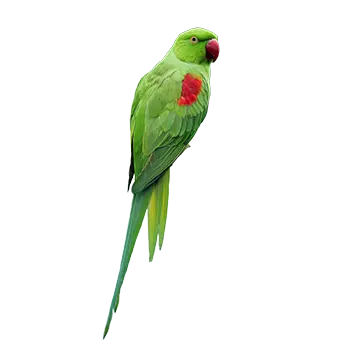

Play Style & Drive

Alexandrine Parakeets are highly intelligent, curious birds with a strong drive to manipulate, chew, and explore their environment. In the wild, they spend hours foraging across varied terrain, stripping bark, cracking seeds, and investigating novel objects. This natural behavioral repertoire translates directly into captive enrichment needs — an Alexandrine without adequate mental stimulation will redirect its energy into screaming, feather plucking, cage bar chewing, and other stereotypic behaviors that signal psychological distress.

Their play style is best described as investigative and destructive in the most positive sense. Alexandrines want to take things apart, figure out how mechanisms work, and shred materials into small pieces. This is not misbehavior — it is healthy, species-appropriate activity that should be encouraged through appropriate toy selection. A toy that an Alexandrine destroys within a few days has done its job well. Owners who view destroyed toys as waste rather than enrichment will struggle to meet this species' needs.

Alexandrines also exhibit a notable preference for foot-held toys — objects small enough to grasp in one foot while they perch and manipulate the item with their beak. This behavior mimics the way wild Alexandrines handle food items and demonstrates the sophisticated coordination these birds possess. Providing a mix of larger hanging toys and smaller foot toys ensures that the bird can engage in multiple play styles throughout the day.

Social play is equally important. Alexandrines that are well-bonded with their owners often enjoy interactive games such as peek-a-boo, retrieving small objects, and vocal mimicry exchanges. These interactions should not replace physical toys but rather complement them, forming a comprehensive enrichment program that addresses both independent and social stimulation needs.

Foraging & Puzzle Toys

Foraging toys are arguably the single most important enrichment category for captive Alexandrine Parakeets. In the wild, these birds may spend six to eight hours daily searching for and processing food. A cage-bound bird that receives all its food in an open dish completes its "foraging" in minutes, leaving vast stretches of unoccupied time that breeds boredom and behavioral problems. Foraging toys extend feeding time and engage the bird's problem-solving abilities simultaneously.

The simplest foraging toys involve hiding food within shreddable materials. Wrapping nuts in plain paper, tucking pellets inside a woven palm leaf ball, or threading vegetables onto a skewer that the bird must work to access all qualify as basic foraging enrichment. These low-cost approaches are often the best starting point for birds that have never encountered foraging challenges, as they provide success with minimal frustration.

More complex puzzle toys require the bird to manipulate levers, slide panels, unscrew caps, or navigate multi-step mechanisms to access a food reward. Alexandrines, with their intelligence and manual dexterity, are excellent candidates for these advanced toys. Look for puzzles made from bird-safe acrylic, stainless steel, and untreated hardwood. Start with single-step mechanisms and gradually increase complexity as the bird gains confidence and skill. A puzzle that the bird cannot solve at all provides no enrichment — the key is calibrating difficulty to produce challenge without sustained failure.

Rotating foraging toys regularly prevents habituation. A bird that has mastered a particular puzzle will lose interest once the challenge disappears. Maintaining a library of six to eight foraging toys and rotating two or three into the cage at a time, swapping them every few days, keeps the enrichment experience fresh. New toys can be introduced alongside familiar ones to reduce the neophobia — fear of novel objects — that some Alexandrines exhibit.

Chew Toys & Durability

Chewing is a biological necessity for Alexandrine Parakeets, not a behavioral preference. Their beaks grow continuously throughout life, and the gnawing, grinding, and shredding actions involved in chewing wear the beak naturally and maintain proper alignment. A bird deprived of chewing opportunities may develop an overgrown or misaligned beak that requires veterinary intervention. Beyond beak maintenance, chewing is deeply satisfying behavior that reduces stress and provides sensory stimulation.

Wood is the gold standard chewing material for Alexandrines. Untreated softwoods like pine, balsa, and yucca provide satisfying destruction for moderate chewers, while harder woods like manzanita, java wood, and dragonwood last longer and suit birds that demolish softer materials within hours. Many commercially available bird toys use a combination of wood blocks, wooden beads, and wood slats strung on stainless steel or nickel-plated hardware. Avoid toys assembled with zinc-plated quick links or chains, as zinc ingestion causes heavy metal poisoning.

Leather strips, palm fronds, coconut shell, and compressed corn cob are additional chewing materials that Alexandrines typically enjoy. Natural fiber rope made from sisal, jute, or unbleached cotton provides a different texture and can be knotted or braided into standalone toys or incorporated into larger assemblies. Always monitor rope toys for fraying — loose threads can wrap around toes, tongues, or necks and cause serious injury. Replace rope components at the first sign of significant unraveling.

Durability expectations should be realistic and adjusted to the individual bird. Some Alexandrines are power chewers that dismantle even robust toys in a day or two, while others are more methodical and make a toy last weeks. Neither style is abnormal. Budget for toy replacement as an ongoing cost of ownership rather than a one-time purchase. Investing in a few quality stainless steel toy bases with replaceable wood and rope components can reduce long-term costs while maintaining a steady supply of fresh chewing material.

Swings, Climbing & Physical Toys

Physical toys that encourage climbing, swinging, and acrobatic movement are essential for maintaining an Alexandrine Parakeet's muscular fitness and coordination. Swings are a perennial favorite — most Alexandrines develop a strong attachment to a well-chosen swing and will spend hours gently rocking while preening or napping. Select a swing sized for a medium-large parrot, with a perching bar thick enough for a comfortable grip and hardware rated for the bird's weight plus the dynamic forces of swinging motion.

Ladders and climbing nets made from natural rope or wood rungs provide vertical and angled exercise pathways within the cage. Boing-style spiral rope perches combine climbing with the springy, bouncing movement that many parrots find stimulating. These are particularly valuable in tall cages where they can span the full height, encouraging the bird to traverse the entire vertical space. Ensure that any climbing structure is firmly anchored — a ladder or net that shifts or collapses under the bird's weight will deter future use and may cause injury.

Playtop gyms and external play stands extend physical enrichment beyond the cage walls. A well-designed playtop features multiple perch levels, toy attachment points, and feeding stations that encourage the bird to climb, hang, and explore during supervised out-of-cage time. Freestanding play gyms made from java wood or manzanita branches create a naturalistic climbing environment that appeals to the Alexandrine's arboreal instincts. Position play stands in social areas where the bird can interact with the family while exercising.

Bell toys and noise-making toys satisfy the Alexandrine's vocal and auditory curiosity. Many Alexandrines develop elaborate relationships with bell toys, ringing them in patterns and incorporating the sound into their vocal repertoire. Stainless steel bells rated for medium-large parrots are the safest option — avoid small jingle bells where the clapper can be removed and swallowed, and avoid bells with pinch-point openings where toes or tongues can become trapped.

Comfort & Companion Items

While Alexandrine Parakeets are generally confident and independent compared to some parrot species, they still benefit from comfort items that provide a sense of security and companionship during quiet periods. A snuggle hut or fabric tent is popular with some birds as a cozy sleeping or resting spot. However, these items require close monitoring — Alexandrines will chew fabric, and ingested fibers can cause crop impaction. If using a fabric hide, inspect it daily for holes or loose threads and replace it immediately when damage appears.

Preening toys serve as surrogate grooming companions for solitary birds. These are typically made from cotton or sisal rope with loose, feathery ends that the bird can preen, pull, and arrange — mimicking the mutual preening behavior that bonded pairs engage in. Preening toys are especially valuable for birds that spend extended periods alone during the day, providing a tactile and psychologically soothing activity that can reduce stress-related feather plucking.

Mirrors are a contentious enrichment item in the parrot community. Some Alexandrines enjoy interacting with their reflection, while others become obsessed, territorial, or hormonally stimulated by the perceived presence of another bird. If introducing a mirror, observe the bird's response carefully over several days. Signs of excessive regurgitation, aggression, or fixation — spending hours staring at the mirror while ignoring other activities — indicate that the mirror should be removed.

Background noise and visual stimulation also fall under comfort enrichment. Many Alexandrine owners report that their birds are calmer and more engaged when there is ambient sound — music, nature recordings, or even talk radio — playing during the day. A window view provides visual entertainment, though care should be taken that the bird cannot see outdoor predators that might cause chronic stress. Some owners set up a tablet or screen near the cage playing nature documentaries or bird-specific video content, which many Alexandrines watch with apparent interest.

DIY & Budget Options

Homemade toys are an excellent supplement to commercially manufactured enrichment, and Alexandrine Parakeets are often more enthusiastic about simple DIY creations than expensive store-bought alternatives. The key is using only bird-safe materials — untreated wood, plain paper, vegetable-tanned leather, food-grade stainless steel hardware, and natural fiber rope. Avoid any material that has been painted, varnished, pressure-treated, or exposed to chemicals.

Some of the most effective DIY toys are also the simplest. A paper towel roll stuffed with crumpled paper and a few hidden pellets becomes a foraging toy that costs nothing. Wooden clothespins clipped to the cage bars provide chewing opportunities and foot-toy manipulation. Stringing wooden beads and blocks onto a leather strip with a few knots creates a hanging toy that rivals commercial products in engagement value. Pine cones collected from pesticide-free areas, baked at 200 degrees for 20 minutes to eliminate insects and mold, are durable natural chew toys.

Kitchen-scrap enrichment is another budget-friendly approach. The tops of carrots, clean corn husks, pomegranate halves with seeds intact, and coconut shell halves all provide foraging, chewing, and nutritional enrichment simultaneously. Threading vegetable chunks onto a stainless steel skewer or kabob holder turns mealtime into an interactive activity. Even a shallow dish of water can serve as enrichment — many Alexandrines enjoy bathing, splashing, and dunking food in water.

When building DIY toys, the most important safety consideration is hardware. Use only stainless steel quick links, split rings, and chain rated for the bird's strength. Avoid zinc-coated hardware, thin wire that can be broken and swallowed, and any mechanism that creates a pinch point or entanglement risk. If a toy component cannot be positively identified as bird-safe, leave it out. The cost savings of DIY enrichment are meaningless if a toxic material leads to a veterinary emergency.

Always consult a qualified professional before making any health-related decisions. This content is provided for informational reference only and should not replace professional guidance specific to your animal.