
Physical Maturity & Characteristics

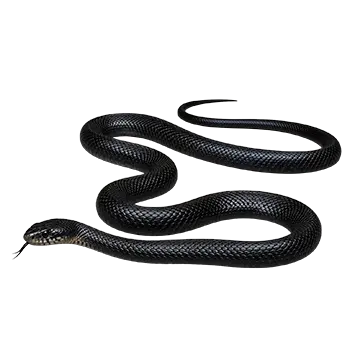
The Eastern Indigo Snake (Drymarchon couperi) reaches full physical maturity between three and five years of age, at which point it stands as the longest native snake species in the United States. Adult males commonly measure six to seven and a half feet in total length, with exceptional specimens reaching eight and a half feet or occasionally exceeding that mark. Females are typically shorter, averaging five to six and a half feet, and are noticeably lighter in body mass than comparably aged males. Sexual dimorphism in this species is moderate but discernible: males tend to have proportionally larger heads, more prominent temporal musculature, and slightly longer tails relative to their overall body length.

The adult Eastern Indigo Snake's most defining physical trait is its extraordinary integumentary coloration. The dorsal scales exhibit a deep, lustrous blue-black that produces a shimmering, iridescent effect in direct light, an optical phenomenon created by the microstructure of the scale surface rather than by pigmentation alone. This iridescence is most vivid in well-hydrated, recently shed animals and can appear somewhat dull in individuals experiencing dehydration, nutritional deficiency, or approaching a shed cycle. Ventral coloration varies by individual and regional lineage, ranging from uniform blue-black to patterns incorporating salmon, orange, brick-red, or cream beneath the chin, throat, and anterior ventral scales.

Body condition in a healthy adult should present as robust and cylindrical, with smooth, even musculature along the dorsal and lateral surfaces and no visible vertebral ridges or prominent costal outlines. The body should feel firm and well-toned when handled, without soft, spongy areas that might suggest localized edema or subcutaneous fat accumulation. At the opposite extreme, a snake whose spine or ribs are easily palpable through the skin is underweight and requires nutritional assessment. Maintaining optimal body condition throughout the prime adult years is the single most effective strategy for maximizing lifespan and preserving reproductive viability.

The head of an adult Eastern Indigo Snake is broad and slightly flattened, distinct from the neck but not as dramatically offset as in vipers or many python species. The eyes are large, round, and dark, providing the excellent vision that supports the species' diurnal, active-foraging lifestyle. The labial scales along the upper and lower jaws are smooth and symmetrical, and any irregularities in scale arrangement, persistent swelling, or discoloration of the oral margins should be investigated as potential indicators of stomatitis or traumatic injury.

Adult Feeding & Nutrition

Feeding an adult Eastern Indigo Snake is considerably less frequent than feeding a growing juvenile, reflecting the slower metabolism and reduced caloric demands of a fully grown animal. Most adults thrive on a feeding schedule of one appropriately sized meal every ten to fourteen days. The standard prey item for an adult is a medium to large rat, though prey selection can be varied with quail, chicks, or commercially produced whole-prey sausages formulated for reptiles. Each meal should produce a modest but visible midline bulge that resolves within four to five days, indicating complete digestion and normal gut transit time.

Obesity is the most prevalent nutritional disorder in captive adult Eastern Indigo Snakes and develops insidiously over months or years of even slight overfeeding. Because the species is an exceptionally willing feeder that rarely refuses a meal, the responsibility for caloric regulation falls entirely on the keeper. An obese Eastern Indigo Snake will exhibit soft, rounded body contours that obscure the normal muscular definition, fat deposits visible as bulging along the ventral midline, and reduced mobility and activity levels. Hepatic lipidosis, or fatty liver disease, is a common consequence of chronic obesity in captive snakes and can be fatal if not addressed through gradual dietary correction.

Conversely, some adult Eastern Indigo Snakes experience seasonal appetite reductions, particularly during the winter months or in response to changes in photoperiod and barometric pressure. These natural fluctuations in appetite should not alarm keepers, provided the snake maintains healthy body condition and resumes normal feeding when environmental cues shift back to favorable conditions. Males may also exhibit reduced appetite during the breeding season, as reproductive hormonal cycling often suppresses feeding drive. Forced feeding should never be attempted in a healthy adult that is voluntarily fasting, as it creates severe stress and can cause esophageal or gastric trauma.

Water intake in adult Eastern Indigo Snakes is substantial relative to many other snake species, reflecting both the animal's large body mass and its ecological association with mesic habitats in the wild. A heavy, tip-resistant water dish large enough for the snake to partially submerge should be available at all times and replenished with fresh water daily. Many adults will drink immediately after a meal and again during the pre-shed period. Water quality matters: municipal tap water treated with chlorine or chloramine should be allowed to off-gas for twenty-four hours or treated with a reptile-safe dechlorinator before use, as these chemicals can irritate mucous membranes and contribute to long-term health complications.

Enclosure Design & Long-Term Housing

Housing an adult Eastern Indigo Snake requires a significant commitment of space and resources. The minimum recommended enclosure size for a single adult is eight feet long by three feet deep by three feet tall, though larger enclosures are always beneficial for this active, wide-ranging species. In the wild, Eastern Indigo Snakes maintain some of the largest home ranges of any North American snake, traversing hundreds of acres of longleaf pine sandhills, scrubby flatwoods, and seasonal wetlands in search of prey and suitable shelter. While a captive enclosure cannot replicate this range, providing the maximum feasible space supports the physical and psychological health that defines a well-kept specimen.

Custom-built enclosures are the norm among serious keepers of adult Eastern Indigo Snakes, as commercially available reptile cages of sufficient size are limited and often prohibitively expensive. Materials commonly used include sealed and waterproofed plywood, PVC panel systems, and high-density polyethylene. Glass-fronted designs allow viewing while maintaining insulation, and sliding glass or acrylic doors are preferable to front-opening hinged panels, which can be more difficult to secure against the surprising strength of a large colubrid. All joints, seams, and hardware must be smooth and free of sharp edges that could abrade the snake's skin during normal locomotion.

The thermal gradient within the adult enclosure should maintain a warm-end ambient temperature of 85 to 88 degrees Fahrenheit, a basking zone of 88 to 92 degrees, and a cool-end temperature of 74 to 78 degrees. The larger volume of an adult enclosure demands careful placement and calibration of heat sources to ensure the gradient is consistent and accessible. Multiple digital probe thermometers positioned at substrate level across the enclosure's length provide the most accurate monitoring. Nighttime temperatures can drop to the low seventies without adverse effect, mimicking the natural diurnal temperature fluctuation the species experiences in its native southeastern United States range.

Substrate for adults should balance moisture retention, ease of cleaning, and naturalistic aesthetics. Cypress mulch is the most widely recommended option: it holds humidity effectively, resists mold growth, and releases a mild, pleasant aroma that does not irritate reptilian respiratory systems. A substrate depth of three to four inches allows limited burrowing and helps buffer temperature and humidity fluctuations. The enclosure should be furnished with multiple hides distributed across the thermal gradient, a large and robust water basin, and structural elements such as cork bark, drift wood, and flat stone that provide climbing surfaces and visual barriers. These furnishings are not optional luxuries but essential components of an environment that supports the full behavioral repertoire of this intelligent, active species.

Ventilation must be engineered to provide adequate air exchange without creating drafts or excessive humidity loss. A combination of upper and lower ventilation panels promotes convective airflow that carries stale air out and draws fresh air in without relying on fans, which can be noisy and create localized cold spots. In humid climates, ventilation may need to be increased to prevent condensation and mold growth on enclosure surfaces, while in arid environments, reducing ventilation surface area slightly can help maintain humidity within the target range of 50 to 70 percent.

Behavior & Temperament in Adulthood

The adult Eastern Indigo Snake is frequently described as the most personable and engaging snake species available in captivity, a reputation earned through decades of keeper experience across the herpetoculture community. Well-socialized adults typically display a calm, confident demeanor during handling, moving deliberately through the keeper's hands with steady, purposeful locomotion rather than the frantic darting common to many nervous colubrid species. This temperament is not universal, and individual variation exists, but the overall species tendency toward tractability is remarkably consistent when foundational socialization has been provided during the juvenile years.

Diurnal activity patterns distinguish the Eastern Indigo Snake from the majority of snake species kept in captivity. Adults are most active during the morning and early afternoon hours, spending this time patrolling their enclosure, investigating scent trails, soaking, and basking. Late afternoon typically brings a reduction in activity as the snake seeks shelter for the evening. This predictable daily rhythm allows keepers to schedule maintenance, feeding, and handling during the snake's natural active period, reducing stress and minimizing the defensive responses that can occur when a resting snake is suddenly disturbed.

The predatory behavior of adult Eastern Indigo Snakes is a fascinating aspect of the species' biology that is readily observable in captivity. Unlike ambush predators that wait motionlessly for prey to pass within striking range, Eastern Indigo Snakes are active pursuers that visually track and chase down their prey with remarkable speed and coordination. When a prey item is introduced to the enclosure, the adult will often raise its head, extend its neck, and advance on the prey with deliberate forward motion before seizing it in a rapid lateral grab. Prey is not constricted but instead subdued through powerful jaw pressure and a vigorous side-to-side chewing motion that immobilizes the item before swallowing begins. This feeding style is uniquely entertaining to observe but also demands that keepers exercise caution during prey presentation, using long tongs and maintaining a safe distance from the snake's strike range.

Territorial and seasonal behavioral shifts are normal in adult Eastern Indigo Snakes and should be anticipated by keepers. Males may become more restless, active, and occasionally assertive during the natural breeding season, which corresponds to late fall through early spring in the species' native range. This restlessness may manifest as increased pacing, nose-rubbing, refusal of food, and a generally heightened state of alertness. Females approaching reproductive readiness may exhibit similar restlessness along with subtle body posture changes. These seasonal behavioral patterns are normal expressions of the species' reproductive biology and do not require intervention unless they result in self-injury or prolonged fasting that compromises body condition.

Routine Health Management

Preventive health care for adult Eastern Indigo Snakes centers on consistent husbandry practices, regular observation, and periodic veterinary evaluation. Annual wellness examinations performed by a reptile-experienced veterinarian should include a thorough physical assessment, body condition scoring, oral cavity inspection, fecal parasite screening, and, where clinically indicated, blood chemistry panels to evaluate liver and kidney function. These routine evaluations establish baseline health parameters that allow early detection of deviation from normal, which is critical in a species whose stoic nature can mask symptoms until a disease process is well advanced.

Shed quality remains a reliable barometer of overall health throughout the adult years. A healthy adult sheds every six to ten weeks, depending on feeding frequency and environmental conditions, and the shed skin should come off in a single, intact piece that includes clear, undamaged eye caps. Persistently incomplete sheds, particularly those that leave retained skin on the tail tip, around the cloaca, or over the spectacles, indicate a chronic humidity deficiency or an underlying systemic condition that warrants investigation. Between sheds, the snake's scales should appear smooth, glossy, and free of raised edges, discoloration, or areas of opacity.

Dermatological conditions are among the most common health issues encountered in adult Eastern Indigo Snakes. Scale rot, more accurately termed ulcerative dermatitis, develops when bacteria penetrate damaged or chronically moist ventral scales, producing discolored, softened areas that may progress to open, necrotic lesions if untreated. The condition is almost always attributable to husbandry errors, most commonly a substrate that remains too wet, insufficient ventilation, or infrequent cleaning. Treatment involves correcting the environmental cause, debriding affected tissue under veterinary guidance, and applying topical antiseptics such as dilute povidone-iodine or chlorhexidine until the lesions resolve. Preventing recurrence requires sustained attention to substrate moisture levels and enclosure hygiene.

Respiratory health in adults is maintained through proper temperature management and adequate ventilation. Signs of respiratory compromise include audible breathing sounds, mucus or bubbling at the nares, open-mouth breathing, and lethargy accompanied by reduced feeding response. Bacterial respiratory infections in Eastern Indigo Snakes are treatable with appropriate antibiotic therapy when caught early, but advanced cases involving the lower respiratory tract carry a guarded prognosis. As with most health conditions in reptiles, prevention through optimal husbandry is far more effective and less stressful for the animal than treatment after the fact.

Conservation Status & Legal Considerations

The Eastern Indigo Snake holds the distinction of being federally listed as Threatened under the United States Endangered Species Act, a designation it has carried since 1978. This protected status has profound implications for every aspect of keeping the species in captivity, from acquisition and possession to breeding, sale, and interstate transport. All keepers of Eastern Indigo Snakes must hold valid permits issued by the U.S. Fish and Wildlife Service and, in most cases, additional permits from the state wildlife agency in their jurisdiction. The permitting process typically requires documentation of husbandry experience, facility inspections, and a commitment to record-keeping and reporting that far exceeds the requirements for keeping non-listed species.

The primary threats to wild Eastern Indigo Snake populations include habitat loss and fragmentation, particularly the destruction and degradation of longleaf pine sandhill ecosystems across the southeastern United States. These open, fire-maintained habitats have been reduced to a fraction of their historical extent by logging, agricultural conversion, and fire suppression, and the gopher tortoise burrows that Eastern Indigo Snakes depend on for winter refugia have declined accordingly. Road mortality, collection for the pet trade prior to federal protection, and secondary poisoning from rodenticides applied in suburban and agricultural settings have further reduced wild populations across much of the species' historical range, which once extended from southeastern Mississippi through southern Alabama, Georgia, and Florida.

Captive breeding programs operated by accredited institutions and permitted private breeders play an increasingly important role in the conservation of the Eastern Indigo Snake. The Orianne Society, the Central Florida Zoo's Orianne Center for Indigo Conservation, and several other organizations have developed successful captive breeding and reintroduction protocols that have resulted in the release of hundreds of captive-bred juveniles into restored longleaf pine habitats across Alabama, Florida, and Georgia. Private keepers who participate in permitted breeding programs contribute to the maintenance of genetic diversity within the captive population and, in some cases, directly support reintroduction efforts through the provision of surplus offspring.

Keepers of adult Eastern Indigo Snakes bear an ethical responsibility that extends beyond the care of their individual animals. Maintaining meticulous records of lineage, health history, and reproductive outcomes contributes to the broader knowledge base that informs both captive management and wild conservation strategies. Sharing husbandry data, participating in studbook programs when available, and adhering rigorously to all permit conditions are not merely legal obligations but contributions to the long-term survival of one of North America's most ecologically important and charismatic reptile species. Any keeper who discovers that their animal may have been acquired in violation of federal or state law has an obligation to contact the relevant wildlife authorities to regularize the animal's status and ensure compliance.

Always consult a qualified professional before making any health-related decisions. This content is provided for informational reference only and should not replace professional guidance specific to your animal.