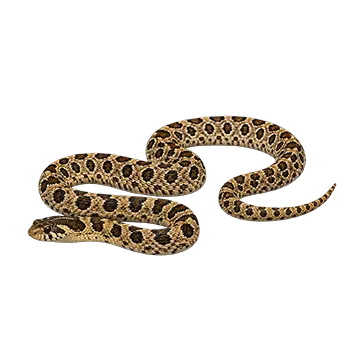

Transition to the Juvenile Stage

The Eastern Hognose Snake (Heterodon platirhinos) enters its juvenile phase at approximately three to four months of age, once the animal has completed several successful feeding cycles and has undergone multiple sheds. By this point, a healthy individual will have grown from its emergence length of six to eight inches to roughly ten to fourteen inches, depending on feeding consistency and individual genetics. The transition from neonate to juvenile is not marked by a single dramatic event but rather by a gradual accumulation of developmental changes — increased body mass, improved motor coordination, stronger feeding response, and a subtle shift in behavioral confidence.

The juvenile stage extends from roughly three months of age through the first twelve to eighteen months of life, at which point the snake approaches subadult and eventually adult size. During this window, the Eastern Hognose Snake undergoes its most rapid period of proportional growth, and the husbandry decisions made during the juvenile phase have lasting consequences for the animal's adult body condition, temperament, and reproductive fitness. Keepers who established good routines during the hatchling stage will find the juvenile period to be a natural extension of those practices, with incremental adjustments to enclosure size, prey size, and handling frequency.

Sexual dimorphism begins to emerge during the juvenile stage, though it is subtle and unreliable for sexing purposes at this age. Female Eastern Hognose Snakes tend to grow somewhat faster and reach larger ultimate sizes than males, but individual variation is significant enough that body size alone cannot determine sex in juveniles. Reliable sexing requires probing or popping by an experienced keeper or veterinarian. Knowing the sex of a juvenile is not critical for general husbandry but becomes relevant for keepers who plan to incorporate the animal into a breeding program later in life.

The juvenile period is also when the Eastern Hognose Snake's personality — to the degree that personality can be attributed to a reptile — becomes more apparent. Some juveniles calm down rapidly and become remarkably tolerant of handling, while others retain a strong propensity for defensive displays well into adolescence. Neither temperament is inherently better or worse; both are within the normal behavioral range for the species. The keeper's primary role during this stage is to provide consistent, appropriate care and allow the animal to develop at its own pace.

Feeding & Dietary Advancement

The juvenile stage is the period during which most Eastern Hognose Snakes complete their transition from scented prey to unscented rodent meals. Animals that were reliably eating toad-scented pinky mice as hatchlings can now be offered pinkies with progressively less scenting — a technique sometimes called scent-fading. The keeper reduces the intensity of the toad scent over several feedings, first offering heavily scented items, then lightly scented ones, then items that have been briefly placed near a toad without direct contact, and finally plain unscented pinkies. This gradual approach works with the snake's natural adaptability and avoids the abrupt dietary change that triggers food refusal in many individuals.

Prey size should increase in step with the snake's growth. A juvenile Eastern Hognose that has outgrown pinky mice should be transitioned to fuzzy mice and eventually to small hopper mice as the animal's girth increases. The general rule of thumb is that the prey item should be roughly the same diameter as the widest point of the snake's midsection. Feeding prey that is too large causes regurgitation and digestive stress, while chronically undersized prey forces the keeper to offer multiple items per feeding, which can lead to overfeeding and obesity. A single appropriately sized item every seven to ten days is sufficient for steady, healthy growth.

Regurgitation is a particularly serious concern in juvenile hognose snakes and must be addressed immediately if it occurs. The most common causes include prey that is too large, handling the snake too soon after feeding, enclosure temperatures that are too low for proper digestion, and stress from environmental disturbances. A juvenile that regurgitates should not be offered food again for at least fourteen days to allow the esophageal and gastric tissues to recover. The subsequent meal should be smaller than the one that was regurgitated, offered in a quiet environment, and followed by a strict forty-eight to seventy-two hour no-handling period. Repeated regurgitation episodes require veterinary evaluation and a thorough review of husbandry parameters.

Hydration continues to be an essential component of juvenile nutrition. A clean water dish should be available at all times, positioned on the cool end of the enclosure to minimize evaporation and bacterial growth. Some juvenile hognose snakes drink frequently and conspicuously, while others drink infrequently and may appear to avoid their water dish entirely. As long as the snake is producing normal urates — white, semi-solid deposits passed alongside feces — and is shedding cleanly, hydration is likely adequate. Wrinkled skin, dry retained sheds, and chalky or yellowed urates are indicators of dehydration that warrant immediate attention.

Enclosure Upgrades & Environment

As the juvenile Eastern Hognose Snake grows, the small tub or container that served adequately during the hatchling stage must be replaced with a larger enclosure that provides room for thermoregulation, burrowing, and moderate exploration. A twenty-gallon long glass terrarium or a comparably sized PVC enclosure is appropriate for most juveniles from roughly four months of age through the end of the first year. The enclosure should be longer than it is tall, reflecting the terrestrial and fossorial habits of the species. Height beyond twelve to fourteen inches is unnecessary and can make it difficult to maintain the stable thermal and humidity gradients that are essential for this species.

The thermal gradient should be refined as the enclosure grows. The warm end should remain at 88 to 90 degrees Fahrenheit with a basking zone of up to 92 degrees, while the cool end should settle between 72 and 76 degrees. A proportional thermostat connected to the primary heat source — whether an under-tank heat pad, a ceramic heat emitter, or a radiant heat panel — is a non-negotiable piece of equipment at this stage. Unregulated heat sources fluctuate with ambient room temperature and can produce dangerous temperature spikes that cause burns, heat stress, or death. A digital thermometer with probes at both the warm and cool ends of the enclosure provides continuous, accurate temperature data.

Substrate depth can be increased to three to five inches of aspen shavings during the juvenile stage, giving the snake ample material for its natural burrowing behavior. Eastern Hognose Snakes are dedicated burrowers, and providing sufficient substrate depth is one of the most effective ways to reduce stress and promote natural activity patterns. The snake will excavate tunnels, push substrate into mounds, and spend significant portions of the day buried beneath the surface with only its upturned snout visible. Keepers who provide insufficient substrate depth often observe increased pacing, glass-surfing, and other repetitive behaviors that indicate environmental dissatisfaction.

Furnishings should be simple but functional. Two hides are recommended — one on the warm end and one on the cool end — so the snake can thermoregulate without sacrificing the sense of security that a hide provides. Cork bark halves, commercial plastic hides, or overturned ceramic dishes all work well. A shallow water dish large enough for the snake to soak in completes the essential furnishings. Decorative elements such as artificial plants or additional climbing structures are acceptable but not necessary for this species, which spends the majority of its time on or beneath the substrate surface rather than exploring elevated surfaces.

Behavioral Development & Temperament

The juvenile stage brings significant behavioral maturation in Eastern Hognose Snakes. The frequency and intensity of the dramatic defensive displays that characterize hatchlings typically decrease as the snake gains experience with routine handling, feeding, and enclosure maintenance. Hood-spreading and hissing may still occur when the snake is startled or approached unexpectedly, but many juveniles that have been handled consistently since the hatchling stage will tolerate being picked up and held with minimal protest. The death-feigning behavior — the species' most iconic defense mechanism — tends to persist longer than other defensive displays but usually becomes less frequent and less prolonged over time.

Feeding behavior in juveniles is often more assertive and confident than in hatchlings. Many juveniles develop a strong associative response to routine feeding cues, such as the sound of the enclosure being opened or the presence of tongs, and will emerge from hiding, approach the front of the enclosure, and strike at prey with focused intensity. This enthusiastic feeding response is a hallmark of healthy Eastern Hognose Snakes and is generally a positive sign, though keepers should be careful not to interpret it as a signal to increase feeding frequency or prey size beyond recommended levels. Obesity remains one of the most common husbandry-related health problems in captive hognose snakes of all ages.

Burrowing behavior becomes more elaborate during the juvenile stage. Rather than simply pushing beneath the surface, juveniles will construct complex tunnel networks through their substrate, sometimes maintaining specific routes between their hides, water dish, and preferred basking area. This burrowing activity serves multiple functions — thermoregulation, predator avoidance, ambush hunting (in the wild), and general stress reduction. Keepers can assess their animal's comfort level in part by observing the complexity and extent of its tunnel construction; a juvenile that has thoroughly excavated its substrate is demonstrating normal, species-appropriate behavior.

Juvenile Eastern Hognose Snakes are primarily diurnal, with activity peaks in the morning and late afternoon that correspond to the natural activity patterns of their wild counterparts. Keepers can expect to see the snake emerge from its burrow or hide during these periods to bask, drink, explore the enclosure perimeter, and investigate scent trails. A photoperiod of twelve hours of light and twelve hours of darkness, provided by ambient room lighting or a low-wattage LED fixture, supports the circadian rhythm without introducing excessive heat or light stress. Nocturnal activity is unusual for this species and may indicate environmental problems such as daytime temperatures that are too high or disturbances in the room during daylight hours.

Health Monitoring & Common Issues

Routine health monitoring during the juvenile stage involves the same systematic approach established during the hatchling period — weekly weight checks, visual skin inspections, respiratory sound assessment, and fecal examination — but with additional attention to the health issues that are most prevalent in growing Eastern Hognose Snakes. Internal parasites, particularly flagellated protozoans and coccidia, can become clinically significant during the juvenile stage when the stress of growth and repeated shedding taxes the immune system. A follow-up fecal examination at three to four months of age, even if the initial hatchling screening was negative, helps catch subclinical infections before they produce symptoms such as chronic loose stools, weight loss, or appetite suppression.

Shedding problems are among the most frequently encountered issues in juvenile hognose snakes. An incomplete shed — where patches of old skin remain adhered to the body, particularly around the eyes, tail tip, or along the ventral surface — is almost always attributable to insufficient humidity during the pre-shed period. The humid hide described in the enclosure setup should contain damp sphagnum moss that is replenished every few days and checked particularly carefully when the snake enters its pre-shed opaque phase. If retained shed does occur, a twenty-to-thirty-minute soak in shallow lukewarm water usually loosens the retained skin enough for it to be gently removed with a damp cotton swab or soft cloth. Retained eye caps (spectacles) require veterinary assistance, as improper removal can damage the cornea.

Obesity deserves particular attention during the juvenile stage because it is both common and insidious. Eastern Hognose Snakes have a stocky, heavy-bodied build that can mask early weight gain, and their enthusiastic feeding response encourages keepers to offer meals more frequently or in larger portions than necessary. A healthy juvenile Eastern Hognose should have a smooth, gently rounded cross-section. If the spine is clearly visible as a ridge along the dorsal surface, the animal is underweight. If the body appears distinctly triangular in cross-section — wide at the ventral surface and narrow along the spine — or if fat rolls are visible when the snake bends, the animal is overweight and feeding frequency should be reduced.

Respiratory infections remain a concern throughout the juvenile stage, particularly during seasonal transitions when room temperatures and humidity levels may fluctuate. Early symptoms include subtle changes in respiratory sounds — faint whistling or occasional clicking — that may only be audible during handling when the snake is close to the keeper's ear. As the infection progresses, more obvious signs appear, including visible mucus at the nostrils, open-mouth breathing, and lethargy. Prompt veterinary attention with culture and sensitivity testing to identify the causative organism and guide antibiotic selection offers the best prognosis. Environmental corrections — ensuring the warm end is at appropriate temperatures, reducing humidity to species-appropriate levels, and improving ventilation — must accompany medical treatment for a full recovery.

Socialization & Handling Progression

The juvenile stage represents the optimal window for building long-term handling tolerance in Eastern Hognose Snakes. The neural plasticity of the developing juvenile brain, combined with the animal's growing familiarity with its keeper, creates conditions in which consistent positive handling experiences produce lasting behavioral changes. Keepers who commit to regular, gentle handling sessions during this period typically produce adults that can be picked up, transported, and examined with minimal stress — a practical advantage that simplifies routine husbandry, veterinary visits, and enclosure maintenance for the remainder of the animal's life.

Handling sessions can be gradually extended from the three-to-five-minute sessions of the hatchling stage to ten-to-fifteen-minute sessions for juveniles, conducted three to four times per week. The snake should be allowed to explore the handler's hands and arms at its own pace, with full body support maintained at all times. Avoid gripping the snake tightly, restraining its head, or restricting its movement, as these actions provoke defensive responses and undermine the trust-building process. If the snake exhibits defensive behaviors during a session — hood-spreading, hissing, or bluff-striking — the handler should remain calm, continue supporting the snake gently, and allow it to settle rather than immediately returning it to the enclosure, which inadvertently rewards the defensive behavior.

It is important to distinguish between the Eastern Hognose Snake's bluff behaviors and genuine distress. Bluff strikes are delivered with a closed mouth and are designed to intimidate without making actual contact; they are a theatrical display rather than an aggressive act. Genuine distress, by contrast, manifests as sustained, frantic thrashing, persistent musking (release of foul-smelling cloacal secretions), and attempts to flee rather than to intimidate. If a juvenile is exhibiting genuine distress rather than standard bluffing, the session should be ended calmly and the keeper should evaluate whether the handling approach, timing, or environment needs adjustment.

Socialization extends beyond direct handling to include habituation to the general sensory environment of the keeper's home. A juvenile housed in a room with regular foot traffic, conversational noise, and the ambient sounds of household life will gradually become desensitized to these stimuli and will be far less reactive than an animal kept in an isolated, silent room that is only disturbed during feeding and cleaning. Positioning the enclosure in a moderately trafficked area — not in a high-impact zone like next to a television or doorway, but in a living space where the snake can observe normal household activity — accelerates the habituation process and contributes to a calmer, more well-adjusted adult animal.

As the juvenile approaches its first year and transitions toward subadult size, keepers should also begin acclimating the snake to the transport and examination procedures it will encounter during veterinary visits. Placing the snake in a secure cloth bag or ventilated container, carrying it to a different room, and simulating the gentle restraint involved in a veterinary examination all help prepare the animal for real-world handling scenarios. A snake that has been gradually exposed to these experiences during the juvenile stage will be significantly less stressed during actual veterinary visits, resulting in more thorough examinations and more reliable diagnostic findings.

Always consult a qualified professional before making any health-related decisions. This content is provided for informational reference only and should not replace professional guidance specific to your animal.