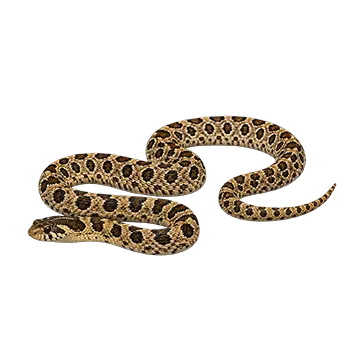

Breeding Readiness & Selection

Successful breeding of Eastern Hognose Snakes (Heterodon platirhinos) begins long before any animals are introduced to each other. Both males and females must meet specific age, size, and health criteria to ensure that the breeding attempt is safe, productive, and does not compromise the long-term welfare of either animal. Males typically reach sexual maturity at approximately eighteen to twenty-four months of age and should weigh at least fifty to sixty grams before being considered for breeding. Females mature later, generally reaching reproductive readiness at twenty-four to thirty-six months, and should weigh a minimum of one hundred fifty grams with a well-conditioned body that reflects consistent, healthy growth over their first two to three years.

Breeding underweight or undersized females is one of the most consequential mistakes a keeper can make. A female that enters the reproductive cycle without adequate fat and muscle reserves faces a significantly elevated risk of egg-binding — a life-threatening condition in which she is unable to pass her eggs — as well as post-laying exhaustion that can suppress her immune system and leave her vulnerable to secondary infections. The additional metabolic demands of follicle development, egg calcification, and oviposition are substantial, and only animals in robust health should be subjected to them. If there is any doubt about a female's readiness, delaying breeding by one season is always the more responsible choice.

Pairing selection should consider the genetic background of both animals whenever possible. Inbreeding depression — the reduced fitness that results from mating closely related individuals — is a real concern in captive populations of Eastern Hognose Snakes, particularly within the relatively small captive gene pool that supplies the pet trade. Maintaining records of lineage, acquisition source, and any known relatives within one's collection helps prevent inadvertent inbreeding. Beyond genetics, pairing animals of complementary size is advisable; a male that is dramatically smaller than the female will have difficulty achieving copulation, while a female that is much smaller than the minimum breeding weight should not be paired regardless of the male's size.

Pre-breeding health screening by a reptile-experienced veterinarian is strongly recommended for both the male and female. A fecal examination to confirm the absence of parasites, a physical assessment to verify body condition and the absence of respiratory or dermatological disease, and a discussion of the animal's recent feeding and shedding history all contribute to an informed breeding decision. Breeding animals that are harboring subclinical infections or parasite loads risks transmitting those conditions to the offspring and places additional stress on animals already facing the physiological demands of reproduction.

Brumation & Seasonal Cycling

Brumation — the reptilian analog of mammalian hibernation — is the hormonal trigger that initiates the reproductive cycle in Eastern Hognose Snakes. In the wild, Heterodon platirhinos brumates during the winter months in underground burrows, rock crevices, or mammal dens, where temperatures remain cool but above freezing. Captive breeding programs replicate this natural cycle by subjecting breeding animals to a controlled period of reduced temperatures and shortened photoperiod, typically beginning in late October or November and extending through January or February.

Preparation for brumation begins several weeks before the actual temperature drop. Both males and females should be fasted for a minimum of fourteen days prior to the onset of cooling to ensure that their digestive tracts are completely empty. Food remaining in the gastrointestinal tract during the reduced temperatures of brumation will not be digested properly and can decompose internally, leading to bacterial infection, sepsis, and death. During the pre-brumation fasting period, normal enclosure temperatures should be maintained to allow complete digestion and elimination of any previously consumed prey. Fresh water should remain available throughout the fasting period and the entire brumation.

The cooling process should be gradual rather than abrupt. Over the course of seven to ten days, reduce the warm-end temperature by two to three degrees Fahrenheit per day until the enclosure reaches a brumation temperature of 55 to 60 degrees Fahrenheit. Photoperiod should be simultaneously reduced to eight hours of light and sixteen hours of darkness. Once brumation temperatures are reached, the animals should be left largely undisturbed for eight to twelve weeks, with checks limited to water level verification and brief visual inspections to confirm the animal is alive and resting normally. Brumating snakes are typically motionless or move very little, and this inactivity is expected and healthy.

The warming process at the end of brumation mirrors the cooling process in reverse. Over seven to ten days, temperatures are gradually raised back to normal operating levels, and the photoperiod is extended to twelve hours. Once normal temperatures have been restored, allow the animals three to five days to acclimate before offering the first post-brumation meal. Males will typically begin exhibiting breeding behavior — restless pacing, increased tongue-flicking, and attempts to explore beyond their enclosure — within one to three weeks of emerging from brumation. Females may take slightly longer to show behavioral signs of receptivity, but follicle development is proceeding internally during this period even before outward signs are apparent.

Introduction & Copulation

Pairing introductions for Eastern Hognose Snakes should be conducted after both animals have fully recovered from brumation, have completed their post-brumation shed, and have accepted at least one or two meals. The female is typically introduced into the male's enclosure rather than the reverse, as the male's familiar scent environment helps stimulate courtship behavior. Alternatively, some breeders place both animals into a neutral enclosure that neither has previously occupied, which can reduce territorial stress and encourage mutual investigation.

Courtship in Eastern Hognose Snakes is relatively subdued compared to the elaborate rituals of some other snake species. The male detects the female's pheromone trail through tongue-flicking and will approach her with rapid, jerky head movements, aligning his body alongside hers and attempting to position his cloaca adjacent to hers. The male may chin-rub along the female's dorsal surface and twitch his body in a series of rhythmic undulations to stimulate her receptivity. If the female is receptive, she will lift her tail and allow cloacal apposition, at which point the male everts a hemipenis and copulation occurs. Copulation in Heterodon may last from twenty minutes to several hours.

If the female is not receptive, she will typically crawl away from the male, coil tightly to prevent tail-lifting, or in some cases flatten her neck and hiss in a defensive posture directed at the male. Unreceptive females should not be left with persistent males for extended periods, as the repeated harassment can cause significant stress. If the female shows clear rejection behavior, separate the animals and attempt reintroduction after three to five days. Multiple short introduction sessions over a period of two to four weeks are generally more productive than a single prolonged pairing.

Multiple copulation events over several weeks improve the likelihood of successful fertilization. Many breeders pair the male and female for twenty-four to forty-eight hour sessions, separate them for three to five days, and then reintroduce them, repeating this cycle three to five times over a period of two to four weeks. Observing copulation directly confirms that mating has occurred, but some copulation events happen overnight or while the keeper is absent. Continued male interest and courtship behavior during subsequent introductions suggests that the female may not yet be fully inseminated and that additional pairings are warranted.

Gravidity & Egg Laying

Following successful copulation, the female Eastern Hognose Snake enters a period of gravidity — the development and calcification of eggs within the oviducts — that typically lasts four to six weeks. During this period, the female's body undergoes visible changes. Her midsection swells progressively as the eggs develop, and she may adopt a distinctive basking posture, positioning herself with her swollen midsection directly over the warmest area of the enclosure to accelerate follicle development. Appetite during early gravidity is often robust, as the female attempts to acquire the caloric reserves needed for egg production, but many females cease feeding entirely during the final two to three weeks before laying as the growing eggs compress the gastrointestinal tract.

A pre-lay shed occurs approximately ten to fourteen days before oviposition and serves as a reliable predictor of the impending egg-laying event. This shed is hormonally driven and signals that the eggs are nearing full development. Once the pre-lay shed has occurred, the keeper should ensure that a suitable nesting site is available within the enclosure. A plastic container with a hole cut in the lid, filled with four to six inches of damp sphagnum moss or a mixture of vermiculite and water, provides the warm, humid microenvironment that the female needs for egg deposition. The nesting box should be placed on the warm end of the enclosure.

Eastern Hognose Snake clutch sizes typically range from eight to twenty-five eggs, though exceptionally large or well-conditioned females may produce up to forty. The female will enter the nesting box, often spending twelve to twenty-four hours arranging the substrate before beginning to lay. Oviposition itself may take several hours, with individual eggs deposited at intervals of several minutes to half an hour. The keeper should avoid disturbing the female during this process, as interruptions can cause her to abandon the nesting site and scatter eggs throughout the enclosure, complicating collection and reducing hatch rates.

Egg-binding, or dystocia, is the most serious complication associated with oviposition and requires immediate veterinary intervention. Signs of egg-binding include prolonged, unproductive straining, visible distress, lethargy, and failure to complete egg-laying within twenty-four hours of depositing the first egg. Risk factors include inadequate calcium reserves, dehydration, suboptimal temperatures, and breeding females that are too young or too small to safely pass a full clutch. Veterinary treatment may involve calcium and oxytocin injections to stimulate uterine contractions, or in severe cases, surgical removal of the retained eggs. Prompt veterinary attention dramatically improves outcomes; delayed treatment allows secondary infection and organ damage that can be fatal.

Incubation Management

Eggs should be carefully transferred from the nesting box to a prepared incubation container within twelve to twenty-four hours of laying. Handle eggs gently, maintaining them in the same orientation in which they were deposited — do not rotate or flip them, as the developing embryo attaches to the upper surface of the yolk within hours of laying, and rotation can detach or drown the embryo. If eggs are adhered together in a cluster, do not attempt to separate them; incubate the cluster intact. Mark the top of each egg with a soft pencil or non-toxic marker to ensure consistent orientation throughout the incubation period.

The incubation medium should be a one-to-one ratio by weight of vermiculite and water, mixed until the vermiculite is uniformly damp but not dripping. The eggs are placed on the surface of this medium in a sealed plastic container with several small ventilation holes drilled in the sides or lid. The container is then placed in an incubator set to a constant temperature of 80 to 82 degrees Fahrenheit. Temperature consistency is critical — fluctuations of more than two to three degrees in either direction can cause developmental abnormalities, embryonic death, or significantly skewed sex ratios if temperature-dependent sex determination plays a role, though this mechanism has not been definitively confirmed in Heterodon.

Incubation duration for Eastern Hognose Snake eggs ranges from approximately fifty to sixty-five days, depending on incubation temperature. During this period, the keeper's primary responsibilities are maintaining stable temperature and humidity within the incubation container and monitoring egg condition. Healthy, fertile eggs will remain turgid and white, gradually swelling slightly as the embryo absorbs moisture from the incubation medium. Infertile or dead eggs typically collapse, discolor to yellow or green, and may develop mold. Infertile eggs should be removed promptly to prevent fungal contamination of viable eggs, but any egg that remains turgid and white should be left undisturbed regardless of how long incubation takes.

As hatching approaches, the eggs may dimple or sweat — developing small areas of condensation on the shell surface — which indicates that the embryos are nearing full development and are beginning to consume the remaining yolk and fluid within the egg. Pipping — the first visible slit in the eggshell made by the hatchling's egg tooth — may occur over a period of twenty-four to forty-eight hours before the hatchling fully emerges. Once the first egg in the clutch has pipped, the remaining eggs typically follow within one to three days. Resist the urge to assist hatchlings that are slow to emerge; premature intervention causes more harm than patience in the vast majority of cases.

Post-Breeding Recovery

The post-breeding recovery period is a critical phase for the female Eastern Hognose Snake and should be treated with the same seriousness as any other stage of the reproductive cycle. Egg production is one of the most metabolically demanding events in a female snake's life, depleting calcium reserves, fat stores, and muscle mass to fuel the development and calcification of a full clutch. A female that has just completed oviposition will be significantly lighter than her pre-breeding weight — a loss of thirty to fifty percent of body mass is not unusual — and her body condition will appear noticeably depleted, with visible vertebral ridges and a hollow, flattened abdominal profile.

Feeding should resume within five to seven days of oviposition, beginning with a small, easily digestible prey item offered in a quiet, stress-free environment. Many post-breeding females are voraciously hungry and will strike at prey with an intensity that exceeds their normal feeding response. Resist the temptation to offer oversized meals or to feed more frequently than every five to seven days during the initial recovery period, as the digestive system needs time to return to full function after the compression and displacement caused by the developing eggs. Gradually increase prey size over the course of several feedings until the female is back on her normal adult diet.

Calcium supplementation during the post-breeding recovery period helps replenish the substantial calcium reserves that were mobilized for eggshell formation. Dusting prey items with a reptile-specific calcium powder for the first four to six feedings after oviposition supports skeletal remineralization and reduces the risk of metabolic bone disease, which can develop in females that are bred repeatedly without adequate recovery time between clutches. A post-breeding veterinary examination is advisable to confirm that all eggs have been successfully passed, to assess body condition, and to screen for any reproductive tract complications such as retained egg material or oviductal inflammation.

Full recovery from a breeding cycle typically takes three to four months, during which the female should be housed individually, maintained on an optimal feeding schedule, and monitored for steady weight regain. Breeding a female in consecutive years without allowing full recovery between clutches is a practice that dramatically increases the risk of egg-binding, metabolic bone disease, immune suppression, and premature death. Most experienced Eastern Hognose breeders recommend breeding individual females no more frequently than every other year, or even every third year for smaller or older females, to ensure that each animal has ample time to fully restore her pre-breeding body condition before the next reproductive cycle.

Male recovery from breeding is less physiologically demanding than female recovery, but males also benefit from a post-breeding rest period. Males that have been actively breeding for several weeks may show reduced body condition, decreased appetite, and elevated stress levels. Returning the male to his individual enclosure, resuming normal feeding, and minimizing handling for two to three weeks after the breeding season concludes allows him to recover physically and behaviorally. Males that are in good condition typically return to their normal routines within a few weeks of the breeding season's end.

Always consult a qualified professional before making any health-related decisions. This content is provided for informational reference only and should not replace professional guidance specific to your animal.