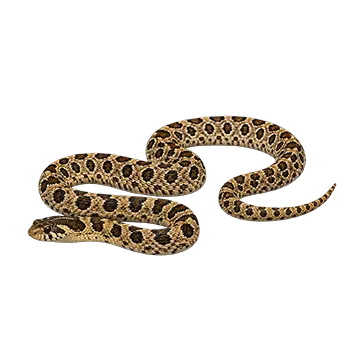

Eastern Hognose Snakes (Heterodon platirhinos) reach physical maturity between eighteen and thirty-six months of age, though the precise timeline depends on sex, genetics, and the quality of care received during the juvenile period. Males tend to mature earlier and remain smaller, typically reaching adult lengths of twenty to twenty-four inches and weights of sixty to one hundred grams. Females grow more slowly but achieve substantially larger adult sizes, commonly reaching twenty-eight to thirty-three inches and weights of one hundred fifty to three hundred fifty grams. Exceptional females from large-bodied genetic lines may exceed these averages, particularly those that have been bred and have undergone the additional growth that often accompanies reproductive maturity.
The transition from subadult to adult is gradual rather than abrupt. Growth rate decelerates significantly compared to the rapid gains of the first year, and shedding frequency slows from every three to four weeks to approximately every six to ten weeks. The snake's body proportions settle into the characteristically stocky, robust build of a mature Heterodon — a broad, flattened head, a thick neck region, a stout midsection, and a relatively short, tapered tail. The upturned rostral scale is fully developed and prominently displayed, giving the head its distinctive shovel-nosed profile.
Adult coloration stabilizes during this period. Animals in the classic patterned morph display well-defined dorsal blotches that may range from dark brown to reddish-brown against a lighter background, while melanistic individuals present a uniformly dark brown to jet-black dorsal surface. The ventral surface in most adults is pale gray to yellow, often with mottled dark pigmentation that becomes more pronounced with age. Color pattern is not an indicator of health or temperament and varies considerably even within a single clutch, reflecting the species' natural polymorphism across its extensive geographic range from southern New England through Florida and westward to the Great Plains.
Adult Eastern Hognose Snakes that have been consistently and properly handled since the juvenile stage are generally calm, tolerant animals that accept routine interaction without dramatic defensive displays. However, even well-socialized adults may revert to hood-spreading, hissing, or death-feigning if startled, handled during a pre-shed period, or exposed to unfamiliar stimuli. This reversion is normal and does not indicate a loss of socialization. The species' defensive behaviors are hardwired instinctual responses that are suppressed by habituation but never truly eliminated.