
Defining the Juvenile Stage

The juvenile phase of the Eastern Egg-Eater (Dasypeltis scabra) spans roughly from four months of age through sexual maturity, which is typically reached between eighteen and twenty-four months in males and twenty-four to thirty months in females under optimal captive conditions. This period is characterized by accelerating growth, increasing gape capacity that opens access to larger egg sizes, and a gradual shift from the heightened wariness of the neonatal period toward the calm, retiring disposition that defines adults of this species. Understanding the boundaries and benchmarks of this life stage helps keepers tailor their husbandry to the animal's changing needs.

At the onset of the juvenile stage, most Eastern Egg-Eaters will measure between ten and fourteen inches and will have established a reliable feeding pattern on finch eggs or small button quail eggs. By the end of this phase, a well-maintained individual will approach or reach its adult length of twenty-four to thirty-six inches and be comfortably consuming standard quail eggs. The transition between these two endpoints is neither linear nor predictable on a week-to-week basis; growth tends to occur in spurts punctuated by brief plateaus, particularly around shedding cycles.

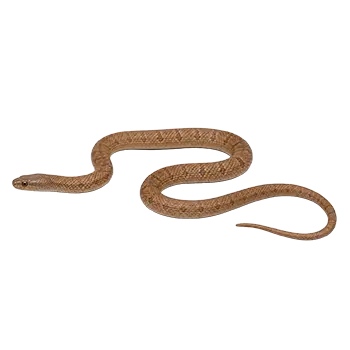
Juvenile Eastern Egg-Eaters retain the vivid dorsal patterning of hatchlings but begin to show the subtle color shifts that will define their adult appearance. The dark saddle-shaped blotches along the dorsum may become slightly less contrasted against the ground color, and the ventral surface transitions from the clean white of neonates to a more mottled or lightly speckled cream. These changes are gradual and cosmetic, carrying no implications for health, but they are useful visual markers that confirm the animal is progressing normally through its developmental timeline.

Behaviorally, juveniles become noticeably more exploratory than neonates. While hatchlings spend the overwhelming majority of their time concealed beneath hides, juveniles will emerge during evening and nighttime hours to investigate their enclosure, climb low branches or cork bark features, and patrol the perimeter. This increased activity is a healthy sign of confidence and should be encouraged through environmental enrichment rather than discouraged by overly spartan enclosure design.

Diet Transitions & Feeding Management

The most consequential husbandry challenge during the juvenile stage is managing the transition from the tiny finch eggs required by hatchlings to the larger quail eggs that will sustain the snake for the remainder of its life. This transition is not simply a matter of offering bigger eggs on an arbitrary timeline; it must be driven by the individual snake's physical development, specifically the growth of its gape — the maximum diameter its jaws can stretch to accommodate a spherical object. Offering an egg that exceeds the snake's current gape capacity results in rejection at best and potentially dangerous oral or esophageal injury at worst.

Button quail eggs serve as the critical intermediate step between finch eggs and standard coturnix quail eggs. At roughly half the diameter of a coturnix egg, button quail eggs are typically accessible to juvenile Eastern Egg-Eaters once they reach approximately fourteen to sixteen inches in length. The transition should be tested by placing a single button quail egg in the enclosure overnight and checking for the characteristic regurgitated shell pellet the following morning. If the egg remains untouched after two consecutive offerings spaced a week apart, the snake's gape has likely not yet developed sufficiently, and finch eggs should be continued.

Once juveniles are reliably consuming button quail eggs, they can eventually be graduated to standard coturnix quail eggs as their body size and gape diameter increase. This second transition typically occurs when the snake reaches eighteen to twenty-two inches in length. Again, the keeper should let the snake's behavior dictate the timeline rather than forcing the issue. Some individuals transition smoothly and will tackle a coturnix egg with obvious enthusiasm, while others require several weeks of overlap during which both button quail and coturnix eggs are offered on alternating feeding days.

Feeding frequency during the juvenile stage should remain at once every five to seven days. Resist the temptation to feed more frequently in an attempt to accelerate growth, as overfeeding places unnecessary strain on the digestive system and can lead to regurgitation. Each successful feeding should produce a visible but not grotesque mid-body bulge that resolves within twenty-four to thirty-six hours as digestion proceeds. A shell pellet should appear within twelve to twenty-four hours of ingestion. Absence of a shell pellet after a confirmed feeding suggests the snake swallowed the egg contents and shell together, which occasionally occurs and is generally harmless but should be noted as it can indicate suboptimal esophageal vertebral function if it becomes a pattern.

Maintaining a dependable egg supply remains the most practically demanding aspect of Dasypeltis husbandry during this stage. Keepers who maintain their own quail flock have a significant advantage, as store-bought quail eggs are often refrigerated and chemically washed, which strips the surface of the organic cues that trigger feeding behavior in the snake. When store-bought eggs must be used, allowing them to warm to room temperature and lightly misting them with water before offering can improve acceptance rates. Some keepers report success rubbing store-bought eggs against the feathers or nesting material of live birds to transfer scent, though this technique is anecdotal and results vary.

Enclosure Upgrades & Habitat Design

As the juvenile Eastern Egg-Eater grows beyond the confines of its neonatal rearing tub, a transition to a larger, more enriched enclosure becomes necessary. The timing of this move is guided by the snake's size relative to its current housing: when the snake's total length exceeds approximately twice the longest dimension of its enclosure, or when the animal is regularly pressed against the walls during nighttime exploration, an upgrade is warranted. For most individuals, this first upgrade occurs between four and six months of age.

A suitable juvenile enclosure measures approximately 24 by 12 by 12 inches, providing adequate floor space for thermoregulation and enough vertical clearance for low climbing structures. Eastern Egg-Eaters are semi-arboreal in the wild, and juveniles in particular will readily utilize cork bark tubes, low branches, and artificial vine structures positioned at various heights within the enclosure. This vertical enrichment serves dual purposes: it provides additional exercise and mental stimulation during the snake's active hours, and it creates elevated hiding spots that many juveniles prefer over ground-level retreats.

The thermal gradient established during the hatchling stage should be maintained with the same target ranges — 82 to 86 degrees Fahrenheit on the warm end and 72 to 76 degrees on the cool end — though the larger enclosure volume may require a slight increase in heating element wattage to maintain these temperatures consistently. A thermostat connected to the primary heat source is essential, not optional, as temperature spikes above 90 degrees can cause acute heat stress in this species. Digital thermometers with probes placed at substrate level on both ends of the enclosure provide the most accurate monitoring.

Substrate can now be transitioned from the paper towels or newspaper used during the hatchling phase to a more naturalistic option that supports the species' burrowing and sheltering instincts. Coconut fiber, aspen shavings, or a blend of the two at a depth of one to two inches provides a good balance of humidity retention, burrowing opportunity, and ease of spot-cleaning. Avoid substrates with small, loose particles such as sand or fine vermiculite, which can be inadvertently ingested and cause intestinal impaction. A layer of dried leaf litter scattered over the primary substrate adds additional cover and creates a more complex microhabitat that the snake will actively utilize.

Hydration infrastructure should be scaled up along with the enclosure. Replace the hatchling's shallow water dish with a slightly larger, heavier ceramic dish that is resistant to tipping. The water level should be deep enough for the snake to submerge its entire body if desired, as juvenile Eastern Egg-Eaters will soak periodically, especially in the days leading up to a shed cycle. Maintain daily water changes and position the dish on the cool end of the enclosure to minimize evaporation rates and prevent the warm end from becoming excessively humid.

Behavioral Development & Enrichment

The juvenile period is when the Eastern Egg-Eater's characteristic behavioral repertoire fully emerges and stabilizes. The dramatic defensive bluffing inherited from neonates — head flattening, body coiling, scale rasping, and mock striking with a closed mouth — gradually diminishes in frequency and intensity as the snake becomes habituated to captive routines and regular handling. By the midpoint of the juvenile stage, most well-socialized individuals will exhibit these displays only when startled by sudden movements or unfamiliar stimuli, reserving them as a last-resort response rather than a default reaction.

Foraging behavior becomes increasingly sophisticated during this stage. In the wild, juvenile Dasypeltis locate bird nests through a combination of chemoreception and visual cues, climbing into shrubs and low trees to access eggs. Captive juveniles can be observed exhibiting these same instincts within their enclosures, systematically tongue-flicking along branches and elevated surfaces during their active hours. Keepers can encourage this natural behavior by occasionally placing eggs in elevated positions within the enclosure — nestled in a fork of a branch or tucked inside a cork bark tube mounted off the ground — rather than always presenting them at substrate level.

Activity patterns in juvenile Eastern Egg-Eaters follow a distinctly crepuscular to nocturnal schedule. The snake will typically begin emerging from its hide in the late afternoon or early evening, becoming most active during the hours immediately following dusk. This activity cycle should be supported with an appropriate photoperiod of approximately twelve hours of light and twelve hours of darkness, adjusted seasonally if the keeper intends to cycle the animal for future breeding. Bright overhead lighting is unnecessary and can be counterproductive, as Dasypeltis are shade-adapted and may become stressed under intense illumination. Ambient room lighting or a low-wattage LED strip on a timer provides sufficient visual cues for circadian regulation.

Environmental enrichment beyond climbing structures can include novel scent introductions such as clean leaves or bark from non-toxic outdoor plants, periodic rearrangement of enclosure furnishings to create new exploration opportunities, and the provision of multiple hide options that differ in material, darkness level, and microclimate. These enrichment strategies are not frivolous extras; they promote natural behavioral expression, reduce the monotony-related stress that manifests as repetitive glass-surfing or persistent hiding, and contribute to the overall psychological wellbeing of the animal.

Growth Monitoring & Physical Development

Systematic growth monitoring is particularly important during the juvenile stage because this is the period of most rapid proportional change in the Eastern Egg-Eater's life. Regular measurements of both weight and length provide objective data that reveals trends invisible to the casual observer. Weigh the snake weekly on a digital gram scale accurate to at least one-tenth of a gram, and measure snout-to-vent length monthly using a soft fabric measuring tape or by guiding the snake along a ruler while it moves naturally. Recording these measurements in a simple log or spreadsheet allows the keeper to identify growth stalls, weight loss, or disproportionate growth ratios that may signal underlying health or husbandry issues.

Healthy juvenile Eastern Egg-Eaters gain weight steadily between sheds and may show a temporary plateau or slight dip during the pre-shed fasting period. A juvenile that fails to gain weight over a span of three or more weeks outside of a shed cycle should be evaluated for feeding refusal, parasitic infection, or environmental stressors. Similarly, rapid weight gain accompanied by visible fat deposits along the spine or behind the head suggests overfeeding, which stresses the liver and kidneys and can shorten the animal's overall lifespan.

Shedding frequency increases during the juvenile growth phase, with healthy individuals shedding every four to six weeks as their bodies expand. Each shed should be complete — a single, unbroken tube of skin inverted neatly from head to tail. Retained sheds, particularly retained eye caps or tail tip skin, indicate inadequate humidity and must be addressed immediately. Retained eye caps can be gently removed with a damp cotton swab after a brief soak in shallow, lukewarm water, but if resistance is encountered, veterinary assistance is preferable to risking damage to the spectacle or underlying cornea.

By the end of the juvenile stage, the Eastern Egg-Eater will have developed its adult body proportions: a slender, slightly laterally compressed body with a distinctly narrow head and large, prominent eyes adapted for low-light foraging. The keeled dorsal scales that give the species its characteristic rough texture will be fully developed, and the ventral scales will have broadened proportionally to support the snake's increasing body mass. These physical hallmarks indicate that the animal is approaching or has reached sexual maturity and is transitioning into the adult phase of its life.

Health Concerns & Veterinary Oversight

Juvenile Eastern Egg-Eaters face a suite of health risks that differ in emphasis from those affecting neonates. While feeding failure remains a concern, the risk decreases substantially once a juvenile is established on a reliable egg size and feeding schedule. The health issues that move to the foreground during this stage are parasitic infections, respiratory illness related to suboptimal environmental conditions, and dermatological problems associated with substrate or humidity mismanagement.

Internal parasites, particularly flagellate protozoans and nematodes, are the most common health issue encountered in juvenile Dasypeltis, especially in animals descended from recently imported wild-caught stock. Symptoms include weight loss despite consistent feeding, loose or unusually foul-smelling feces, lethargy, and regurgitation. A fecal examination performed by a reptile veterinarian can identify the specific parasite involved and guide appropriate treatment, which typically involves oral antiparasitic medications administered at doses calculated for the snake's precise body weight. Routine fecal screening every six months during the juvenile stage is a worthwhile preventive measure even in asymptomatic animals.

Respiratory infections in juvenile Eastern Egg-Eaters are almost always iatrogenic — caused by keeper error rather than spontaneous pathogen exposure. The most common precipitating factors are ambient temperatures chronically below the recommended range, which suppresses immune function; excessive humidity combined with stagnant air, which creates a breeding ground for bacterial and fungal pathogens; and dirty substrate or water that serves as a reservoir for opportunistic organisms. Maintaining proper environmental parameters eliminates the vast majority of respiratory risk. When respiratory symptoms do appear — audible breathing, nasal discharge, open-mouth respiration, or bubbles visible at the nares — prompt veterinary intervention with culture-guided antibiotic therapy is critical, as untreated respiratory infections progress rapidly in this species.

Scale rot, also known as ventral dermatitis or necrotic dermatitis, is a bacterial skin infection that develops when the snake's ventral surface is in prolonged contact with wet, contaminated substrate. It presents as discolored, reddened, or blistered scales along the belly, and in advanced cases the affected scales may lift away to reveal raw, ulcerated tissue beneath. Prevention is straightforward: maintain a clean, appropriately dry substrate with prompt removal of feces and urates, ensure proper ventilation, and avoid allowing the water dish to overflow or condensation to pool on the enclosure floor. Early-stage scale rot responds well to topical antiseptic treatment and environmental correction, but advanced cases require systemic antibiotics and potentially long-term wound management under veterinary supervision.

Scheduling a comprehensive veterinary checkup at the midpoint and end of the juvenile stage provides valuable baseline health data and catches subclinical issues before they become overt problems. A veterinarian experienced with colubrid species can assess body condition, perform oral examination to ensure the esophageal vertebral projections are developing normally, screen for parasites, and discuss any husbandry adjustments that may benefit the animal as it enters adulthood.

Always consult a qualified professional before making any health-related decisions. This content is provided for informational reference only and should not replace professional guidance specific to your animal.