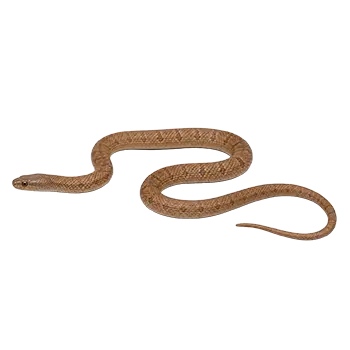

The Eastern Egg-Eater (Dasypeltis scabra) reaches full physical maturity between two and three years of age, entering a sustained prime that typically lasts through year eight or nine of its ten-to-fifteen-year captive lifespan. Adult males generally measure twenty-four to thirty inches in total length, while females tend to be somewhat larger, frequently reaching thirty to thirty-six inches. Body mass in healthy adults ranges from approximately sixty to one hundred twenty grams depending on sex and individual variation. At maturity the growth rate slows dramatically compared to the juvenile phase, and the keeper's focus shifts from supporting rapid development to maintaining stable body condition and long-term organ health.
Adult Dasypeltis scabra exhibit a settled, predictable temperament that makes them one of the most agreeable snake species in captivity. The dramatic bluffing displays common in younger animals become increasingly rare, reserved only for genuinely novel or startling stimuli. Most well-socialized adults can be lifted from their enclosures with no defensive response whatsoever, moving calmly through the keeper's hands with the slow, deliberate locomotion characteristic of the genus. This tractability, combined with their modest size and complete absence of dangerous dentition, makes the adult Eastern Egg-Eater an excellent candidate for educational programs and public interaction where permitted by local regulations.
The species' obligate egg-eating ecology sets it apart from virtually every other snake commonly kept in captivity and defines the central management challenge of the adult stage. Unlike species that can subsist on commercially available frozen rodents, adult Eastern Egg-Eaters require a steady supply of appropriately sized bird eggs, most commonly coturnix quail eggs. Keepers who have not established a reliable egg source by the time their animal reaches adulthood will face recurring logistical difficulties that can directly impact the snake's health and welfare.
Adult Eastern Egg-Eaters are primarily crepuscular to nocturnal, with peak activity occurring in the two to three hours following dusk. During daylight hours the snake will remain tightly concealed within its preferred hide, emerging only if significantly disturbed. This activity pattern should be accommodated through appropriate photoperiod management and by scheduling routine husbandry tasks — feeding, spot-cleaning, water changes — during the snake's inactive period whenever possible to minimize disruption.