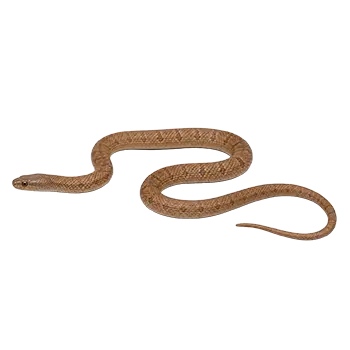

Terminal decline in the Eastern Egg-Eater (Dasypeltis scabra) is distinguished from normal senior aging by its pace, severity, and resistance to husbandry intervention. Where healthy aging produces gradual, manageable changes over months and years, terminal decline is characterized by accelerating deterioration across multiple body systems within weeks to a few months. Recognizing this transition requires the keeper to honestly assess whether observed changes represent a continuation of the slow arc of aging or a qualitative shift into irreversible organ failure and systemic collapse.
The most reliable early indicator of terminal decline is sustained, involuntary weight loss that does not respond to dietary adjustments. A senior Eastern Egg-Eater that has been maintaining stable body weight on a reduced feeding schedule and then begins losing weight progressively despite consistent egg availability and appropriate environmental conditions is likely experiencing organ dysfunction — most commonly hepatic or renal failure — that impairs nutrient absorption and metabolic efficiency. This weight loss typically accelerates over time, and the snake develops a visibly wasted appearance with a prominent vertebral ridge, sunken flanks, and a distinctly angular head shape as the temporal muscles atrophy.
Feeding cessation that extends well beyond any seasonal or cyclical pattern is another hallmark of terminal decline. An Eastern Egg-Eater that refuses food for eight or more consecutive weeks outside of a brumation period, and that does not resume feeding after environmental optimization including temperature adjustments, egg freshness verification, and stress reduction, has likely lost the physiological capacity or neurological drive to feed. In Dasypeltis, where the feeding mechanism depends on the coordinated function of the jaw musculature, cervical vertebrae, and esophageal structures, failure at any point in this chain can render the animal unable to process food even if the desire to eat persists.
Other signs that collectively indicate terminal decline include chronic respiratory abnormalities that do not resolve with antibiotic treatment, persistent abnormal posturing such as sustained stargazing or listing to one side, loss of muscle tone to the point where the snake cannot right itself if placed on its back, chronic retained sheds involving large portions of the body, and generalized edema visible as fluid-filled swelling beneath the scales. Any one of these signs in isolation warrants veterinary evaluation; the convergence of multiple signs is a strong indicator that the animal has entered the final phase of its life.