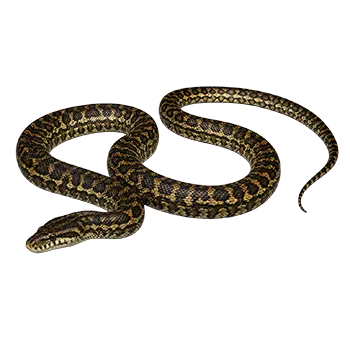

Sexual Maturity & Breeding Readiness

Coastal Carpet Pythons (Morelia spilota mcdowelli) reach sexual maturity at different rates depending on sex, growth rate, and overall body condition. Males typically become reproductively capable between two and three years of age, at a minimum length of approximately four and a half to five feet. Females generally require an additional year or more, reaching breeding readiness between three and four years of age at a minimum length of five and a half to six feet. These timelines are guidelines rather than rigid thresholds, as sexual maturity in pythons is driven primarily by body mass and condition rather than chronological age alone.

Determining whether an individual is ready to breed involves more than simply confirming that it has reached the minimum size. Both prospective breeding animals should be in robust body condition — well-muscled, well-hydrated, and carrying moderate fat reserves without being obese. A female that is underweight or has recently recovered from illness is a poor candidate for breeding, as the physiological demands of follicle development, ovulation, and egg production represent an enormous metabolic investment that can be catastrophic for an animal without adequate energy reserves. Similarly, a male in poor condition may produce low-quality sperm or lack the stamina to perform the sustained courtship behaviors necessary for successful mating.

Definitive sexing of prospective breeders should be confirmed by an experienced handler or veterinarian through probing, which involves inserting a lubricated stainless steel probe into the cloaca to measure the depth of the hemipenal pockets. Males probe deeply, typically to a depth of eight to twelve subcaudal scales, while females probe shallowly, usually no more than two to four subcaudal scales. This procedure is safe and minimally invasive when performed correctly, but improper technique can cause cloacal injury, so it should not be attempted by inexperienced individuals. Visual sexing based on tail thickness and spur size is unreliable for definitive determination and should be treated as suggestive at best.

Breeders should also consider the genetic background of both animals before pairing. Responsible breeding of Coastal Carpet Pythons involves pairing animals of known locality or lineage to maintain the genetic integrity of captive populations. Indiscriminate crossing of different Morelia spilota subspecies — such as pairing a Coastal Carpet Python with a Jungle Carpet Python or an Inland Carpet Python — produces hybrid offspring that, while sometimes visually appealing, dilute the distinct phenotypic and behavioral characteristics that define each subspecies and reduce the conservation value of the captive gene pool.

Pre-Breeding Conditioning & Brumation

Successful breeding of Coastal Carpet Pythons in captivity almost always requires a period of seasonal cooling, often referred to as brumation, that mimics the natural temperature drop experienced by wild populations during the Australian autumn and winter months. This cooling period triggers hormonal cascades in both sexes that prime the reproductive system for mating — spermatogenesis in males and follicular development in females. Attempting to breed carpet pythons without a cooling period can result in failed pairings, infertile clutches, or complete reproductive inactivity.

Pre-conditioning begins several weeks before the cooling period commences. Both the male and female should be offered one or two additional meals above their normal maintenance schedule during the late summer months to build the fat reserves they will draw upon during the fasting period that accompanies brumation. The last meal should be offered approximately two weeks before temperatures begin to drop, allowing ample time for complete digestion. Initiating a cooling period with undigested food in the gastrointestinal tract creates a serious risk of putrefaction and bacterial sepsis, as the snake's digestive enzymes function inefficiently at the reduced temperatures of brumation.

The cooling protocol for Coastal Carpet Pythons typically involves gradually reducing nighttime temperatures over a period of two to three weeks, beginning in late autumn. Nighttime lows should be brought down to 65 to 70 degrees Fahrenheit, while daytime temperatures can be maintained at 78 to 82 degrees to allow the animals a brief daily warming period. The photoperiod should be reduced concurrently, from the standard twelve hours of light to approximately eight to ten hours, simulating the shorter days of the austral winter. This cooling and shortened photoperiod should be maintained for six to eight weeks before temperatures are gradually returned to normal over another two-to-three-week transition period.

During brumation, both animals should have continuous access to fresh water but will typically refuse food voluntarily. Occasional water dish use and minimal locomotion are normal during this period. Keepers should check on brumating animals regularly to verify that temperatures are within the target range, that water is clean and available, and that no signs of respiratory illness have developed, as the reduced temperatures of brumation can predispose animals with subclinical infections to overt respiratory disease. Any animal that develops audible respiratory sounds, nasal discharge, or open-mouth breathing during brumation should be gradually returned to normal temperatures and evaluated by a veterinarian before the cooling protocol is resumed.

Courtship, Mating & Copulation

Introductions between male and female Coastal Carpet Pythons should begin shortly after both animals have been returned to normal maintenance temperatures following the brumation period and have accepted at least one post-brumation meal. The male is typically introduced into the female's enclosure rather than the reverse, as the female's established scent profile and territorial familiarity may stimulate more immediate courtship behavior from the male. Some breeders mist the enclosure lightly with warm water just before introduction, which can heighten olfactory sensitivity and stimulate activity in both animals.

Courtship behavior in Coastal Carpet Pythons involves a recognizable sequence of actions initiated by the male. Upon detecting the female's pheromone trail, the male will begin actively tracking her through the enclosure with rapid tongue flicking and increased locomotion. Once alongside the female, the male aligns his body parallel to hers and begins rhythmic spasmodic movements along his posterior body, using his cloacal spurs to scratch and stimulate the female's cloacal region. These spur-scratching movements serve both a tactile stimulatory function and a chemical signaling function, as the spurs are associated with scent-producing glands. A receptive female will remain relatively still and may lift her tail to facilitate cloacal alignment.

Copulation occurs when the male successfully everts one of his paired hemipenes and achieves cloacal intromission. The mating event itself can last from several hours to over twenty-four hours, during which the pair will remain loosely intertwined and relatively inactive. Keepers should not disturb the pair during copulation except in the event of a genuine emergency, as interruption can cause the hemipenis to be damaged during withdrawal and can disrupt the sperm transfer necessary for fertile egg production. Multiple copulations over a period of two to four weeks increase the likelihood of successful fertilization, and many breeders introduce the male to the female several times during this window, removing him between sessions to maintain novelty and stimulate renewed courtship behavior.

Not every pairing results in successful mating. If the female is unreceptive, she may flee from the male, coil defensively, or actively rebuff his advances by pressing her tail flat against the substrate to prevent cloacal access. Persistent aggression from either party — striking, biting, or sustained constriction — requires immediate separation to prevent injury. Some pairs that fail to copulate during initial introductions may succeed when re-paired after a brief separation of several days to a week. Environmental factors such as barometric pressure drops, evening introductions that coincide with the species' natural activity period, and the introduction of a second male's shed skin as a competitive pheromone stimulus have all been reported by experienced breeders to improve mating success in reluctant pairs.

Egg Laying, Incubation & Clutch Management

Following successful mating, the gravid female Coastal Carpet Python enters a gestation period of approximately sixty to ninety days before oviposition. During this period, the developing follicles are visible as a pronounced swelling in the posterior third of the body that increases in size as the eggs mature. Gravid females frequently adopt a characteristic inverted basking posture, resting with their ventral surface turned toward the heat source to maximize thermal exposure to the developing eggs. This behavioral change is a reliable indicator of advanced follicular development and signals that oviposition is approaching.

A suitable egg-laying site must be provided well before the anticipated oviposition date. A large, enclosed nesting box filled with dampened sphagnum moss or vermiculite offers the warm, humid, and enclosed environment that the female instinctively seeks for egg deposition. The nesting box should be positioned in the warm zone of the enclosure and should be large enough for the female to fully coil inside with room to maneuver. Many females will investigate several potential nesting sites before selecting one, and offering two options in different locations within the enclosure can increase the likelihood that the female deposits her clutch inside the box rather than on the open substrate.

Coastal Carpet Python clutches typically number between twelve and thirty eggs, with experienced, well-conditioned females at the upper end of this range. The female will coil tightly around the freshly deposited clutch and may exhibit maternal brooding behavior, a characteristic of many python species in which the mother uses rhythmic muscular contractions, known as shivering thermogenesis, to generate metabolic heat that raises the temperature of the egg mass above ambient levels. While fascinating from a biological perspective, maternal incubation in captivity is generally less reliable than artificial incubation because the female cannot precisely regulate temperature and humidity to the narrow tolerances that maximize hatching success.

Artificial incubation is the standard approach for captive-bred Coastal Carpet Python eggs. The eggs should be carefully removed from the female — who may resist by tightening her coils and striking defensively — and placed in an incubation container partially filled with a moistened substrate such as vermiculite, perlite, or a proprietary reptile incubation medium mixed with water at a ratio of approximately one part water to one part substrate by weight. The eggs should be positioned in the same orientation in which they were laid, as rotating python eggs after the first twenty-four hours can detach the embryo from the inner shell membrane and cause developmental failure. Incubation temperature should be maintained at a steady 88 to 90 degrees Fahrenheit using a dedicated reptile egg incubator with proportional thermostat control. At this temperature range, the incubation period is typically fifty-five to sixty-five days.

Throughout incubation, the eggs should be inspected regularly for signs of mold, collapse, or discoloration. Healthy fertile eggs are turgid, white to off-white, and may develop a slightly translucent window through which embryonic vasculature becomes faintly visible when candled with a small flashlight after the first few weeks. Eggs that become yellow, green, or emit a foul odor are no longer viable and should be removed promptly to prevent contamination of adjacent healthy eggs. Humidity within the incubation container should remain high — condensation visible on the container walls indicates adequate moisture — but the eggs themselves should never sit in standing water, which promotes fungal growth and can suffocate the developing embryo.

Post-Breeding Recovery & Reproductive Health

The physical toll of reproduction on a female Coastal Carpet Python is substantial, and post-breeding recovery must be managed with the same attentiveness given to the breeding event itself. A female that has just deposited a clutch of twenty or more eggs may have lost thirty to forty percent of her pre-breeding body weight, and she will appear visibly emaciated, with prominent vertebral and rib outlines and a dramatically reduced midsection. This degree of weight loss, while alarming in appearance, is a normal consequence of the massive energy investment required for egg production and does not by itself indicate a health crisis.

Refeeding the post-partum female should begin within one to two weeks of oviposition, starting with small prey items offered at short intervals rather than a single large meal. An appropriately sized small rat offered every five to seven days for the first month allows the digestive system to resume function gradually without overwhelming it with a prey bolus that the depleted animal may struggle to process. Regurgitation during the post-breeding recovery period is particularly dangerous because the female's metabolic reserves are already at their lowest point, and the loss of a partially digested meal compounds the nutritional deficit at a time when the animal can least afford it.

Hydration is the most immediate post-breeding concern. A gravid female that has not eaten for several weeks and has invested significant fluid volume into egg production is invariably dehydrated to some degree. A fresh, clean water dish large enough for full-body soaking should be provided immediately after the eggs are removed, and most females will drink heavily and soak for extended periods within the first twenty-four to forty-eight hours. If the female does not voluntarily drink within the first day, lightly misting her body with lukewarm water can stimulate lapping behavior. In cases of severe dehydration — indicated by tenting of the skin, sunken eyes, or extreme lethargy — subcutaneous fluid administration by a veterinarian may be necessary to stabilize the animal.

Female Coastal Carpet Pythons should not be bred in consecutive years without careful consideration of their body condition and recovery trajectory. The standard recommendation among experienced breeders is to allow a full recovery year between breeding seasons, during which the female rebuilds her fat reserves, muscle mass, and overall condition to a level that can safely support another reproductive cycle. Breeding a female that has not fully recovered from her previous clutch significantly increases the risk of egg binding, follicular stasis, and reproductive tract infections, all of which can be life-threatening. Males recover from the breeding season far more quickly, as their physiological investment in reproduction is comparatively modest, and can typically be used for breeding annually without adverse health effects provided they maintain good body condition.

Always consult a qualified professional before making any health-related decisions. This content is provided for informational reference only and should not replace professional guidance specific to your animal.