
Physical Maturity & Adult Characteristics

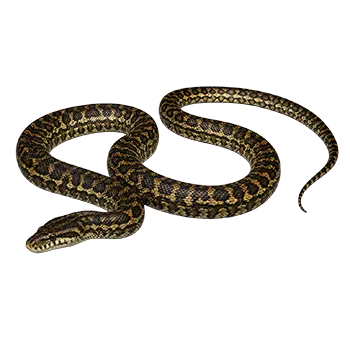
Coastal Carpet Pythons (Morelia spilota mcdowelli) reach physical maturity between three and five years of age, though the precise timeline varies depending on sex, genetics, and the quality of husbandry provided during the growth phase. Males typically attain their full adult length of six to seven feet somewhat earlier than females, which continue adding length and girth into their fourth or fifth year before stabilizing at seven to nine feet. Exceptional females from robust genetic lines occasionally exceed nine feet, though lengths beyond that are uncommon outside of animals with mixed locality ancestry.

The adult coloration of the Coastal Carpet Python is often strikingly different from the sharp, high-contrast banding displayed during the hatchling and juvenile stages. By the time the animal reaches full maturity, the dorsal pattern has broadened and softened, with the dark saddles blending into more diffuse markings set against a ground color that may range from pale gold or straw to deep olive, tan, or even rich caramel depending on individual genetics and locality. The ventral surface is typically cream to pale yellow and remains relatively unmarked throughout life. This ontogenetic color change is one of the defining aesthetic features of the subspecies and continues to refine subtly over the first several years of adulthood.

Sexual dimorphism in adult Coastal Carpet Pythons is moderate but discernible to an experienced eye. Beyond the size difference, males tend to have proportionally longer tails relative to body length and possess larger cloacal spurs — vestigial pelvic appendages visible as small, claw-like projections on either side of the vent. Females generally carry more body mass at equivalent lengths, with broader midsections and wider heads relative to neck diameter. Definitive sexing is best accomplished through probing or popping performed by an experienced handler or veterinarian, as visual assessment alone is unreliable in many individuals.

Once growth has stabilized, the adult animal's shedding frequency decreases markedly from the every-four-to-six-week cycle of the juvenile period to roughly every eight to twelve weeks, or approximately four to six times per year. This reduced shedding frequency reflects the cessation of rapid skeletal and muscular growth and is entirely normal. Shed quality remains an important health indicator throughout adulthood — clean, complete sheds confirm that humidity, hydration, and overall health are well-maintained, while retained or fragmented sheds signal environmental or health issues that require attention.

Long-Term Enclosure Design

An adult Coastal Carpet Python requires a permanent enclosure that accommodates the species' semi-arboreal nature, its considerable body length, and its need for a well-defined thermal gradient. The minimum recommended enclosure dimensions for a single adult are 48 by 24 by 36 inches, with taller enclosures of 48 inches or more in height being preferable because Coastal Carpet Pythons will spend a significant portion of their time off the ground. Custom-built PVC or melamine enclosures with front-opening doors offer the best combination of thermal insulation, humidity retention, security, and ease of access for routine husbandry tasks.

The interior layout of an adult enclosure should incorporate multiple levels of horizontal perching at varying heights, securely anchored to prevent shifting under the weight of a six-to-nine-foot snake. Cork bark flats, hardwood branches with a diameter at least equal to the snake's body, and fixed shelving platforms all serve as effective climbing and resting surfaces. A minimum of two enclosed hides — one positioned in the warm zone and one in the cool zone — should be provided at ground level to allow the animal to thermoregulate while feeling concealed. Many keepers also install a third hide at an elevated position, which is often the preferred resting location for this species during daylight hours.

Thermal management in an adult enclosure follows the same gradient principles established during earlier life stages but requires more powerful heating equipment to maintain appropriate temperatures across a larger volume of air and substrate. The basking zone should reach 88 to 90 degrees Fahrenheit, measured at the surface of the primary basking perch rather than at the ceiling where the heat source is mounted. The cool end should rest between 75 and 78 degrees. All heating elements must be controlled by a proportional thermostat to prevent temperature spikes, and temperature should be verified with a digital thermometer or infrared temperature gun rather than relying on the thermostat's internal sensor alone, which may not accurately reflect conditions at the animal's resting position.

Lighting in the adult enclosure should provide a consistent photoperiod of twelve hours of light and twelve hours of darkness, adjusted seasonally if the keeper intends to cycle the animal for breeding. While Coastal Carpet Pythons are primarily crepuscular and nocturnal in their activity patterns, exposure to ambient light during the day supports circadian rhythm regulation and may contribute to overall behavioral health. Low-wattage LED lighting that does not produce significant heat is sufficient for this purpose. UVB supplementation remains a subject of ongoing discussion within the reptile-keeping community; while not strictly necessary for a species that does not synthesize vitamin D through cutaneous pathways, some evidence suggests that low-level UVB exposure may support immune function and metabolic efficiency in captive pythons.

Feeding & Weight Management

Nutritional management of an adult Coastal Carpet Python shifts from fueling growth to maintaining optimal body condition over the long term. Once growth has stabilized, feeding frequency should be reduced to once every fourteen to twenty-one days, with each meal consisting of a single appropriately sized rat — typically a medium to large adult rat for females, and a small to medium adult rat for the smaller males. This schedule provides adequate caloric and nutritional intake without the excess energy that leads to obesity, which is the single most common and most preventable health problem in captive adult pythons of all species.

Body condition scoring provides an objective framework for assessing whether an adult Coastal Carpet Python is being fed appropriately. A snake in ideal condition displays a gently rounded dorsal profile without a visible spine ridge, a body cross-section that is roughly triangular with the flat ventral surface forming the base, and no obvious fat deposits along the lower lateral body walls. An underweight animal shows a prominent dorsal spine, visible rib outlines, and a concave lateral profile. An overweight animal has a rounded, tube-like cross-section, visible fat pads along the lower flanks near the vent, and may display scale spreading along the midsection where subcutaneous fat forces the scales apart.

Seasonal appetite fluctuation is entirely normal in adult Coastal Carpet Pythons and should be anticipated rather than treated as a cause for concern. Many individuals voluntarily reduce their food intake or fast entirely during the cooler months of the year, typically from late autumn through early spring if the animal is being maintained on a seasonal temperature cycle. This natural appetite suppression mirrors the species' wild behavior, where reduced winter temperatures and shorter day lengths trigger a metabolic slowdown. Keepers should continue offering food at regular intervals during this period but should not force-feed or otherwise attempt to override the animal's voluntary fast, provided the animal maintains a healthy body condition and shows no signs of illness.

Water availability remains critical for adult animals and should never be treated as an afterthought. A heavy, tip-resistant water dish large enough for the snake to submerge at least half its body should be provided at all times. Many adult Coastal Carpet Pythons soak regularly, particularly during pre-shed periods and during the warmer months when evaporative water loss from respiration increases. The water should be changed every one to two days under normal conditions and immediately if soiled. Dehydration in adult carpet pythons manifests more subtly than in juveniles — chronic low-grade dehydration may present as poor shed quality, reduced skin elasticity, and concentrated urate output without other obvious clinical signs.

Behavioral Patterns & Environmental Enrichment

Adult Coastal Carpet Pythons exhibit a range of species-typical behaviors that keepers should understand and accommodate to ensure psychological well-being in captivity. The species is primarily crepuscular and nocturnal, meaning that the majority of voluntary activity — including hunting behavior, exploration, and locomotion — occurs during the twilight hours and after dark. During the day, healthy adults typically rest in a securely concealed position, often draped along a branch or coiled within an elevated hide. This resting behavior should not be mistaken for lethargy; a snake that consistently remains in its hide during daylight hours and becomes active around dusk is displaying entirely normal behavior for the species.

Arboreal activity is a defining behavioral trait of Coastal Carpet Pythons and represents one of the most important areas of environmental enrichment for captive individuals. In the wild, this subspecies routinely ascends into the canopy of rainforest margins, open woodlands, and suburban vegetation to hunt, thermoregulate, and rest. Captive enclosures that deny access to vertical space deprive the animal of a fundamental behavioral outlet and can contribute to chronic stress, obesity from reduced activity, and abnormal behaviors such as persistent glass-surfing or nose-rubbing against enclosure walls. Providing a complex three-dimensional environment with multiple climbing routes, resting platforms at different heights, and varying perch diameters encourages natural locomotor behavior and maintains muscle tone.

Novel stimuli can be introduced periodically to encourage exploratory behavior and provide cognitive engagement. Rearranging branches, introducing new hide structures, or adding sensory items such as smooth river stones or cork bark pieces gives the animal new scent trails to investigate and new surfaces to explore. This environmental rotation should be done thoughtfully — wholesale enclosure redesigns are unnecessarily stressful, but minor changes every few weeks promote active investigation without triggering a prolonged defensive hiding response. Some keepers also provide supervised out-of-enclosure exploration time in a snake-proofed room, which offers significant enrichment value but requires careful attention to escape routes, thermal safety, and the presence of other pets or household hazards.

Feeding behavior in adult Coastal Carpet Pythons can itself serve as a form of enrichment when managed thoughtfully. Rather than simply placing a thawed prey item on the enclosure floor, presenting the item with tongs and allowing the snake to strike, constrict, and orient the prey for ingestion engages the full sequence of predatory behaviors that the species has evolved to perform. This approach adds behavioral complexity to an otherwise passive captive existence and keeps the snake's predatory reflexes sharp, which has both behavioral and physiological benefits. Feeding should always be conducted with the keeper positioned safely outside the enclosure to prevent accidental redirection of the strike response toward the handler's hand.

Routine Health Maintenance & Veterinary Care

Preventive health care for adult Coastal Carpet Pythons centers on regular observation, consistent husbandry, and periodic veterinary evaluation. An annual wellness examination with a reptile-experienced veterinarian should include a thorough physical assessment, body condition scoring, fecal parasite screening, and a discussion of any behavioral or husbandry changes observed over the preceding year. This visit provides an opportunity to detect subclinical health issues before they progress to overt disease and to adjust husbandry recommendations as the animal ages.

Oral health should be monitored through periodic visual inspection of the oral cavity during routine handling. Infectious stomatitis, commonly referred to as mouth rot, is a bacterial infection of the gingival and labial tissues that presents as reddening, swelling, caseous exudate along the gum line, and in advanced cases, erosion of the labial scales and underlying bone. The condition is often secondary to immunosuppression caused by suboptimal temperatures, chronic stress, or traumatic oral injuries sustained during feeding. Early-stage stomatitis responds well to topical antiseptic treatment combined with correction of the underlying environmental cause, but advanced cases require systemic antibiotic therapy and may result in permanent disfigurement of the oral tissues.

External parasites remain a concern throughout adulthood, particularly for animals housed in collections with multiple species or for those that are regularly exhibited at shows or educational events where cross-contamination can occur. Regular inspection of the periocular region, labial pits, gular fold, and cloacal area for the presence of snake mites should be performed during every handling session. An established mite infestation in an adult enclosure is significantly more difficult and time-consuming to eradicate than one caught in its earliest stages, making vigilant monitoring the most effective form of prevention.

Internal parasite screening through annual fecal examination is particularly important for animals that were wild-caught or that were originally sourced from collections with uncertain parasite management histories. Even long-term captive-bred animals can harbor low-level parasitic infections that remain subclinical for years before manifesting as weight loss, appetite suppression, or chronic regurgitation during periods of physiological stress. The most commonly encountered internal parasites in captive carpet pythons include flagellate protozoans, ascarid nematodes, and oxyurid pinworms, all of which are treatable with appropriate antiparasitic medications prescribed by a veterinarian.

Record-keeping remains as important during adulthood as it was during the growth phase. A comprehensive log of feeding dates, prey sizes, shed dates and quality, weight measurements, behavioral observations, and veterinary visits creates a detailed longitudinal health record that allows both the keeper and veterinarian to identify trends and anomalies over time. An adult Coastal Carpet Python that has been consistently well-documented throughout its life provides a wealth of individual-specific data that is far more valuable for clinical decision-making than population-level generalizations drawn from species care sheets.

Always consult a qualified professional before making any health-related decisions. This content is provided for informational reference only and should not replace professional guidance specific to your animal.