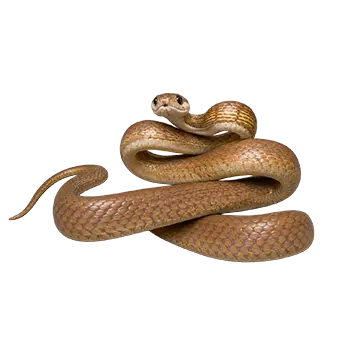

Growth Rates & Physical Development

The juvenile stage of the Cat-Eyed Snake (Leptodeira septentrionalis) spans roughly from four months of age through the onset of sexual maturity, which typically occurs between eighteen and twenty-four months depending on feeding regimen, environmental conditions, and individual genetics. During this period, the snake undergoes its most dramatic physical transformation, growing from the slender, delicate proportions of a hatchling into the more robust, muscular build characteristic of a sub-adult. A well-maintained juvenile that entered this stage at roughly ten inches can be expected to reach sixteen to twenty-two inches by the time it transitions into adulthood, with the rate of growth most rapid during the first half of the juvenile period and gradually decelerating as the snake approaches its mature dimensions.

Physical changes during the juvenile phase extend well beyond simple length increases. The head broadens noticeably, accentuating the distinctive cat-like eye profile that gives the species its common name. The vertically elliptical pupils become more prominent as the head widens, and the large, protruding eyes develop the full range of nocturnal acuity that the species relies on for hunting in low-light conditions. The dorsal saddle pattern intensifies in contrast, transitioning from the somewhat washed-out hues of the neonate to the bold dark brown or black bands set against a vivid tan, cream, or golden-yellow background that characterizes a healthy, well-nourished juvenile.

Weight gain should be monitored regularly using a precision gram scale capable of measuring in tenths of a gram. A healthy juvenile Cat-Eyed Snake gains weight steadily between sheds, with no prolonged plateaus or unexplained losses. The body should feel firmly muscled when gently palpated, with no soft, spongy areas that might suggest subcutaneous fluid retention or parasitic cysts. The vertebral column should not be prominently visible along the dorsal midline — a snake whose spine is easily traced by sight is underweight and requires a reassessment of feeding frequency, prey size, or overall husbandry conditions.

Shed frequency increases during the juvenile phase compared to adulthood, occurring approximately every three to five weeks as the rapidly growing integument is replaced. Each shed cycle follows a predictable pattern: a brief period of appetite suppression, followed by opacity in the spectacle scales covering the eyes, a clearing phase in which the eyes return to normal appearance, and then the actual shedding event one to three days later. Complete sheds in a single piece remain the goal, and any instance of incomplete or fragmented shedding should prompt an immediate review of enclosure humidity levels.

Diet Expansion & Feeding Strategy

As juvenile Cat-Eyed Snakes grow, their dietary options expand in both prey size and species variety, though the fundamental preference for amphibians and small reptiles persists. Juveniles that were started on small tree frogs or tiny geckos as hatchlings can now transition to larger frog species, small anoles, and appropriately sized house geckos. This dietary breadth reflects the species' opportunistic feeding strategy in the wild, where Cat-Eyed Snakes are generalist predators within the amphibian and small reptile niche, consuming whatever suitably sized prey they encounter during their nocturnal foraging bouts along streams, forest edges, and bromeliad-rich canopy habitats.

Transitioning juveniles to a diet that includes scent-transferred rodent prey is a practical goal for most keepers, as commercially bred rodents are more consistently available, more nutritionally complete, and easier to store than live amphibians. The scent-transfer technique involves rubbing a thawed pinky or fuzzy mouse against a fresh frog or lizard carcass, or soaking the rodent in water that has housed a frog for several hours. Persistence is essential — some juveniles accept scented rodents within a few attempts, while others may require weeks of consistent offering before making the switch. Offering scented prey items on a shallow dish left in the enclosure overnight, rather than actively presenting them with tongs, sometimes succeeds with individuals that refuse tong-fed items.

Feeding frequency for juveniles should be maintained at once every five to seven days, with prey size increasing proportionally as the snake grows. The appropriate prey diameter rule remains consistent: the widest point of the prey item should not exceed one and a half times the widest point of the snake's head. This guideline prevents regurgitation, which carries significant physiological consequences including esophageal trauma, dehydration, and a prolonged recovery period during which feeding must be suspended for at least ten to fourteen days. Keepers who push prey sizes too aggressively in an attempt to accelerate growth risk chronic regurgitation syndrome, a condition that can permanently impair a juvenile's feeding response.

Nutritional supplementation is generally unnecessary for juveniles consuming whole prey items, as whole vertebrate prey provides a complete nutritional profile including calcium, phosphorus, and fat-soluble vitamins in biologically appropriate ratios. However, juveniles that remain on an exclusively amphibian diet may benefit from occasional dusting of prey items with a reptile-specific calcium and vitamin D3 supplement, as some captive-bred feeder frogs may have suboptimal mineral content depending on their own diet. Supplementation should be conservative — a light dusting on every third to fourth prey item is sufficient to address potential deficiencies without risking hypervitaminosis.

Enclosure Upgrades & Enrichment

The transition from a hatchling holding container to a juvenile-appropriate enclosure is one of the most impactful husbandry decisions during this life stage. A juvenile Cat-Eyed Snake requires an enclosure that emphasizes vertical climbing space, reflecting the species' increasingly arboreal habits as it matures. An enclosure measuring approximately 18 by 18 by 24 inches (length by width by height) provides adequate space for juveniles up to approximately eighteen inches in length, after which a further upgrade to adult-sized housing becomes necessary. Front-opening enclosures remain preferable to top-opening designs throughout the juvenile stage, as overhead access continues to trigger a predator-avoidance response that elevates stress and complicates routine maintenance.

The interior furnishing of the juvenile enclosure should be substantially more complex than the sparse setup appropriate for hatchlings. Multiple thin branches arranged at various angles provide climbing pathways and perching sites, while live or high-quality artificial tropical plants create visual barriers and hiding spots at multiple elevations within the enclosure. Cork bark tubes mounted vertically and horizontally offer secure retreats that the snake can access at its preferred height and temperature. The goal is to create a three-dimensional habitat with options at every level — substrate, mid-height, and upper canopy — so the juvenile can select its position based on thermoregulatory needs, light avoidance, or security preferences at any given time.

Substrate can be transitioned from the simple paper-based options used during the hatchling phase to more naturalistic, moisture-retentive materials that support the elevated humidity requirements of this tropical species. A blend of coconut fiber and orchid bark, maintained at a depth of approximately two inches, provides excellent moisture retention, natural aesthetic appeal, and adequate drainage to prevent waterlogging. A layer of dried leaf litter on top of the base substrate adds additional moisture buffering, microbial diversity, and visual complexity that encourages natural foraging behavior. Bioactive substrate systems, which incorporate a drainage layer, substrate barrier, living soil, and a cleanup crew of springtails and isopods, are an increasingly popular option that dramatically reduces maintenance requirements while maintaining a stable, self-regulating microhabitat.

Environmental enrichment for juvenile Cat-Eyed Snakes should extend beyond static furnishing to include elements that stimulate natural behavior patterns. A shallow, elevated water dish — such as a small dish secured to a branch junction — encourages the arboreal drinking behavior observed in wild populations. Rearranging branches and plant positions every few weeks during routine cleaning provides novel spatial challenges that promote exploration and cognitive engagement. A drip system or regular evening misting session creates moving water on leaf surfaces, stimulating the snake's instinct to drink from foliage rather than from standing water sources. These enrichment strategies collectively support physical fitness, behavioral diversity, and psychological well-being during the formative juvenile period.

Behavioral Changes & Temperament

The juvenile period brings notable shifts in temperament and behavioral repertoire as the Cat-Eyed Snake matures beyond the purely reactive responses of the hatchling stage. Defensive behaviors generally become less frequent and less intense in well-socialized juveniles, though the species retains a baseline wariness that varies considerably among individuals. Some juveniles become remarkably calm with consistent handling, resting quietly in the keeper's hands and showing little inclination to flee or musk. Others remain persistently skittish, particularly those with limited handling exposure during the hatchling phase or those derived from wild-caught stock that may carry a stronger flight response.

Nocturnal activity patterns become more pronounced and predictable during the juvenile stage. As the snake matures, keepers will observe a reliable cycle of daytime concealment — the snake wedged tightly into a cork bark crevice, coiled behind foliage, or pressed against the enclosure glass in a dark corner — followed by emergence at dusk and active exploration throughout the evening and early nighttime hours. This activity cycle is governed by circadian rhythms that are synchronized to the photoperiod, making a consistent lighting schedule of twelve hours of daylight and twelve hours of darkness essential for maintaining normal behavioral patterns. Red or blue night-viewing lights, if used, should be low-intensity and positioned to avoid direct illumination of the snake's preferred activity zones.

Feeding behavior matures significantly during the juvenile period. Hatchlings often strike at prey from a stationary position with relatively poor aim, sometimes missing entirely or striking the prey item at a suboptimal angle that makes constriction difficult. Juveniles develop increasingly precise strike accuracy and begin exhibiting the characteristic Leptodeira hunting posture: the anterior third of the body elevated and drawn back into a loose S-curve, the head slightly tilted, and the large eyes fixed intently on the prey item. This deliberate, visually guided hunting style is distinct from the heat-sensing ambush approach used by many other snake genera and reflects the Cat-Eyed Snake's reliance on acute vision rather than infrared detection for prey acquisition.

Territorial and exploratory behavior also changes during the juvenile phase. Juveniles actively investigate new objects placed in their enclosure, tongue-flicking surfaces and structures with increased frequency compared to hatchlings. This heightened chemosensory exploration serves both prey detection and spatial mapping functions and is a sign of healthy cognitive development. Keepers may also notice juveniles becoming more assertive about their preferred perching sites, returning repeatedly to the same branch or hide after disturbance. This site fidelity is a normal part of the species' spatial behavior and should be accommodated by maintaining consistency in enclosure layout between cleaning sessions.

Thermal & Humidity Management

Temperature management for juvenile Cat-Eyed Snakes follows the same fundamental principles established during the hatchling phase but may require equipment adjustments to accommodate a larger enclosure with greater air volume. The warm end of the juvenile enclosure should be maintained at 82 to 86 degrees Fahrenheit, with the cool end resting between 74 and 78 degrees. The thermal gradient must extend vertically as well as horizontally in an arboreal enclosure, meaning that the highest perching sites near the top of the enclosure will naturally be among the warmest zones if the heat source is positioned overhead. This vertical gradient is beneficial, as it allows the juvenile to fine-tune its body temperature by selecting perch height as well as lateral position within the enclosure.

Heating equipment for the juvenile enclosure should produce no visible light during the evening and nighttime hours when the snake is most active. Ceramic heat emitters, radiant heat panels, and deep heat projectors are all appropriate primary heat sources that provide infrared radiation without disrupting the snake's nocturnal behavior. A thermostat — preferably a proportional or pulse-proportional model rather than a simple on-off switch — is mandatory for any heat source, as unregulated heaters can produce dangerous temperature spikes, particularly in small, enclosed spaces. A secondary digital thermometer with probes positioned at the warm end, cool end, and at the highest perching level provides independent verification of the thermostat's accuracy and ensures that the gradient is functioning as intended.

Humidity remains a critical environmental parameter throughout the juvenile stage. Ambient humidity should be maintained between 60 and 80 percent, with a humid microclimate of 80 to 90 percent available within at least one enclosed hide. A hygrometer positioned at mid-height in the enclosure provides the most representative humidity reading, as ground-level readings tend to be artificially high due to substrate moisture, while readings at the top of the enclosure may be lower due to ventilation and proximity to the heat source. Automated misting systems set to deliver a fine mist for thirty to sixty seconds once or twice per evening can dramatically simplify humidity management, though manual misting with a hand sprayer is equally effective for keepers who prefer hands-on control.

Ventilation must be balanced against humidity retention to prevent the enclosure from becoming a stagnant, pathogen-friendly environment. Enclosures with front ventilation strips near the bottom and screened openings near the top create gentle convective airflow that refreshes the air without dramatically dropping humidity. If humidity levels are chronically difficult to maintain despite regular misting and moisture-retentive substrate, reducing the size of ventilation openings with medical tape or covering a portion of a screen top with a nonporous barrier such as acrylic sheeting can help retain moisture. However, eliminating ventilation entirely is dangerous and leads to conditions that promote bacterial skin infections, respiratory disease, and mold growth within the enclosure.

Health Monitoring & Preventive Care

Consistent health monitoring is essential during the juvenile stage, when rapid growth and metabolic demands place the Cat-Eyed Snake's physiological systems under sustained stress. A comprehensive record-keeping system that tracks feeding dates, prey type and size, acceptance or refusal, shed dates and completeness, defecation dates, weight measurements, and any behavioral anomalies provides the foundation for early problem detection. Reviewing these records on a monthly basis often reveals subtle trends — a gradually lengthening interval between feedings, a slow decline in weight despite apparent feeding, or a pattern of incomplete sheds — that are invisible in day-to-day observation but become obvious when viewed longitudinally.

Parasite screening should be performed at least twice during the juvenile period, even for captive-bred animals from established collections. A fecal flotation test, conducted by a reptile-experienced veterinarian using a sample collected within twenty-four hours, screens for the eggs and oocysts of common internal parasites including ascarid nematodes, strongylid nematodes, and coccidia. Flagellated protozoa such as Trichomonas and Hexamita are occasionally encountered in Cat-Eyed Snakes and require fresh fecal smears rather than flotation for detection. Animals maintained on a diet of wild-caught amphibians are at elevated risk for parasitic infection because feeder frogs and lizards serve as intermediate hosts for numerous helminth species that complete their life cycle in snake definitive hosts.

Ectoparasite vigilance is equally important. Snake mites (Ophionyssus natricis) are the most commonly encountered external parasite and can affect Cat-Eyed Snakes housed in any environment where mites have been introduced through contaminated substrate, shared equipment, or proximity to infested animals. Mite infestations are identified by the presence of tiny, dark, moving dots around the spectacle scales, labial scales, and gular fold, as well as by the appearance of small white or gray specks (mite feces) on the snake's body, in the water dish, and on enclosure surfaces. Treatment involves thorough cleaning and disinfection of the enclosure, replacement of all substrate and porous furnishings, and application of a veterinarian-recommended miticide appropriate for the species.

Veterinary visits during the juvenile stage should occur at least annually, with additional visits prompted by any signs of illness including sustained appetite loss exceeding three consecutive offered meals, weight loss, respiratory symptoms, oral lesions, abnormal posture, or changes in defecation frequency or consistency. Building a relationship with a reptile-experienced veterinarian before an emergency arises ensures that the snake can receive prompt, informed care if a health crisis develops. Many general-practice veterinarians have limited experience with rear-fanged colubrid species, so identifying a specialist in advance is a prudent step that can make a meaningful difference in treatment outcomes.

Always consult a qualified professional before making any health-related decisions. This content is provided for informational reference only and should not replace professional guidance specific to your animal.