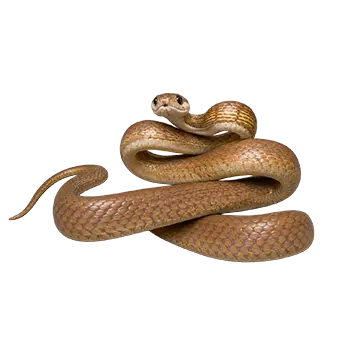

Sexual Maturity & Breeding Readiness

Cat-Eyed Snakes (Leptodeira septentrionalis) reach sexual maturity at approximately eighteen to twenty-four months of age, though maturity is more accurately assessed by body size and condition than by chronological age alone. Males generally mature earlier than females, sometimes reaching reproductive capability as early as fifteen months, while females typically require closer to two full years before their body reserves are sufficient to support the energetic demands of egg production. A female should measure at least twenty inches in total length and possess a well-rounded body condition with no visible vertebral prominence before being considered as a breeding candidate. Breeding undersized or underweight females risks egg binding, nutritional depletion, and long-term health consequences that can shorten the animal's lifespan.

Sexual dimorphism in Cat-Eyed Snakes is subtle but detectable by experienced keepers. Males tend to be slightly more slender than females of the same total length, with proportionally longer tails relative to total body length. The most reliable method of sex determination is probing, in which a lubricated, blunt-tipped probe is gently inserted into the cloaca and directed posteriorly toward the tail tip. In males, the probe passes into the inverted hemipene pocket to a depth of approximately eight to twelve subcaudal scales, while in females, the probe enters a shallow scent gland pocket to a depth of only two to four subcaudal scales. Probing should be performed only by experienced keepers or veterinarians, as improper technique can cause cloacal injury, infection, or misidentification of sex.

Before initiating any breeding attempt, both the male and female should be in optimal health as confirmed by a veterinary examination within the preceding three months. Both animals should be free of internal and external parasites, feeding reliably on appropriately sized prey, and shedding completely without assistance. Any chronic health condition — respiratory infection, dermatitis, retained shed history, or unexplained weight fluctuations — should be fully resolved before breeding stress is imposed. The energetic cost of reproduction is substantial for both sexes but particularly demanding for females, who must mobilize significant calcium, fat, and protein reserves for egg production, making pre-breeding health assessment a non-negotiable prerequisite.

Genetic considerations deserve attention from breeders working with Cat-Eyed Snakes, particularly given that captive populations of this species are relatively small and may derive from a limited number of founder animals. Pairing unrelated individuals minimizes the risk of inbreeding depression, which can manifest as reduced clutch size, lower hatch rates, decreased hatchling vigor, and increased susceptibility to disease. Maintaining accurate breeding records that document the lineage of every animal in the collection is essential for making informed pairing decisions and for contributing to the long-term genetic health of the captive Cat-Eyed Snake population.

Pre-Breeding Conditioning

Successful captive breeding of Cat-Eyed Snakes typically requires a period of pre-breeding conditioning that simulates the seasonal environmental changes triggering reproductive behavior in wild populations. In their native range across Central America and northern South America, Cat-Eyed Snakes breed primarily during the transition between the dry season and the onset of the wet season, a period characterized by rising humidity, increasing rainfall, and gradually warming ambient temperatures. Replicating these cues in captivity provides the physiological triggers that synchronize reproductive readiness between paired animals.

The conditioning period begins with a cooling phase of approximately six to eight weeks, typically initiated in late autumn or early winter. During this phase, the warm-end temperature is gradually reduced from the normal 82 to 86 degrees Fahrenheit to approximately 74 to 78 degrees, and the photoperiod is shortened to ten hours of light and fourteen hours of darkness. Feeding frequency is reduced to every fourteen to twenty-one days during the cooling phase, with prey size remaining unchanged. The snake's metabolism slows in response to the lower temperatures, and appetite suppression is normal and expected. Both males and females should be monitored closely during cooling, and any individual that shows signs of illness, significant weight loss, or respiratory distress should be returned to normal maintenance temperatures immediately.

The transition out of the cooling phase and into active breeding condition is orchestrated to mimic the onset of the wet season. Over a period of ten to fourteen days, temperatures are gradually returned to normal maintenance levels, the photoperiod is extended back to twelve hours of light and twelve hours of darkness, and misting frequency is increased substantially — from once daily to two to three times daily — to simulate the elevated humidity and rainfall characteristic of the breeding season. Feeding frequency is simultaneously increased, with both sexes offered meals every five days to rebuild energy reserves depleted during the cooling phase. Females in particular should be fed generously during this period, as they are mobilizing stored nutrients for follicle development.

The conditioning response can be monitored by observing behavioral changes that indicate reproductive readiness. Males typically become more active than usual, spending extended periods patrolling the enclosure with their tongues in nearly constant motion — a behavior that reflects heightened chemosensory searching for female pheromones. Females may show subtle swelling in the posterior body cavity as ovarian follicles develop, and some individuals become more restless or refuse food in the days immediately preceding ovulation. These behavioral cues, combined with the appropriate environmental conditions, signal that the animals are ready for introduction.

Courtship, Mating & Introduction Protocols

Introducing a male Cat-Eyed Snake to a female's enclosure is the standard protocol for initiating courtship, as the female's established territory provides a familiar, lower-stress environment for mating to occur. The introduction should take place during the evening hours when both snakes are naturally active, and the keeper should observe the initial interaction carefully from a distance that does not disturb the animals but allows immediate intervention if aggression occurs. While Cat-Eyed Snakes are not typically aggressive toward conspecifics during the breeding season, unexpected conflicts can arise, particularly if one or both animals are not in true reproductive condition.

Courtship behavior in Cat-Eyed Snakes follows a pattern broadly similar to other colubrid species but with species-specific nuances. The male, upon detecting the female's pheromone trail, will approach with rapid tongue-flicking and begin to align his body alongside hers, maintaining close physical contact along the length of their bodies. He may chin-rub the female's dorsal surface, pressing his chin and lower jaw along her body from mid-body toward her head in a rhythmic, undulating motion. This tactile stimulation, combined with the chemical signaling of pheromones, stimulates the female's receptivity. A receptive female remains relatively still and raises her tail, allowing the male to align his cloaca with hers and insert one of his paired hemipenes for copulation.

Copulation in Cat-Eyed Snakes typically lasts between thirty minutes and several hours, during which the pair remains intertwined and relatively immobile. The keeper should not disturb the snakes during mating but should check periodically to ensure that neither animal is in distress. After copulation, the male will withdraw and the pair will separate naturally. The male can be returned to his own enclosure once the pair has fully disengaged. Repeated introductions every three to five days over a period of two to three weeks increase the likelihood of successful fertilization, as multiple copulation events ensure adequate sperm transfer and may synchronize ovulation timing.

Unsuccessful introductions — in which the male shows no interest in the female, the female actively flees or displays defensive behavior toward the male, or the pair simply coexists without courtship initiation — may indicate that one or both animals have not reached full reproductive condition. In these cases, the animals should be separated and conditioning parameters reassessed. Extending the cooling period by an additional two to three weeks, increasing the intensity of the humidity cycling, or simply waiting an additional week before re-introducing the pair often resolves the issue. Repeated forced introductions between unresponsive animals generate stress without reproductive benefit and should be avoided.

Egg Deposition & Nesting

Following successful mating, the female Cat-Eyed Snake enters a gravid period of approximately thirty to fifty days before depositing her clutch. During this period, the developing eggs become increasingly visible as swellings in the posterior two-thirds of the body, giving the female a distinctly lumpy appearance that is quite different from the uniform body contour of a non-gravid adult. The female's appetite typically diminishes significantly during the latter half of gestation, and some individuals cease feeding entirely during the final two weeks before oviposition. This voluntary fasting is a normal physiological response to the physical compression of the digestive tract by the expanding eggs and should not prompt forced feeding attempts.

Providing an appropriate nesting site is critical for encouraging successful egg deposition in a location where the eggs can be monitored and transferred to an incubator. A moist nesting box — a plastic container with an access hole, filled with damp sphagnum moss, vermiculite, or perlite — should be placed on the warm side of the enclosure at least two weeks before the expected lay date. The nesting substrate should be moist enough to clump when squeezed but not so saturated that water drips freely, as excessively wet conditions can cause egg degradation. The container should be large enough for the female to coil comfortably inside with her full body and deep enough that the eggs will be deposited into substrate rather than directly onto the container floor.

Pre-lay behavior in gravid Cat-Eyed Snakes includes restless crawling along the enclosure walls and floor, repeated investigation of the nesting box (entering and exiting multiple times over several days), and a characteristic inverted posture in which the snake positions her cloaca upward while exploring potential deposition sites. These behavioral cues typically appear two to five days before actual oviposition. The female may also undergo a pre-lay shed during this period, which serves as a reliable indicator that egg laying is imminent — usually within seven to fourteen days of the shed.

A typical Cat-Eyed Snake clutch consists of three to twelve eggs, with clutch size influenced by the female's age, body size, nutritional condition, and whether she has produced previous clutches within the same season. The eggs are elongated, soft-shelled, and slightly adherent to one another due to the thin mucus coating present at deposition. They should be carefully transferred to a prepared incubation container within twelve hours of laying, maintaining their original orientation — the eggs should not be rotated or flipped, as the embryo attaches to the upper surface of the yolk sac within hours of deposition, and reorientation can displace the embryo and cause developmental failure. The female should be offered water and a small meal within twenty-four hours of laying, as the oviposition process is physically demanding and she will need to replenish fluids and energy reserves.

Incubation Management

Proper incubation is the single most critical factor determining hatch success in Cat-Eyed Snake breeding. Eggs should be placed in a lidded plastic container on a bed of moistened incubation substrate — vermiculite mixed with water at a ratio of approximately one part water to one part vermiculite by weight is the most widely used and reliable medium. The eggs should be partially buried in the substrate so that approximately half of each egg is visible above the surface, and no two eggs should be in contact with one another to prevent the transmission of mold or bacterial infection from one egg to its neighbors. Small ventilation holes in the container lid, approximately three to four millimeters in diameter, provide the minimal air exchange needed to prevent carbon dioxide buildup without causing excessive moisture loss.

Incubation temperature is the primary determinant of both developmental rate and hatch success. Cat-Eyed Snake eggs should be incubated at a stable temperature between 78 and 82 degrees Fahrenheit, with 80 degrees representing the optimal target for most breeders. Temperature fluctuations exceeding three degrees in either direction within a twenty-four-hour period increase the risk of developmental abnormalities and embryonic death. A dedicated reptile egg incubator with a proportional thermostat provides the most reliable temperature control, though a simple setup using a small, enclosed space heated by a thermostatically controlled heat mat can also produce acceptable results if carefully calibrated. A digital thermometer with a probe placed directly beside the eggs provides independent verification of the incubator's accuracy.

Humidity within the incubation container should remain between 80 and 95 percent throughout the incubation period. The substrate moisture level at the time of setup generally sustains adequate humidity for several weeks, but periodic weight checks of the incubation container can alert the breeder to moisture loss before it becomes critical. If the container's weight drops by more than ten percent from its initial setup weight, a small amount of room-temperature water should be added to the substrate edges — never directly onto the eggs — to restore moisture levels. Conversely, visible condensation covering the entire inner surface of the lid indicates excessive humidity that can promote mold growth and should be addressed by briefly opening the container to allow evaporation.

The incubation period for Cat-Eyed Snake eggs ranges from approximately fifty-five to seventy-five days under the conditions described above, with temperature being the primary variable that determines whether development proceeds at the faster or slower end of this range. Eggs should be inspected visually every three to four days for signs of viability — fertile eggs gradually become opaque and slightly turgid as the embryo develops, while infertile or non-viable eggs remain translucent, become yellow or discolored, and may eventually collapse or develop mold. Candling — holding a small, focused light source against the egg in a darkened room — can reveal vascular development (visible as a network of red blood vessels) within ten to fourteen days of incubation and provides the most definitive early confirmation of fertility.

Post-Breeding Recovery & Multi-Clutch Considerations

The post-breeding recovery period for both male and female Cat-Eyed Snakes is a critical phase that determines the animals' long-term health and future reproductive potential. Females experience the greatest physiological toll from breeding, having invested substantial metabolic resources in follicle development, egg formation, and the physical demands of oviposition. Rebuilding depleted calcium, fat, and protein reserves requires aggressive nutritional support in the weeks following egg laying. Meals should be offered every five days, with prey items slightly larger than the pre-breeding standard, for a period of six to eight weeks or until the female has regained her pre-breeding body weight and body condition.

Calcium supplementation deserves particular attention during the post-breeding recovery period. Eggshell formation draws heavily on the female's skeletal calcium stores, and severe depletion can result in metabolic bone disease — a condition characterized by softening of the bones, muscular tremors, lethargy, and in advanced cases, permanent skeletal deformity. Dusting prey items with a calcium and vitamin D3 supplement at every other feeding for the first month post-laying provides supplemental calcium that accelerates the replenishment of skeletal reserves. A veterinary blood calcium level check at the post-breeding examination confirms whether supplementation is adequate or needs to be intensified.

Males also require a recovery period, though their physiological demands during breeding are less extreme than those of females. Males that have been subjected to the reduced temperatures and photoperiod of the conditioning phase and the elevated activity levels of the mating period may show temporary appetite reduction and weight loss. Returning the male to standard maintenance conditions — normal temperatures, twelve-hour photoperiod, regular feeding schedule — immediately after the final mating introduction allows a prompt metabolic recovery. Males can typically be returned to breeding condition the following season without detriment, provided they fully recover their body condition between breeding periods.

Cat-Eyed Snakes are capable of producing multiple clutches within a single breeding season, with some females depositing two or even three clutches at intervals of approximately four to six weeks. While multi-clutch production is a natural reproductive strategy for the species, captive breeders should carefully evaluate whether a second or third clutch is advisable for each individual female based on her body condition after the first clutch. A female that has not regained at least eighty percent of her pre-breeding body weight before initiating a subsequent clutch is at increased risk of egg binding, nutritional depletion, and long-term health decline. Conservative breeders limit females to one clutch per season and allow a full recovery year between breeding attempts, prioritizing the long-term health of the breeding female over short-term hatchling production.

Always consult a qualified professional before making any health-related decisions. This content is provided for informational reference only and should not replace professional guidance specific to your animal.