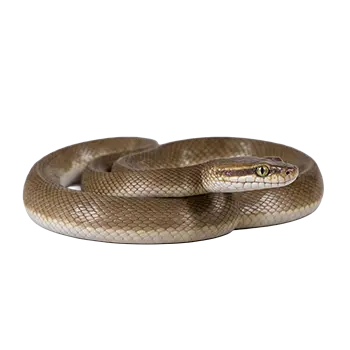

Growth Rates & Physical Development

The juvenile stage of the Brown House Snake (Boaedon capensis) spans roughly from four months of age through approximately eighteen to twenty-four months, at which point most individuals approach sexual maturity and adult body proportions. During this period, growth is consistent and measurable, with juveniles typically adding one to two inches in length per month under optimal husbandry conditions. A snake that entered the juvenile stage at around fourteen to eighteen inches will generally reach twenty-four to thirty inches by the end of its first year, with continued gains through the second year bringing it to near-adult dimensions of thirty to forty inches depending on sex and individual genetics.

Weight gain during the juvenile period should be steady and proportional to length increases. A well-fed juvenile Brown House Snake carries a rounded, cylindrical body profile without visible spine ridges or prominent vertebral bumps, which would indicate underfeeding. Conversely, a juvenile whose body appears overly plump with indistinct scale definition along the sides may be receiving prey items that are too large or too frequent. Monthly weigh-ins on a digital gram scale provide objective growth data that can be charted over time to identify trends, and any deviation from the expected upward trajectory warrants a review of husbandry conditions and feeding protocols.

Sexual dimorphism begins to emerge during the later juvenile phase. Males tend to be slightly more slender in overall build and typically reach the shorter end of the adult size range at around two to two and a half feet. Females tend to develop broader, heavier bodies, particularly through the posterior third of their length, and generally reach greater overall lengths of three to four feet at maturity. Probe sexing or visual assessment of tail taper can be performed by an experienced keeper or veterinarian during this stage to confirm sex, which is relevant for keepers planning future breeding programs or needing to house animals appropriately.

Shedding frequency provides another useful benchmark for juvenile growth. Rapidly growing juveniles may shed every three to five weeks, with each shed cycle producing a noticeable increase in overall length and girth. Shed intervals that extend beyond six weeks in a juvenile that is feeding regularly may indicate suboptimal temperatures, inadequate humidity, or an underlying health concern. Every shed should be examined after removal from the enclosure to confirm it is complete and in one piece, including intact eye caps and tail tip. Retained shed fragments require prompt attention to prevent constriction injuries and secondary infections.

Feeding Progression & Dietary Management

As juvenile Brown House Snakes grow, their prey size must increase proportionally to support development without exceeding the snake's digestive capacity. The general guideline is to offer prey items that are roughly equal to or slightly larger than the widest part of the snake's body at midbody. A juvenile that has outgrown pinky mice should transition to fuzzy mice, then to small hoppers, and eventually to adult mice as it approaches sub-adult size. Each prey size transition should be gradual, and keepers should observe that the snake handles the new prey size without difficulty before making the increase permanent.

Feeding frequency during the juvenile stage should be once every seven to ten days. This interval allows complete digestion and metabolic processing of each meal before the next is offered. Overfeeding juveniles — whether through excessively frequent meals, oversized prey, or offering multiple prey items per session — is a common husbandry error that leads to obesity, fatty liver disease, and regurgitation syndrome. A single appropriately sized prey item per feeding session is both sufficient and optimal for healthy juvenile growth. If a juvenile regurgitates a meal, wait at least ten to fourteen days before offering a smaller prey item, and evaluate enclosure temperatures to ensure the warm side is adequate for digestion.

Prey acceptance in juvenile Brown House Snakes is rarely problematic, as this species is well-known for its robust and reliable feeding response. Most juveniles will strike at tong-presented frozen-thawed rodents with enthusiasm, and some individuals become so food-driven that they may strike at any movement near the enclosure opening. This eager feeding response is a positive trait that simplifies husbandry, but it also means keepers should be mindful of their hands during cage maintenance and always use feeding tongs rather than fingers to present prey. Training the juvenile to associate tong presentation with feeding events helps prevent opportunistic strikes during non-feeding interactions.

Hydration remains a critical but often overlooked component of juvenile nutrition. A clean, appropriately sized water dish should be available at all times and refreshed daily. Juveniles in the active growth phase require consistent hydration to support tissue development, efficient digestion, and clean shed cycles. Water dishes should be heavy enough or designed to resist tipping, as active juveniles exploring their enclosures will inevitably push against and climb over enclosure furnishings. Any sign of reduced water intake — particularly when accompanied by other changes such as decreased appetite or lethargy — should prompt an immediate review of enclosure conditions and consideration of a veterinary consultation.

Enclosure Upgrades & Habitat Design

The transition from a small hatchling tub to a larger juvenile enclosure is a necessary milestone that typically occurs around four to six months of age, when the snake has outgrown its initial housing. A juvenile Brown House Snake should be housed in an enclosure measuring approximately 24 by 12 by 12 inches, which provides adequate space for a thermal gradient, multiple hides, a water dish, and room for the snake to stretch and move without being so expansive that the animal feels exposed and stressed. Glass terrariums, plastic tubs with ventilation modifications, and PVC enclosures are all suitable options, with the primary considerations being security, ventilation, and ease of maintenance.

The thermal gradient established during the hatchling stage should be maintained throughout the juvenile period with minimal modification. The warm end should remain between 85 and 90 degrees Fahrenheit, the cool end between 72 and 78 degrees, and the basking zone can reach up to 92 degrees. As the enclosure increases in size, achieving and maintaining a stable gradient may require adjustments to heat source wattage or positioning. A quality digital thermometer with probes placed at both the warm and cool ends of the enclosure provides continuous, accurate temperature monitoring that eliminates guesswork. Thermostat-controlled heat sources are strongly recommended to prevent dangerous temperature fluctuations.

This stage of development is appropriate for introducing more complex habitat elements that enrich the juvenile's environment and encourage natural behaviors. Climbing branches, cork bark flats and tubes, artificial foliage, and varied substrate textures create a more stimulating living space. While Brown House Snakes are primarily terrestrial, juveniles will readily utilize low climbing structures during their nocturnal active periods, and the addition of vertical elements increases the usable space within the enclosure without requiring a larger footprint. All furnishings should be stable and securely positioned to prevent shifting or collapse that could injure the snake.

Substrate can be upgraded from the paper-based options used during the hatchling stage to more naturalistic choices such as aspen shavings, coconut coir, or a bioactive soil mix. These substrates offer better humidity buffering, allow for natural burrowing behaviors, and create a more visually appealing enclosure. Aspen shavings are a popular choice for Brown House Snakes because they hold burrow tunnels well, are easy to spot-clean, and are relatively dust-free when sourced from a quality supplier. Avoid cedar and pine shavings, which contain aromatic oils that are toxic to reptiles, and avoid sand or fine particulate substrates that can be ingested and cause intestinal impaction.

Lighting during the juvenile stage should follow a consistent photoperiod of roughly twelve hours of light and twelve hours of darkness to simulate a natural day-night cycle. Brown House Snakes are nocturnal and do not require UV-B lighting for vitamin D synthesis in the way that many diurnal lizard species do, but maintaining a regular light cycle supports healthy circadian rhythms and behavioral patterns. Ambient room lighting or a low-wattage LED fixture on a timer provides sufficient light without generating excess heat. Avoid placing the enclosure in direct sunlight, as this can cause rapid, uncontrollable temperature spikes within the enclosure.

Behavioral Development & Socialization

Juvenile Brown House Snakes undergo significant behavioral maturation that reflects their transition from vulnerable neonates to increasingly confident sub-adults. The pronounced hiding behavior and wariness characteristic of the first few months gradually gives way to bolder exploration, particularly during the evening and nighttime hours. Keepers will notice juveniles emerging earlier in the evening, spending longer periods actively investigating their enclosures, and showing less startle response to routine disturbances such as room lights turning on or the enclosure being opened for maintenance.

Continued regular handling during the juvenile stage is important for maintaining and reinforcing the tolerance established during the neonatal period. Sessions of ten to fifteen minutes, conducted three to four times per week, are ideal. Juvenile Brown House Snakes are active and inquisitive handlers, frequently threading through fingers and exploring hands, arms, and clothing with their tongues flicking constantly to gather chemical information about their surroundings. This exploratory behavior is a sign of healthy curiosity rather than stress, and allowing the snake to move freely during handling sessions builds positive associations with human interaction.

Feeding response management becomes increasingly important as juveniles grow larger and more food-motivated. Many Brown House Snakes develop a strong associative link between enclosure opening and feeding events, which can lead to the snake striking at any object entering the enclosure — including the keeper's hands during routine maintenance. To mitigate this, establish clear behavioral cues that distinguish feeding events from non-feeding interactions. Using a snake hook to gently touch the snake before lifting it out for handling teaches the animal to differentiate between the tong presentation that precedes a meal and the hook contact that precedes a handling session. Consistency in these cues over time produces a juvenile that is noticeably less likely to launch opportunistic feeding strikes.

Juveniles housed within sight or scent of other snakes may exhibit increased restlessness, defensive posturing, or food refusal, particularly during the later juvenile stage when territorial awareness begins to develop. Brown House Snakes are solitary animals in the wild and should be housed individually at all times. Cohabitation, even between siblings, introduces stress and competition for resources that can suppress feeding, increase aggression, and lead to injuries. Each juvenile requires its own enclosure, heat source, hides, and water dish. This individualized approach to housing is not merely a recommendation but a fundamental component of responsible husbandry for this species.

Common Juvenile Health Concerns

The juvenile period is generally one of robust health for Brown House Snakes maintained under proper husbandry conditions, but several health concerns warrant ongoing vigilance. Dysecdysis, or incomplete shedding, is among the most frequently encountered issues and is almost always a direct result of insufficient environmental humidity. A juvenile with retained shed will have patches of dull, opaque skin clinging to the body, retained eye caps visible as cloudy or wrinkled spectacle scales, or a constricting ring of retained shed around the tail tip. Mild cases can be resolved with a lukewarm soak in shallow water for fifteen to twenty minutes followed by gentle removal of the retained skin with a damp cloth. Chronic or severe dysecdysis requires correction of enclosure humidity and may need veterinary intervention to safely remove retained eye caps.

Internal parasites are a persistent concern during the juvenile stage, particularly for animals that were not screened at the neonatal stage or that originated from collections with unknown health histories. Nematodes, including ascarids and hookworms, and protozoan parasites such as Cryptosporidium and flagellate species can establish subclinical infections that gradually undermine digestive efficiency, nutrient absorption, and growth. Routine fecal examinations performed every six to twelve months by a reptile-experienced veterinarian are the most reliable method for detecting and treating parasitic infections before they become clinically significant. Treatment protocols are species-specific and dosage-sensitive, and over-the-counter deworming products marketed for other animals should never be used in snakes without veterinary direction.

Regurgitation in juvenile Brown House Snakes is an alarming but not uncommon event that can result from several causes including handling too soon after feeding, enclosure temperatures too low for proper digestion, prey items that are too large, or underlying gastrointestinal illness. A single isolated regurgitation in an otherwise healthy juvenile is usually not cause for major concern if the precipitating factor can be identified and corrected. The appropriate response is to withhold food for ten to fourteen days, offer a smaller prey item than the one that was regurgitated, and confirm that the warm end of the enclosure is maintaining adequate temperatures for digestion. Repeated regurgitation — two or more episodes within a short timeframe — is a serious warning sign that requires prompt veterinary evaluation.

Scale rot, also known as ventral dermatitis or blister disease, develops when the ventral scales are exposed to chronically damp or soiled substrate conditions. It presents as discolored, pinkish or reddened areas on the belly scales that may progress to raised blisters or ulcerated lesions if untreated. Prevention is straightforward: maintain clean, dry substrate, spot-clean immediately after defecation, and ensure adequate ventilation in the enclosure to prevent stagnant humidity from pooling at substrate level. Mild cases in juveniles respond well to a substrate change to dry paper towels, gentle cleaning of affected scales with dilute chlorhexidine solution, and improved enclosure hygiene. Advanced cases with open lesions require veterinary treatment including topical or systemic antibiotics.

Preparing for the Transition to Adulthood

As juvenile Brown House Snakes approach the eighteen to twenty-four month mark, several physical and behavioral indicators signal the transition toward adult maturity. Growth rate begins to decelerate noticeably, with monthly length gains slowing from the one to two inches typical of early juveniles to fractions of an inch. Shedding frequency correspondingly decreases from every three to five weeks to intervals of six to eight weeks or longer. These changes reflect the natural metabolic shift from a growth-focused phase to a maintenance-focused one and are not signs of declining health. Feeding frequency can be adjusted accordingly, transitioning from weekly meals to offerings every ten to fourteen days as the snake's metabolic demands decrease.

Enclosure sizing should be evaluated again as the snake reaches sub-adult dimensions. A Brown House Snake approaching adult length will benefit from an upgrade to its permanent adult enclosure, typically measuring 36 by 18 by 12 inches or equivalent volume. Making this transition during the late juvenile stage allows the snake to acclimate to its permanent home before reaching full maturity, reducing the stress of a housing change during a period when the animal may also be experiencing the hormonal shifts associated with sexual maturation. The adult enclosure should replicate the thermal gradient, humidity range, and hide placement established in previous housing, scaled up appropriately for the larger space.

For keepers who intend to breed their Brown House Snakes in the future, the late juvenile period is an important time to confirm the sex of each animal and begin planning pairings. Probe sexing is the most accurate method and should be performed by an experienced keeper or veterinarian to avoid injury. Female juveniles destined for breeding programs should be monitored for body condition and weight gain to ensure they will reach appropriate breeding weight and condition by the time they are sexually mature, typically around two to three years of age. Breeding underweight or undersized females carries significant health risks and should be avoided.

The behavioral foundation established during the juvenile stage directly determines the quality of the keeper-animal relationship throughout adulthood. A juvenile that has been handled regularly, fed consistently, and maintained in a stress-free environment will transition into a calm, predictable adult that is a pleasure to interact with. Conversely, juveniles that have been neglected, handled roughly, or subjected to chronic stressors such as inadequate hides, unstable temperatures, or cohabitation may develop lasting behavioral issues including persistent food refusal, chronic defensiveness, and heightened startle responses. Investing time and attention in proper juvenile husbandry is the single most impactful thing a keeper can do to ensure a long, rewarding relationship with their Brown House Snake.

Always consult a qualified professional before making any health-related decisions. This content is provided for informational reference only and should not replace professional guidance specific to your animal.