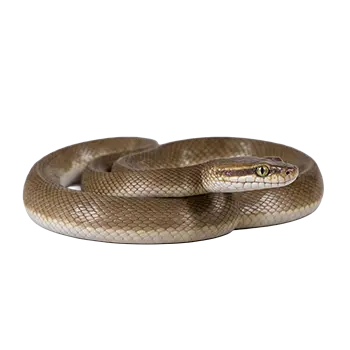

Adult Brown House Snakes (Boaedon capensis) typically reach their full length between two and three years of age, with most individuals measuring between two and four feet depending on sex, genetics, and husbandry history. Females are generally the larger sex, commonly reaching three to four feet and carrying more mass through the posterior body, while males tend to remain more slender and rarely exceed three feet. Once full adult dimensions are reached, growth effectively ceases, and the keeper's focus shifts from supporting development to maintaining optimal body condition over the long term.
Assessing body condition in an adult Brown House Snake is a skill every keeper should develop. A snake in ideal condition has a smoothly rounded cross-sectional profile with no visible spine ridge or rib outlines when viewed from above, and the ventral scales lie flat against the substrate without lateral skin folds that would indicate excess fat deposits. An underweight adult displays a triangular cross-section with prominent vertebral and costal ridges, while an obese individual has a noticeably wider body with soft, puffy flanks that obscure the normal scale texture. Both extremes carry health consequences — underweight animals are immunocompromised and reproductively compromised, while obese animals face elevated risks of hepatic lipidosis, cardiovascular strain, and shortened lifespan.
With proper care, Brown House Snakes routinely live fifteen to twenty years in captivity, and some well-maintained individuals have been documented exceeding twenty years. This lifespan places the species among the longer-lived small colubrids and means that acquiring a Brown House Snake is a commitment spanning one to two decades. The quality and consistency of husbandry during the adult years has a direct and cumulative impact on longevity, making the practices established during this stage among the most consequential in the animal's entire life.
Periodic health assessments by the keeper should be built into the routine of adult maintenance. Monthly body condition evaluations, quarterly weight checks, and careful observation of each shed cycle provide a comprehensive picture of ongoing health without the need for frequent veterinary visits. Any change from established baselines — a persistent weight trend in either direction, a change in shed quality or interval, or a sustained alteration in behavior or appetite — should prompt a closer investigation and, if warranted, a veterinary consultation.