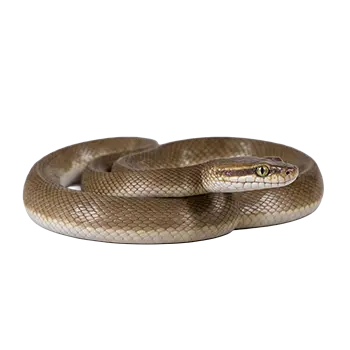

Brown House Snakes (Boaedon capensis) reach sexual maturity at approximately two to three years of age under typical captive conditions, though the onset of reproductive capability is determined more by body size and weight than by chronological age alone. Males tend to mature slightly earlier than females, with some males showing breeding interest as early as eighteen months, while females generally require a full two to three years of growth to reach appropriate breeding size. Breeding a female before she has achieved sufficient body mass places her at serious risk of reproductive complications including egg binding, nutritional depletion, and long-term health damage.
The minimum recommended weight for a breeding female Brown House Snake is approximately 200 grams, though 250 grams or more is preferable. At this weight, the female has accumulated sufficient fat reserves to support the metabolic demands of follicular development, egg formation, and the fasting period that typically accompanies the later stages of gravidity. Males can be bred at lower weights, typically around 100 to 120 grams, as the energetic demands of mating on males are substantially less than those borne by egg-producing females. Weighing both prospective breeders before initiating any conditioning protocol is a non-negotiable first step.
Body condition assessment goes beyond simple weight measurement. A breeding-ready female should have a well-rounded body profile with no visible spine or rib outlines and a palpable layer of fat reserves along the body cavity. She should have been feeding consistently for at least six months without interruption and should show no signs of recent illness, parasitic infection, or incomplete shed cycles. A male intended for breeding should be in lean, muscular condition with a strong feeding response. Any health concerns in either prospective parent should be fully resolved before conditioning begins, as the physiological stress of breeding can exacerbate underlying conditions.
Keepers new to breeding Brown House Snakes should understand that responsible reproduction requires planning not only for the breeding event itself but for the resulting offspring. A single clutch can produce eight to sixteen hatchlings, all of which will require individual housing, feeding, and eventually placement in permanent homes. Before initiating a breeding project, the keeper should have a realistic plan for hatchling care, housing capacity, and rehoming. Producing offspring without a clear path to responsible placement contributes to the surplus of unwanted reptiles in the hobby and is ethically indefensible.