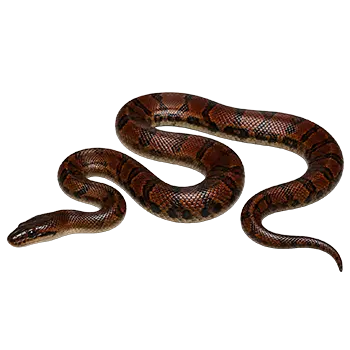

Sexual Maturity & Breeding Readiness

Blood Pythons (Python brongersmai) reach sexual maturity based on a combination of age, size, and body condition rather than any single threshold. Males generally become reproductively viable between two and three years of age, while females typically require three to four years before they possess the body mass and fat reserves necessary to support follicular development, ovulation, and egg production. Attempting to breed animals before they have achieved adequate maturity risks reproductive failure, egg binding in females, and long-term health consequences that can shorten the animal's productive lifespan.

Size is a more reliable indicator of breeding readiness than age alone. A female Blood Python should weigh a minimum of eight to ten pounds before being considered for breeding, though many experienced breeders prefer to wait until females reach twelve pounds or more to ensure a comfortable margin of body reserves. Males can breed successfully at lower weights, typically six to eight pounds, as the energetic cost of reproduction is substantially lower for males than for females. A male in good body condition with visible spurs — the vestigial pelvic limb remnants located on either side of the cloaca — and an active response to seasonal temperature changes is likely reproductively ready.

Pre-breeding health assessment by a reptile-experienced veterinarian is strongly recommended for both sexes, particularly for animals being bred for the first time. The examination should include a physical evaluation of body condition, a fecal parasite screen, and, for females, ultrasound imaging to assess ovarian follicular development. Identifying and resolving any health issues before the breeding season begins is far preferable to managing complications during the physiologically demanding process of egg development and deposition.

Genetic planning is an ethical responsibility that extends beyond simply pairing compatible animals. Breeders should research the lineage of both prospective parents to avoid inbreeding, which increases the incidence of developmental abnormalities, reduced clutch viability, and compromised hatchling vigor. Record keeping of parentage, morph genetics, and reproductive history for every animal in the breeding program forms the foundation of responsible production and supports the long-term health of the captive Blood Python population.

Conditioning & Seasonal Cycling

Successful Blood Python breeding begins with a conditioning period that prepares both sexes for the physiological demands of reproduction. Conditioning typically starts in early autumn, approximately eight to twelve weeks before the intended pairing date. The first step is to ensure that both animals are in optimal body condition — well-muscled and carrying moderate fat reserves without being obese. Overweight females are at increased risk of ovulation failure and egg binding, while underweight females may lack the reserves to sustain follicular development through to egg deposition.

Temperature cycling is the primary environmental trigger for initiating reproductive behavior in captive Blood Pythons. Beginning in late October or November in the Northern Hemisphere, nighttime temperatures should be gradually reduced over a two-week period to 72 to 75 degrees Fahrenheit, while daytime temperatures are lowered to 82 to 85 degrees Fahrenheit. This represents a reduction of approximately five to eight degrees from normal maintenance temperatures. The cooling period should last eight to twelve weeks, during which feeding is suspended for both sexes. The metabolic slowdown caused by reduced temperatures renders digestion unreliable, and undigested prey can decompose in the gut and cause fatal bacterial infections.

Photoperiod manipulation complements temperature cycling. Reducing the light cycle from twelve hours to eight to ten hours of daylight during the cooling period reinforces the seasonal signal and promotes hormonal shifts associated with reproductive readiness. While Blood Pythons are not as photoperiod-sensitive as some temperate-zone species, the combination of reduced temperature and shortened day length produces more consistent breeding responses than either stimulus alone.

Hydration must be maintained throughout the conditioning period even though feeding is suspended. Fresh water should be available at all times, and the keeper should monitor each animal for signs of dehydration, including wrinkled skin along the lateral body wall and prolonged periods in the water dish. Some breeders offer slightly larger water dishes during the cooling period to encourage soaking, which supports hydration and may contribute to hormonal triggering in females. The conditioning period concludes with a gradual return to normal temperatures over one to two weeks, at which point feeding is resumed with small prey items to gently restart the digestive system before pairing commences.

Introduction & Copulation

Pairing Blood Pythons is typically accomplished by introducing the male into the female's enclosure rather than the reverse. This approach minimizes stress on the female, who is the reproductively critical animal, and takes advantage of the male's natural drive to seek out and court a receptive female in her established territory. Introduction should occur after both animals have resumed feeding following the cooling period and have had at least one successful post-cooling meal to confirm that their digestive systems are functioning normally.

Courtship behavior in Blood Pythons involves the male actively crawling alongside and over the female while using his spurs — the vestigial hind limb remnants — to stimulate her cloacal region. The male will align his body parallel to the female's and attempt to lift her tail to achieve cloacal apposition. Copulation, once initiated, may last from two to twelve hours. During this time, the pair should not be disturbed. The enclosure should be kept dim and quiet, as interruptions can cause the animals to separate prematurely, potentially necessitating re-introduction and delaying the breeding timeline.

Multiple pairings are recommended to maximize the probability of successful fertilization. Most breeders introduce the male to the female two to three times per week over a period of four to six weeks, removing the male between sessions and returning him to his own enclosure. If the female is not receptive — indicated by tail clamping, aggressive posturing, or active avoidance of the male — the introduction should be suspended and reattempted after several days. Persistent non-receptivity may indicate that the female is not in breeding condition, that the cooling cycle was insufficient, or that follicular development has not progressed to the point of receptivity.

Breeder safety during pairings requires awareness and caution. Both animals are more defensive during the breeding season than at other times, and a male engaged in courtship behavior may redirect aggression toward the keeper if disturbed. Always use a snake hook to separate animals if intervention is necessary, and never reach into an enclosure containing a paired male and female with bare hands. Monitor pairings from a distance using a camera or by observing through the enclosure wall, intervening only if the animals are displaying aggression toward each other that poses a risk of injury.

Gravid Female Care & Egg Deposition

Following successful copulation, female Blood Pythons enter a follicular development and ovulation phase that lasts approximately four to six weeks before the pre-lay shed occurs. During this period, the female's midsection will visibly swell as developing follicles enlarge, ovulate, and become shelled eggs. The female's appetite often increases dramatically during early follicular development and then drops off sharply as the eggs occupy an increasing proportion of her body cavity and compress the digestive tract. It is important to follow the female's appetite cues — offering food when she is willing to eat and suspending offerings when she refuses — rather than adhering to a fixed feeding schedule.

The pre-lay shed is a critical milestone that signals egg deposition is imminent. This shed occurs approximately fourteen to twenty-one days before the female deposits her clutch and is typically easy to identify because the shed skin is thicker and more robust than a normal maintenance shed. Once the pre-lay shed is observed, a laying box should be introduced into the enclosure immediately if one is not already present. The laying box should be a dark, enclosed container filled with dampened sphagnum moss, large enough for the female to enter comfortably and coil around the eggs, with a single entrance hole just wide enough for the snake to pass through.

Egg deposition in Blood Pythons typically produces clutches of twelve to thirty eggs, with clutch size influenced by the female's age, body size, and nutritional condition. The laying process itself can take several hours to a full day, and the female should not be disturbed during deposition. Once she has finished laying, the female will often coil around the egg mass in a behavior known as maternal incubation, which she will maintain for the duration of incubation if permitted. In the wild, female Blood Pythons guard and thermoregulate their eggs through muscular contractions, but most captive breeders remove the eggs for artificial incubation, which provides more reliable temperature and humidity control.

Egg binding, also known as dystocia, is a potentially life-threatening complication in which the female is unable to pass one or more eggs. Signs include prolonged straining, visible distress, swelling in the caudal body, and failure to complete deposition more than forty-eight hours after the process begins. Egg binding in Blood Pythons can be caused by oversized eggs, insufficient calcium reserves, dehydration, suboptimal temperatures during the laying period, or anatomical abnormalities. Any suspicion of dystocia requires immediate veterinary attention, as delayed intervention can result in egg rupture, internal infection, and death.

Incubation Management

Artificial incubation is the standard practice for Blood Python eggs in captivity, offering consistent environmental control that produces higher hatch rates than maternal incubation in most keeper scenarios. Eggs should be carefully removed from the female and the laying medium within twelve to twenty-four hours of deposition. Blood Python eggs are often adhered to one another in a cluster, and while some breeders separate individual eggs for monitoring purposes, others incubate the entire cluster intact to avoid damaging the fragile shells. If separation is attempted, gently roll individual eggs apart rather than pulling, as the adhesion between shells can be surprisingly strong.

The incubation container should be a sealed plastic box with small ventilation holes, filled with a moistened incubation medium. Vermiculite and perlite are the two most commonly used media, mixed with water at a ratio of approximately one part water to one part medium by weight. The eggs should be positioned on the surface of the medium with the same orientation they had when laid — the top of each egg should remain on top throughout incubation, as rotating developing eggs can detach the embryo from the shell membrane and cause death. Mark the top of each egg with a soft pencil at the time of collection to ensure consistent orientation if the eggs must be moved.

Incubation temperature for Blood Python eggs should be maintained at 88 to 90 degrees Fahrenheit, which is narrower than the acceptable range for some other python species and underscores the importance of a reliable, thermostatically controlled incubator. Temperatures below 86 degrees result in prolonged incubation times and increased rates of developmental abnormality, while temperatures above 92 degrees can cause embryonic death. Humidity within the incubation container should remain high, with visible condensation on the container walls serving as a rough indicator of adequate moisture. If the medium begins to dry out, add water to the medium at the edges of the container rather than directly on the eggs.

Incubation duration for Blood Pythons ranges from fifty-eight to seventy days, with temperature being the primary variable. Keepers should begin checking eggs visually for signs of pipping around day fifty-five. Healthy developing eggs will appear taut and slightly translucent when candled with a small flashlight, with visible veining in the early weeks that becomes obscured by the growing embryo as incubation progresses. Eggs that collapse, develop mold, or emit a foul odor are typically non-viable and should be removed to prevent contamination of the remaining clutch. Do not discard eggs prematurely based on appearance alone, as some eggs that appear compromised externally still contain viable embryos.

Post-Breeding Recovery

The physical toll of reproduction on female Blood Pythons is substantial. A female that has produced and deposited a clutch of eggs has invested a significant portion of her body reserves in follicular development, shell formation, and the deposition process itself. Post-laying females are typically visibly emaciated, having lost twenty to forty percent of their pre-breeding body weight. Recovery to pre-breeding condition can take six to twelve months of attentive husbandry and should not be rushed.

Refeeding the post-lay female should begin within seven to ten days of egg deposition, starting with a small prey item — roughly half the size she would normally consume — to gently restart the digestive system. If the female accepts the first meal without difficulty, prey size can be gradually increased over the following two to three feedings until she is consuming her normal adult prey size. Feeding frequency during the recovery period can be increased to every seven to ten days to accelerate weight restoration, but each meal must be fully digested before the next is offered. Regurgitation during the recovery period is particularly dangerous because the female's depleted condition leaves her with minimal reserves to withstand the metabolic stress of a regurgitation event.

Breeding females should not be paired again until they have fully recovered their pre-breeding body weight and condition. For most Blood Python females, this means breeding no more frequently than every other year, and many experienced breeders advocate for breeding every two to three years to ensure the female's long-term health and reproductive longevity. Consecutive-year breeding accelerates physical decline, reduces clutch size and viability over time, and shortens the female's overall productive lifespan. The short-term gain of an additional clutch does not justify the long-term cost to the animal's welfare.

Males recover more quickly from the breeding season but are not exempt from the need for post-season management. Males that fasted during the cooling and pairing period may have lost noticeable body mass and should be refed on a schedule similar to their pre-breeding routine. Monitor both sexes for signs of post-breeding health complications, including respiratory infections — which may develop during the stress of the breeding season — retained shed, and changes in defecation patterns. A post-season veterinary checkup for both animals provides a formal assessment of their condition and establishes a recovery baseline against which future progress can be measured.

Always consult a qualified professional before making any health-related decisions. This content is provided for informational reference only and should not replace professional guidance specific to your animal.