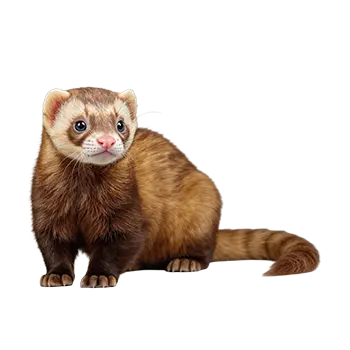

Reproductive Biology & Sexual Maturity

Domestic ferrets, including the cinnamon color variant, are seasonally polyestrous breeders whose reproductive cycles are driven primarily by photoperiod. As day length increases in late winter and early spring, hormonal cascades triggered by the pineal gland's melatonin production initiate the breeding season. Jills typically come into estrus between March and August in the Northern Hemisphere, while hobs develop enlarged testes and increased testosterone production over a similar window. Sexual maturity is reached between six and twelve months of age, though most responsible breeders do not pair ferrets for their first mating until the animals are at least one year old and have been thoroughly health-screened.

The jill's estrus is externally signaled by a pronounced swelling of the vulva, which becomes visibly enlarged and pink or reddish in color. This swelling develops over a period of several days and remains prominent for the duration of estrus. Unlike many mammals, the jill does not cycle out of estrus spontaneously. She is an induced ovulator, meaning that ovulation is triggered by the physical act of mating. If an intact jill is not bred or otherwise brought out of estrus, she will remain in heat indefinitely. This condition, known as persistent estrus, leads to chronically elevated estrogen levels that progressively suppress bone marrow function, resulting in aplastic anemia. Aplastic anemia caused by persistent estrus is fatal if left untreated, making reproductive management of intact jills a life-and-death responsibility.

Hobs undergo their own seasonal transformation as testosterone levels rise. The testes enlarge substantially, descending prominently into the scrotal sac. The hob's body odor intensifies markedly due to increased sebaceous gland secretion, and the skin may develop a yellowish, oily quality, particularly along the neck and dorsal surface. Intact hobs in breeding condition become more territorial and may display increased aggression toward other male ferrets. Their urine develops a stronger, muskier odor that serves as a territorial marker in wild and semi-wild populations. These changes are entirely reversible once the breeding season ends and testosterone levels decline with decreasing photoperiod in autumn.

Understanding the cinnamon color variant's genetic basis is relevant for breeders aiming to produce cinnamon offspring. The cinnamon coloration is a recessive trait, meaning that both parents must carry at least one copy of the cinnamon gene for cinnamon kits to appear in the litter. A mating between two cinnamon ferrets will produce an entirely cinnamon litter. A cinnamon-to-sable pairing where the sable parent carries one copy of the cinnamon gene will produce approximately half sable and half cinnamon kits statistically, though actual litter ratios can vary due to the randomness of genetic segregation. Breeders working to establish or maintain the cinnamon line must track pedigrees carefully and understand basic Mendelian inheritance to make informed pairing decisions.

Selecting Breeding Pairs

The selection of breeding pairs is the most consequential decision a cinnamon ferret breeder makes, with implications for the health, temperament, and genetic integrity of future generations. Both the hob and the jill should be in excellent overall health before breeding is considered. Pre-breeding veterinary examinations should include a thorough physical assessment, blood work including a complete blood count and blood glucose level, and evaluation for any signs of the diseases that commonly affect domestic ferrets, particularly adrenal disease, insulinoma, and cardiac conditions. Breeding animals with known or suspected heritable health problems perpetuates those conditions in the population and is ethically indefensible regardless of the desirability of their color or conformation.

Temperament is a critical selection criterion that inexperienced breeders sometimes undervalue in favor of physical appearance. Ferrets with calm, confident, human-friendly dispositions produce kits that are easier to socialize and more suitable as companion animals. Nervous, aggressive, or excessively fearful ferrets pass behavioral tendencies to their offspring through both genetic predisposition and maternal behavior during the rearing period. A jill that is anxious and defensive is more likely to neglect or cannibalize her litter, and her kits are less likely to receive the calm, confident early handling that produces well-adjusted pets. The hob's temperament is equally important, as behavioral traits are inherited from both parents.

Age is another factor in pair selection. Jills should ideally be between one and three years of age for their first breeding, old enough to have reached full physical maturity and young enough to manage the physical demands of pregnancy and lactation without undue strain. Hobs can breed successfully over a wider age range but are generally at peak fertility between one and four years. Breeding ferrets of advanced age increases the risk of pregnancy complications, smaller litter sizes, and the production of kits with higher rates of developmental abnormalities. Ferrets with a history of reproductive problems, including previous dystocia, small litter sizes, or poor maternal behavior, should generally be retired from breeding programs.

Genetic diversity should be a guiding principle in pairing decisions. The cinnamon color variant exists within a relatively small gene pool compared to the sable or albino populations, which means that inbreeding can become a concern if breeders rely on a limited number of founding animals. Maintaining pedigree records for at least three generations allows breeders to identify common ancestors and avoid pairings with a high coefficient of inbreeding. Outcrossing to unrelated lines, even if it means producing split-color litters in the first generation, introduces genetic vigor and reduces the accumulation of deleterious recessive alleles. Breed registries and ferret breeding networks can assist in locating suitable outcross partners for breeders working with cinnamon lines.

The Mating Process

Mating in domestic ferrets is a vigorous and sometimes alarming process for those witnessing it for the first time. The behavior is not gentle by mammalian standards, and understanding what constitutes normal mating behavior versus dangerous aggression is essential for any breeder supervising a pairing. The hob initiates courtship by approaching the jill, sniffing her vulvar area, and vocalizing with soft clucking sounds. If the jill is receptive, she will flatten her body against the ground and present her hindquarters. The hob then grasps the jill by the scruff of the neck with his teeth, a bite hold that can appear brutal but serves to immobilize the jill and trigger a reflex relaxation response analogous to the scruff response seen in many carnivore species.

Copulation in ferrets is prolonged by the standards of most domestic animals, typically lasting between thirty minutes and three hours. During this time the hob maintains his scruff hold while the pair may drag, roll, and shift positions repeatedly. The jill may vocalize, hiss, or attempt to pull free intermittently, and some jills appear limp and passive while others are more vocal throughout. The prolonged nature of copulation is physiologically necessary because ferrets are induced ovulators, and the extended mating stimulation is what triggers the hormonal cascade leading to ovulation. Interrupting copulation prematurely may result in failure to ovulate, leaving the jill still in estrus and at continued risk of aplastic anemia from persistent estrogen exposure.

After mating concludes, the pair should be separated and the jill examined for injuries. Some degree of scruff hair loss, minor skin abrasions on the neck, and temporary swelling at the scruff site are normal and expected. More serious injuries such as deep puncture wounds, torn skin, or bleeding that does not stop within a few minutes require immediate veterinary attention. The jill should be placed in a quiet, secure enclosure with fresh food and water and allowed to rest. Multiple matings over two to three consecutive days increase the likelihood of a successful breeding and full ovulation, though the stress of repeated mating sessions must be balanced against the jill's physical condition.

Ovulation occurs approximately thirty to forty hours after the first successful mating. If the jill ovulates but is not actually pregnant, either because mating was unsuccessful or because the sperm did not fertilize the ova, she will enter a state called pseudopregnancy. Pseudopregnancy in ferrets lasts approximately 42 days and mimics many of the behavioral and physical changes of true pregnancy, including weight gain, nesting behavior, and mammary development. The jill will emerge from pseudopregnancy without producing kits and will not return to estrus for the remainder of that breeding season. While pseudopregnancy is not harmful, it can be confusing for novice breeders who may prepare for a litter that never arrives. Abdominal palpation or ultrasound by a veterinarian can distinguish true pregnancy from pseudopregnancy by approximately two to three weeks after mating.

Pregnancy & Gestation

The gestation period for domestic ferrets, including the cinnamon variant, is approximately 41 to 42 days from the date of successful mating. This is one of the shorter gestation periods among domestic carnivores, and the compressed timeline means that pregnancy progresses rapidly and demands vigilant attention from the breeder. During the first two weeks, external signs of pregnancy are minimal. The jill may show a slight increase in appetite and a tendency to sleep more than usual, but these changes are subtle and can be difficult to distinguish from normal behavioral variation or from pseudopregnancy.

By the third week, physical changes become more apparent. The jill's abdomen begins to enlarge as the developing kits grow, and experienced breeders can often confirm pregnancy through gentle abdominal palpation, feeling for the small, firm swellings that represent individual embryos. This should only be attempted by those with experience, as excessive pressure can damage the developing embryos. Ultrasound confirmation by a veterinarian is a safer alternative and can also provide an estimate of litter size, though accuracy varies depending on equipment quality and the operator's experience with mustelid imaging. The jill's nipples become more prominent and may develop a pink or reddish tint as the mammary tissue begins to prepare for lactation.

Nutritional demands escalate significantly during the second half of gestation. The jill should have unlimited access to her regular high-quality food, and supplementation with additional protein sources such as cooked egg, raw or cooked meat, and high-calorie ferret supplements supports the caloric demands of fetal development. Some breeders increase the fat content of the diet slightly during late pregnancy, either through the addition of salmon oil or by switching to a kitten kibble with a higher fat percentage for the final two weeks of gestation. Fresh water intake should be monitored to ensure the jill remains well-hydrated, as dehydration during late pregnancy can contribute to complications during delivery.

The nesting box should be introduced no later than ten days before the expected delivery date, giving the jill ample time to claim and prepare the space. A sturdy, enclosed box with a single entry opening, positioned in a quiet, dimly lit area of the enclosure, mimics the den-like environment that wild and feral mustelids seek for parturition. The box should be lined with soft, clean nesting material that the jill can arrange to her satisfaction. Fleece strips, cotton cloth, and shredded unbleached paper towels are all suitable options. As the due date approaches, the jill may become increasingly focused on nest building, spending extended periods arranging and rearranging the bedding material. She may also become more reclusive, spending more time in or near the nesting box and less time interacting with cage mates or the keeper. These behavioral changes are normal indicators that parturition is imminent.

Complications during ferret pregnancy are relatively uncommon in healthy, well-nourished jills, but breeders should be aware of the warning signs that indicate a problem. Vaginal discharge that is discolored, foul-smelling, or bloody during pregnancy can indicate infection or fetal resorption. Sudden lethargy, complete appetite loss, or abdominal straining without production of kits near the expected delivery date may signal dystocia. Having the contact information for an emergency exotic animal veterinarian readily available and establishing a relationship with that practice before the breeding season begins ensures that help can be accessed quickly if complications arise.

Whelping & Postpartum Care

Parturition in ferrets typically begins in the early morning hours and can extend over a period of two to six hours for the entire litter, though some jills deliver more quickly while others take longer, particularly with large litters. The jill will retreat to her nesting box and begin showing signs of active labor including restlessness, rapid breathing, visible abdominal contractions, and licking of the vulvar area. Kits are usually delivered at intervals of fifteen to sixty minutes, each encased in a thin amniotic membrane that the jill tears open and consumes. She severs the umbilical cord by chewing through it and vigorously licks the newborn to stimulate breathing and circulation.

The breeder's role during delivery is primarily observational. Direct intervention should be reserved for clear emergencies such as a kit remaining in the birth canal for more than thirty minutes of active straining, a kit delivered in membranes that the jill fails to remove, or a jill that becomes unresponsive or shows signs of hemorrhage. In the case of an unremoved membrane, the breeder can carefully tear it open around the kit's face using clean, blunt tweezers, clearing the mouth and nostrils to allow breathing. If a kit appears lifeless after delivery, gentle rubbing with a warm, soft cloth to stimulate circulation and holding the kit slightly head-down to drain fluid from the airways may revive it. These interventions are time-sensitive, and if there is any doubt about the situation, emergency veterinary assistance should be sought immediately.

Postpartum care for the jill centers on nutrition, hydration, and undisturbed recovery. The jill's food and water should be placed as close to the nesting box as practical so she does not have to leave her kits for extended periods during the critical first days. Her caloric needs during lactation are substantially higher than during pregnancy, and free access to high-quality food supplemented with protein-rich additions supports milk production. The bedding in and around the nesting box should be checked daily for soiling and replaced gently, ideally when the jill has voluntarily left the nest for a brief break. Complete nest overhauls should be avoided during the first week to minimize disruption.

Monitoring the litter from a respectful distance is essential during the postpartum period. A healthy litter will be quiet for most of the day, vocalizing only briefly when the jill shifts position or when kits compete for nipple access. Persistent, high-pitched crying from the nest that continues for more than an hour may indicate that one or more kits are not receiving adequate milk, that the ambient temperature is too low, or that the jill is neglecting the litter. A discreet check of the nest, ideally when the jill has stepped away, allows the breeder to assess the kits' condition. Warm, plump kits with rounded bellies and smooth skin are being well-nourished. Cold, wrinkled, or unusually thin kits require immediate intervention, which may involve supplemental feeding, adjusting the environmental temperature, or in extreme cases, removing a failing kit for hand-rearing.

Always consult a qualified professional before making any health-related decisions. This content is provided for informational reference only and should not replace professional guidance specific to your animal.