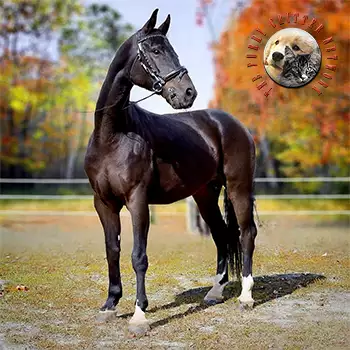

Growth & Physical Development

The juvenile period for a Trakehner encompasses roughly six months of age through three years, a span during which the horse undergoes dramatic physical transformation. During the first year, the foal's body proportions shift constantly as different growth plates activate at different rates. It is common for a young Trakehner to appear higher in the hindquarters than the withers, or to seem disproportionately leggy relative to its body depth. These phases of uneven growth are entirely normal for warmblood breeds and should not cause alarm.

By twelve to eighteen months, the yearling Trakehner begins to show hints of its adult frame. The chest deepens, the neck lengthens, and the muscling along the topline starts to develop more definition. However, significant skeletal maturation continues well beyond this point. The growth plates in the legs close progressively from the ground up, with the lower limb plates closing by around twelve months and the upper plates not fully fusing until the horse is three to four years old. This timeline has direct implications for the type and intensity of exercise that is appropriate during this stage.

Nutritional management during rapid growth phases is critical to preventing developmental orthopedic disease. Overfeeding concentrates or providing an imbalanced mineral profile can accelerate growth beyond what the skeletal system can support, leading to conditions such as osteochondrosis or physitis. Regular body condition scoring helps ensure the young Trakehner is growing at a steady, moderate rate rather than in excessive spurts.

Regular farrier visits every six to eight weeks are essential throughout the juvenile period. Proper hoof balance supports correct limb alignment as the bones grow and mature. The farrier and veterinarian should work together to monitor any angular or flexural deviations and address them promptly. A young horse's hooves grow quickly, and neglecting regular trimming can lead to imbalances that stress joints and tendons during a critical developmental window.

Nutrition & Diet Transition

Weaning marks a major nutritional transition for the Trakehner foal, typically occurring between four and six months of age. The shift from a milk-supplemented diet to one based entirely on forage and concentrates must be managed carefully to avoid digestive upset and nutritional gaps. A well-formulated weanling feed provides the protein, energy, and mineral ratios needed to support continued growth without the risks associated with overfeeding. Calcium, phosphorus, copper, and zinc are particularly important during this phase, and their ratios matter as much as their absolute amounts.

Quality forage should form the foundation of the young Trakehner's diet from weaning onward. Good grass hay or a grass-legume mix provides fiber essential for healthy hindgut function and encourages natural grazing behavior that supports both digestive and mental health. Pasture access is ideal when available, though lush spring pasture should be introduced gradually to prevent digestive disturbances. The young horse should always have access to clean, fresh water and a plain white salt block or loose salt.

As the Trakehner moves from weanling to yearling and beyond, its dietary needs evolve. The protein percentage in the concentrate can be gradually reduced as growth rate slows, shifting from the higher protein weanling formulas to a yearling or young horse feed. Monitoring body condition throughout this period helps guide feed adjustments. The young horse should appear well-covered but not fat, with ribs that can be felt easily but are not visually prominent.

Overfeeding is one of the most common and consequential nutritional mistakes during the juvenile period. Warmblood breeds like the Trakehner are predisposed to developmental orthopedic conditions, and excessive caloric intake accelerates growth in ways that immature bone and cartilage cannot always accommodate. A moderate, consistent growth curve supported by balanced nutrition is far preferable to rapid gains. Consulting with an equine nutritionist can be valuable in designing a feeding program tailored to the individual horse's growth rate and activity level.

Behavioral Changes

The juvenile and adolescent period brings significant behavioral shifts as the young Trakehner develops its personality and begins to test social boundaries. The weaning process itself is often the first major behavioral challenge, as the foal transitions from constant maternal security to greater independence. Trakehners are particularly sensitive horses, and the stress of weaning can manifest as vocalization, pacing, reduced appetite, or attempts to escape confinement. Gradual weaning methods, where mare and foal are separated incrementally rather than abruptly, tend to produce less stress in this breed.

As yearlings, Trakehners often display increasing confidence and curiosity, which can sometimes cross into pushiness if boundaries are not established. Ground manners that were easy to maintain with a small foal become more challenging as the horse gains size and strength. Consistent, fair handling during this period establishes the respectful relationship that will be essential once the horse begins formal training. The Trakehner's intelligence means it learns quickly, but it also means it learns unwanted behaviors just as readily as desired ones.

Colts and fillies may begin to show gender-specific behaviors during their second year. Colts may become more assertive, territorial, or distracted by the presence of mares. Fillies may exhibit mood changes associated with their estrous cycles. Understanding these hormonally driven behaviors helps handlers respond appropriately without overreacting or under-managing. Decisions about gelding colts are often made during this period, and early gelding can prevent the development of stallion-like behaviors that become harder to manage over time.

Play behavior remains an important part of the juvenile Trakehner's life and should be encouraged through turnout with compatible companions. Horses that are isolated during this formative period often develop behavioral issues including anxiety, aggression toward other horses, or stereotypic behaviors such as weaving and cribbing. Social interaction with peers teaches the young horse essential communication skills and provides a natural outlet for energy and curiosity.

Training Foundations

Formal training for a Trakehner should not begin under saddle until the horse is physically mature enough to carry weight safely, typically around three to four years of age. However, the juvenile period is the ideal time to build a comprehensive foundation of ground skills that will make the transition to ridden work smooth and successful. Halter training, leading, tying, standing for the farrier, loading into a trailer, and accepting grooming are all skills that can and should be well established during this stage.

The Trakehner's natural sensitivity and intelligence make it highly responsive to training methods that emphasize clarity, consistency, and positive reinforcement. Harsh or confrontational methods are particularly counterproductive with this breed, as they tend to produce anxiety, resistance, or shutdown rather than willing cooperation. Training sessions should be short, focused, and end with the horse feeling confident and successful. Varying the routine helps maintain the Trakehner's mental engagement, as repetitive drilling can lead to boredom and resentment.

Lunging and long-lining can be introduced gradually as the young horse matures, typically starting with brief sessions around two years of age. These exercises help develop balance, rhythm, and responsiveness to voice commands while strengthening the musculature that will support a rider. Care must be taken to limit the duration and intensity of work on a circle, as the repetitive loading pattern can stress developing joints. Straight-line work and large circles are preferable for young horses whose skeletal systems are still maturing.

Exposure to a variety of environments and experiences during the juvenile period builds the confidence and adaptability that define a well-rounded sport horse. Taking the young Trakehner to shows as a spectator, practicing loading and unloading from trailers, walking through water, crossing bridges, and encountering unfamiliar objects all contribute to a horse that will handle the demands of competition or pleasure riding with composure. The investment in this groundwork pays enormous dividends once formal training begins.

Exercise & Turnout

Appropriate exercise during the juvenile period supports healthy development without overstressing immature structures. For the young Trakehner, the single most beneficial form of exercise is ample daily turnout in a safe pasture. Free movement over natural terrain allows the horse to self-regulate its activity level, strengthens bones and tendons through varied loading patterns, and provides essential mental stimulation. Ideally, the young horse should have access to turnout for as many hours per day as management and climate allow.

Group turnout with age-appropriate companions is strongly preferred over solitary turnout. Young horses learn spatial awareness, develop coordination through play, and establish social skills that contribute to a well-adjusted temperament. The turnout area should be large enough to allow running and playing without crowding, and fencing should be safe and highly visible. Barbed wire and narrow-gauge wire should never be used for young horses, as the risk of injury during play is significant.

Structured exercise beyond turnout should be introduced conservatively and with respect for the horse's developmental stage. Hand walking, ponying from a mature horse, and exploring trails at a walk help build fitness and expose the young horse to the broader world without imposing the physical demands of carrying a rider. As the horse approaches three years of age, short sessions of lunging or long-lining on good footing can supplement turnout, but these sessions should remain brief and infrequent to protect growing joints.

Forced exercise programs, repetitive arena work, and any activity that involves jumping are inappropriate for juvenile Trakehners. The temptation to start formal athletic conditioning early can be strong, particularly with a horse that shows exceptional movement or talent, but patience during this period is essential. Premature physical demands increase the risk of developmental orthopedic disease, soft tissue injuries, and mental burnout. Allowing the young Trakehner to mature at its own pace results in a sounder, more willing partner in the long run.

Gelding Considerations

The decision of whether and when to geld a young Trakehner colt is one of the most significant management choices during the juvenile period. Gelding eliminates the production of testosterone, which reduces stallion-like behaviors such as aggression, mounting, vocalization, and distraction around mares. For the vast majority of Trakehner colts that are not destined for approved breeding programs, gelding improves the horse's quality of life and makes it a safer, more manageable companion and athlete.

Timing of the procedure is a matter of some debate, but most veterinarians recommend gelding between six and eighteen months of age. Earlier gelding tends to result in a taller, more refined horse because the closure of growth plates is slightly delayed in the absence of testosterone. Later gelding allows for more masculine muscular development but increases the risk that stallion behaviors become learned habits that persist even after the hormonal influence is removed. The individual colt's behavior, management situation, and future plans should all factor into the timing decision.

The gelding procedure itself is routine and can be performed standing under sedation or under general anesthesia, depending on the veterinarian's preference and the colt's temperament. Recovery is typically straightforward, with most young horses returning to normal turnout within a few days. Post-operative care includes monitoring the surgical site for excessive swelling, maintaining gentle exercise to promote drainage, and watching for signs of complications such as infection, herniation, or excessive hemorrhage.

For owners considering keeping a colt intact for potential breeding, it is important to understand the responsibilities involved. An intact Trakehner stallion requires experienced handling, separate turnout and housing, and careful management around mares. The breed registry has stringent approval processes that evaluate conformation, movement, and performance before granting breeding licenses. Unless the colt has been identified as having genuinely exceptional quality and the owner has the facilities and expertise to manage a stallion safely, gelding is almost always the best decision for both horse and owner.

Socialization & Exposure

Continued socialization during the juvenile period is essential for producing a confident, well-adjusted adult Trakehner. While the foundations laid during the foal's first weeks are important, the experiences and exposures that occur between weaning and the start of formal training are equally formative. The Trakehner's sensitive and intelligent nature means it absorbs and remembers both positive and negative experiences with remarkable clarity, making the quality of these interactions critically important.

Regular, positive human interaction should be a constant throughout the juvenile period. Grooming, handling feet, leading through doorways, standing tied, and accepting blankets or fly sheets all contribute to a horse that views human contact as routine and nonthreatening. Introducing the young horse to clippers, spray bottles, and veterinary procedures in a patient and progressive manner prevents the development of phobias that can become deeply entrenched and difficult to resolve in an adult horse.

Exposure to novel environments helps build resilience and adaptability. Short trailer rides to new locations, walks around unfamiliar properties, and attendance at shows or events as a noncompeting observer all expand the young Trakehner's comfort zone. Each successful outing reinforces the horse's confidence and its trust in its handler. Negative experiences during these outings should be addressed calmly and constructively rather than avoided entirely, as learning to recover from mild stress is an important part of developing emotional resilience.

Social development with other horses continues to be important throughout the juvenile stage. Young Trakehners benefit from time spent with horses of different ages, sizes, and temperaments. Interactions with older, calm horses can have a steadying influence on an excitable youngster, while time with age mates provides opportunities for the vigorous play that young horses need. A horse that has been well socialized with both humans and other horses during its juvenile years enters formal training as a confident, communicative partner ready to learn.

Always consult a qualified professional before making any health-related decisions. This content is provided for informational reference only and should not replace professional guidance specific to your animal.