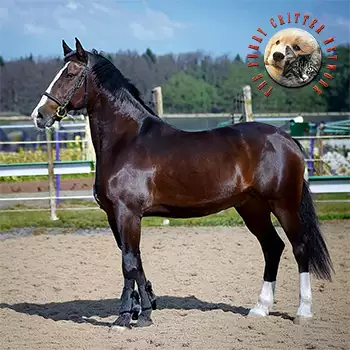

Growth & Physical Development

The Swedish Warmblood undergoes remarkable physical transformation during its juvenile and adolescent years, roughly spanning from weaning at four to six months through the age of three or four. During this period, the young horse transitions from a leggy, narrow-bodied youngster into a more proportioned and muscular frame that hints at its adult athletic potential. Growth is not uniform; horses often grow in spurts, with the hindquarters frequently outpacing the front end, creating a temporarily uneven topline.

Bone development is a primary concern during this stage. The growth plates in a horse's skeleton do not fully close until the animal is four to six years old, with some plates in the spine not fusing until even later. This biological reality has significant implications for when and how training is introduced. Excessive physical demands on immature skeletal structures can lead to permanent damage, making patience during this period one of the most valuable investments a Swedish Warmblood owner can make.

Regular body condition assessments help guide nutritional and management decisions throughout the juvenile period. A young Swedish Warmblood should carry enough flesh to support healthy development without becoming overweight. Excess body condition places unnecessary stress on developing joints and has been linked to developmental orthopedic diseases. Conversely, an underweight youngster may lack the resources for proper bone and muscle growth.

Height and weight measurements taken at regular intervals provide valuable data for tracking growth against breed-typical curves. Swedish Warmbloods generally reach close to their full height by age three, though they continue to fill out and mature in musculature and body depth well into their fifth or sixth year. A growth diary helps owners and veterinarians identify any deviations from expected patterns early enough to adjust management accordingly.

Nutrition & Diet Transition

Weaning marks the beginning of a significant dietary shift for the young Swedish Warmblood. The transition from relying on the mare's milk to a diet based entirely on forage and concentrates must be managed carefully to avoid digestive upset and nutritional gaps. A gradual weaning process, during which the foal has already been consuming creep feed and quality hay, eases this transition considerably.

The foundation of any young horse's diet should be high-quality forage. Good pasture and well-cured hay provide the fiber necessary for healthy gut function and supply many of the vitamins and minerals a growing horse needs. Forage should be available on a near-constant basis, as the equine digestive system is designed for continuous, small-volume intake rather than large meals spaced far apart.

Concentrate feeds formulated specifically for growing horses provide the additional calories, protein, and micronutrients that forage alone may not supply in sufficient quantities. The protein content of a juvenile's diet is particularly important because amino acids are the building blocks of muscle, bone, and connective tissue. Lysine is often the first limiting amino acid in equine diets, and feeds designed for young horses are typically fortified to address this gap.

Mineral balance is a critical and often underappreciated aspect of feeding the growing Swedish Warmblood. The calcium-to-phosphorus ratio must be maintained within an appropriate range to support sound skeletal development. An imbalance in either direction can contribute to developmental bone disorders. Working with an equine nutritionist or veterinarian to formulate a diet that accounts for forage analysis results, the individual horse's growth rate, and regional mineral profiles ensures the young horse receives precisely what it needs without excess or deficiency.

Behavioral Changes

Adolescence in the Swedish Warmblood brings a wave of behavioral shifts that can test the patience of even experienced horsemen. As the young horse matures, it begins to assert its individuality, test boundaries, and explore its social standing within the herd. These behaviors are entirely normal developmental processes, but they require thoughtful management to ensure the horse learns appropriate responses to human direction.

Colts often become increasingly assertive and may begin displaying stallion-like behaviors such as posturing, vocalizing, and attempting to mount other horses. These behaviors intensify if colts are housed near mares and may escalate without appropriate intervention. Fillies may show mood swings associated with their developing reproductive cycle, becoming distracted or irritable at irregular intervals as their hormonal systems mature.

Play behavior becomes more vigorous and complex during the juvenile period. Young Swedish Warmbloods are naturally energetic and curious, and their play often involves galloping, bucking, rearing, and mock fighting with herd mates. While this behavior is healthy and essential for physical and social development, it can increase the risk of injury in poorly maintained pastures or overcrowded turnout situations.

The young horse's attention span and emotional regulation are still developing, which affects how it responds to new experiences and stimuli. A Swedish Warmblood adolescent may react dramatically to something it encountered calmly the week before, seemingly without reason. This inconsistency is a hallmark of the juvenile brain and underscores the importance of patient, repetitive exposure to new environments, objects, and situations during this period.

Training Foundations

Training during the juvenile stage of a Swedish Warmblood focuses on groundwork, handling skills, and basic manners rather than ridden work. The goal is to build a foundation of trust, respect, and communication that will support more advanced training once the horse is physically mature enough to carry a rider. Swedish Warmbloods are bred for their trainability, and investing time in ground training during this stage typically pays significant dividends later.

Halter training, leading, tying, and standing quietly for grooming and veterinary procedures form the core curriculum for the young horse. These skills should be taught through calm, consistent repetition rather than forceful methods. A Swedish Warmblood that learns to associate human interaction with clarity and fairness develops into a confident, willing partner. Harsh or confusing handling during this impressionable period can create deep-seated anxiety and resistance.

Lunging and long-lining can be introduced carefully as the horse approaches two to three years of age, but sessions should be kept short and conducted on good footing to protect developing joints. The purpose at this stage is to introduce the concepts of forward movement, rhythm, and response to voice and body language cues rather than to build fitness or achieve athletic goals. Overly demanding lunging programs imposed on immature horses are a common source of soundness problems later in life.

Many Swedish Warmblood breeding programs incorporate young horse evaluations and inspections, which provide valuable external feedback on the horse's movement quality, conformation, and temperament. Preparing a young horse for these events doubles as excellent training, teaching the horse to stand for evaluation, trot in hand, and remain composed in an unfamiliar environment with other horses and spectators present.

Exercise & Turnout

Turnout is the single most important form of exercise for the juvenile Swedish Warmblood. Free movement in a spacious, well-maintained pasture allows the young horse to develop strength, coordination, and bone density naturally, without the repetitive stress patterns that structured exercise can impose on immature joints. Ideally, the young horse should spend the majority of its time outdoors with compatible companions.

The terrain and footing of the turnout area influence the young horse's physical development more than many owners realize. Varied terrain with gentle slopes encourages the horse to use its body in diverse ways, strengthening different muscle groups and promoting proprioceptive awareness. Flat, soft pastures are safe but offer less developmental stimulus than more varied landscapes.

Group turnout with age-matched companions provides both physical and psychological benefits. Young horses that grow up in social groups tend to develop better coordination, stronger bones, and more balanced temperaments than those raised in isolation. The Swedish Warmblood's naturally sociable disposition makes it well suited to group living, though careful introduction and monitoring are necessary when forming new groups.

Structured exercise beyond turnout should be minimal and age-appropriate during the juvenile phase. Short hand-walking sessions, ponying alongside a calm adult horse, and brief exposure to trail environments are all appropriate activities that build experience without overtaxing the young body. The temptation to begin serious training early should be resisted, particularly with a breed that is not considered physically mature until at least four years of age and continues developing well beyond that.

Gelding Considerations

The decision of whether and when to geld a male Swedish Warmblood is one that intersects management practicality, behavioral considerations, and breeding potential. Most male horses that are not destined for breeding programs are gelded, as the procedure significantly simplifies management and reduces the aggressive and distracted behaviors associated with intact stallions.

Timing of gelding varies, but many veterinarians recommend the procedure be performed between one and two years of age. Gelding at this age allows sufficient testosterone exposure to support some masculine physical development while intervening before stallion behaviors become deeply ingrained habits. Some breeders prefer earlier gelding for management convenience, while others delay until the horse's potential can be better assessed at breed inspections.

The procedure itself is routine in equine veterinary practice and is typically performed under standing sedation or short general anesthesia. Recovery is generally straightforward, with most horses returning to normal activity within a few days. Post-operative care includes monitoring the surgical site for excessive swelling or discharge and ensuring the horse moves enough to promote drainage and reduce edema.

Owners should be aware that behavioral changes following gelding are not always immediate. Residual testosterone and learned behaviors may persist for weeks or even months after the procedure. A colt that was gelded after developing strong stallion behaviors may retain some of those tendencies indefinitely, though they typically diminish significantly over time. Consistent handling and appropriate social grouping help the newly gelded horse settle into its changed hormonal landscape.

Socialization & Exposure

Continued socialization during the juvenile period builds on the foundation established in the foal's earliest weeks and is essential for producing a well-adjusted adult Swedish Warmblood. The adolescent horse's brain is still remarkably plastic, and positive experiences during this stage have a lasting influence on the horse's confidence and adaptability throughout its life.

Exposure to a variety of environments, surfaces, sounds, and situations should be a routine part of the young horse's education. Trips away from home, even if only to a neighbor's property, teach the horse to cope with the stress of travel and unfamiliar surroundings. Loading and unloading from a trailer, standing tied in a new location, and encountering different animals and objects all contribute to the horse's growing worldliness.

Interaction with different people is also valuable. A horse that has been handled exclusively by one person may become anxious or uncooperative when asked to work with someone new. Allowing trusted friends, farriers, veterinarians, and trainers to handle the young horse broadens its social vocabulary and reduces the likelihood of person-specific dependencies or anxieties.

The Swedish Warmblood's intelligence and sensitivity mean that negative experiences during the juvenile period can be particularly impactful. A frightening trailer loading incident, a painful veterinary procedure handled without adequate sedation, or an aggressive encounter with another horse can create lasting phobias that require significant effort to overcome. Prioritizing positive, low-stress experiences during this developmental window builds a reservoir of confidence that serves the horse well in its future career as a sport or pleasure horse.

Always consult a qualified professional before making any health-related decisions. This content is provided for informational reference only and should not replace professional guidance specific to your animal.