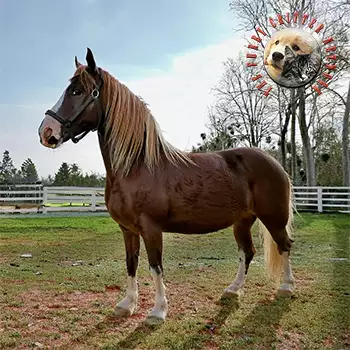

Growth & Physical Development

The Peruvian Paso undergoes dramatic physical transformation between weaning and maturity. Most foals are weaned between four and six months of age, and this transition marks the beginning of an extended growth period that continues until the horse is roughly five to six years old. Unlike many lighter riding breeds that reach near-adult size by age three, the Peruvian Paso's skeletal development, particularly the closure of growth plates in the legs and spine, follows a timeline that demands patience from owners eager to begin riding.

During the first year, the young horse will experience its most rapid gains in height. The legs, which appeared disproportionately long at birth, gradually come into proportion as the body deepens and the barrel fills out. By twelve months, many Peruvian Paso yearlings have reached approximately sixty to seventy percent of their adult height but considerably less of their adult body mass. Weight gain and muscular development continue steadily through the second and third years.

Conformation assessment during the juvenile period can be tricky, as young horses go through awkward growth phases where the hindquarters may temporarily stand higher than the withers or the neck may appear too short for the body. These phases are normal and typically resolve as growth evens out. However, significant limb deviations or persistent conformational concerns should be discussed with a veterinarian or experienced equine professional, as some issues benefit from early corrective trimming or other interventions.

The breed's signature gait characteristics become increasingly visible during this period. Owners and trainers often observe the natural lateral movement becoming more defined as the young horse matures and builds strength. It is important during this stage to allow the horse to develop its gait naturally on varied terrain rather than attempting to force or refine the movement through artificial means.

Nutrition & Diet Transition

The weaning transition is one of the most nutritionally sensitive periods in a young Peruvian Paso's life. In the weeks leading up to weaning, the foal should already be consuming a quality foal-appropriate concentrate alongside good hay or pasture. Abrupt dietary changes at weaning compound the stress of separation from the dam, so a gradual approach to both the social and nutritional transition is strongly recommended.

Young growing horses have higher protein, energy, and mineral requirements relative to their body weight than adult horses. Calcium, phosphorus, copper, and zinc are particularly important for proper skeletal development. An imbalance in the calcium-to-phosphorus ratio can contribute to developmental orthopedic diseases, a group of conditions that affect growing bones and joints. Feeds specifically formulated for young horses are designed to address these requirements, and choosing a reputable commercial feed takes much of the guesswork out of ration balancing.

Overfeeding is as dangerous as underfeeding during the growth phase. Excessive caloric intake, particularly from grain-heavy diets, can accelerate growth rates beyond what the skeletal system can safely support. This is especially relevant for breeds like the Peruvian Paso that are naturally moderate in frame and build. The goal is steady, consistent growth rather than rapid weight gain. Forage should form the foundation of the diet, with concentrates added only as needed to meet nutritional gaps.

Fresh, clean water and access to a plain white salt block should be available at all times. Pasture quality varies by season and region, and periodic forage analysis can help identify whether supplementation is needed. As the young horse transitions from yearling to two-year-old and beyond, dietary needs will gradually shift toward those of an adult horse, with protein requirements declining and the emphasis moving toward maintaining condition on a primarily forage-based diet.

Behavioral Changes

Adolescence in the Peruvian Paso brings predictable behavioral shifts as the young horse tests boundaries, develops social skills, and begins to assert its individuality. Colts in particular may become more assertive, displaying mounting behavior, nipping, and posturing as testosterone levels rise during the first and second year. While these behaviors are natural, they must be managed consistently to prevent dangerous habits from becoming established.

Fillies may show their first signs of estrus as early as twelve to eighteen months, though they are far too young for breeding at this stage. Hormonal cycling can cause mood fluctuations, distraction, and occasional irritability. Understanding that these behavioral changes have a physiological basis helps handlers respond with patience rather than frustration, while still maintaining clear expectations for manners and personal space.

The Peruvian Paso is renowned for its calm and cooperative disposition, and this temperament advantage is evident even during the sometimes challenging adolescent period. Compared to hotter-blooded breeds, the young Peruvian Paso tends to be more forgiving of handler mistakes and quicker to return to a relaxed state after a spook or moment of tension. This does not mean the breed is immune to developing vices or anxiety, however. Inconsistent handling, social isolation, and insufficient turnout are common contributors to behavioral problems in young horses of any breed.

Play behavior remains important throughout adolescence. Young horses that have access to compatible companions engage in mutual grooming, play fighting, and racing that builds physical fitness and social intelligence. Horses denied these opportunities may develop stereotypic behaviors such as cribbing, weaving, or stall walking, which are difficult to eliminate once established.

Training Priorities

Ground training during the juvenile period establishes the foundation upon which all future work is built. For the Peruvian Paso, this means teaching the young horse to lead quietly, stand for grooming and hoof care, load into a trailer, and accept basic handling of every part of its body. These lessons should be introduced gradually, with each session kept short enough that the horse's attention span is not overwhelmed. Ending on a positive note reinforces the idea that cooperation is rewarding.

Longeing and ground driving can be introduced as the horse matures, typically around eighteen months to two years for light work and always with attention to the stress placed on developing joints. Tight circles and hard footing are particularly harmful to young skeletal structures. The Peruvian Paso's natural gait can be observed and gently encouraged during longe work, but any attempt to use mechanical devices or weighted shoes to alter or enhance the gait at this age is both unnecessary and potentially harmful.

The question of when to start a Peruvian Paso under saddle is a matter of ongoing discussion among breeders and trainers. Traditional practice in Peru often involved starting horses at a younger age, but modern understanding of equine skeletal maturation supports waiting until the horse is at least three years old for initial saddle work, with serious training and sustained riding delayed until four or older. The growth plates in the spine, which bear the rider's weight, are among the last to close, and premature loading can cause lasting damage.

Regardless of the training timeline, the juvenile period is an ideal time to build the young horse's vocabulary of cues and its trust in the handler. Desensitization to common stimuli such as tarps, water crossings, clippers, and spray bottles pays enormous dividends later. A well-prepared Peruvian Paso that enters formal training already comfortable with the human world is far more likely to progress quickly and without conflict.

Exercise & Activity

Free movement is the best form of exercise for a growing Peruvian Paso. Ample daily turnout on safe, varied terrain allows the young horse to self-regulate its activity level, develop balance and coordination, and strengthen bones and soft tissues through natural loading patterns. Pasture turnout with compatible companions provides both physical exercise and the social interaction that is essential for mental health.

Structured exercise should be introduced conservatively and with respect for the horse's developmental stage. Light ground work, short walks in hand on varied terrain, and ponying alongside a calm older horse are excellent ways to build fitness and expose the young horse to new environments without placing excessive strain on growing structures. Long trail rides, repetitive arena work, and any form of high-impact exercise should be avoided until the horse is physically mature.

The Peruvian Paso's natural gait develops best through self-carriage and natural movement rather than forced or artificial training methods. Young horses allowed to move freely over hills, through fields, and across different footing conditions develop the strength and proprioception that support their signature smooth gait. Restricting a young horse to flat, level surfaces or confining it to a stall for extended periods works against this natural development.

Monitoring the young horse for signs of exercise-related stress is important. Persistent lameness, swelling in the joints, reluctance to move, or a sudden change in gait quality should prompt a veterinary evaluation. Growing horses are susceptible to conditions such as physitis, osteochondrosis, and flexural deformities, many of which have an exercise and nutrition component. Early detection and management of these conditions generally leads to better outcomes.

Gelding Considerations

The decision of whether and when to geld a Peruvian Paso colt is one of the most consequential choices an owner faces during the juvenile period. The vast majority of male horses that are not destined for breeding programs benefit enormously from castration, both in terms of manageability and quality of life. Geldings are generally calmer, safer to handle, more compatible with other horses, and easier to keep in a variety of living situations.

Timing of gelding varies based on veterinary recommendation and individual circumstances. Many veterinarians are comfortable performing the procedure once both testicles have descended, which typically occurs by one year of age. Some owners prefer to wait until eighteen to twenty-four months to allow more masculine physical development, though the behavioral advantages of early gelding are well documented. The procedure is routine and carries low risk when performed by an experienced equine veterinarian under appropriate conditions.

For colts that are being evaluated as potential breeding stock, the decision to delay gelding should be made in consultation with knowledgeable breeders who can assess whether the young horse possesses the conformation, gait quality, temperament, and lineage to justify remaining intact. The Peruvian Paso breed benefits from thoughtful, selective breeding practices, and not every colt, regardless of how attractive he may be, warrants contributing to the gene pool.

Post-operative care following gelding is straightforward but important. The surgical site should be monitored for excessive swelling, discharge, or signs of infection. Controlled exercise in the days following surgery helps promote drainage and reduce swelling. Most young horses recover quickly and show a notable reduction in hormonally driven behaviors within weeks to months, though horses gelded later in life may retain some stallion-like habits.

Socialization & Exposure

Continued socialization during the juvenile period is essential for producing a confident, well-adjusted Peruvian Paso. While the foundation is laid during the foal's earliest weeks, the experiences accumulated between weaning and the start of formal training shape the horse's responses to the wider world. A young horse that encounters a broad range of sights, sounds, surfaces, and situations during this formative period is far less likely to develop fear-based reactions later in life.

Trailer loading practice is one of the most valuable skills to introduce during this stage. Rather than waiting until the horse needs to travel for a veterinary emergency or show, regular low-pressure trailer loading sessions teach the young horse that the trailer is a safe, unremarkable space. Begin with simply walking the horse near and around the trailer, progressing to loading and unloading without travel, and eventually taking short trips. Each session should be calm and unhurried.

Exposure to farrier and veterinary procedures builds tolerance for necessary handling throughout the horse's life. Young Peruvian Pasos should learn to stand quietly for hoof trimming, which typically begins at a few months of age and continues on a regular schedule. Regular handling of the mouth prepares the horse for dental care. Veterinary procedures such as vaccinations and deworming become less stressful when the horse has been conditioned to accept restraint and brief discomfort without panic.

Trail walking, either in hand or while ponied, introduces the young horse to environmental challenges such as water crossings, wildlife encounters, uneven terrain, and vehicular traffic. These experiences build the calm, unflappable attitude that Peruvian Paso owners prize. The breed's inherent steadiness is an asset in these situations, but it must be reinforced through positive exposure rather than taken for granted. A young horse that is sheltered from novel experiences will not magically develop confidence when it encounters them for the first time as an adult.

Always consult a qualified professional before making any health-related decisions. This content is provided for informational reference only and should not replace professional guidance specific to your animal.