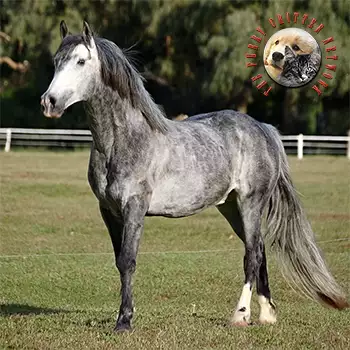

Growth & Physical Development

The juvenile period for a Paso Fino spans roughly from weaning at four to six months through the horse's third or fourth year, encompassing some of the most dramatic physical changes the animal will undergo. During this time, the horse transitions from a leggy, somewhat awkward weanling into a proportioned young adult approaching its mature size. Growth is not linear; Paso Finos tend to experience growth spurts interspersed with periods of consolidation, and different parts of the body mature at different rates.

The skeletal system is still developing throughout the juvenile period, and the growth plates in the long bones do not fully close until the horse is four to five years old. This has significant implications for the type and intensity of work that can be safely asked of a young Paso Fino. Excessive concussive exercise, carrying heavy loads, or repetitive training on hard surfaces can damage developing joints and growth plates, potentially causing lifelong soundness problems.

Paso Finos are a compact breed, and most individuals will reach close to their adult height by eighteen to twenty-four months, though they continue to fill out and develop muscularly well into their fourth year. Regular body condition scoring and growth monitoring help ensure the young horse is developing at a healthy rate. Both excessive thinness and excessive weight can cause problems during this critical growth phase, so nutrition and exercise must be managed carefully.

Hoof growth and development require particular attention during the juvenile period. Regular farrier visits should begin early, with the first trim typically occurring around one to two months of age and continuing every six to eight weeks thereafter. Proper hoof balance during growth helps prevent conformational issues and supports the development of the breed's naturally smooth gait mechanics.

Nutrition & Diet Transition

The transition from a milk-based diet to a fully forage-and-grain diet is one of the most important nutritional shifts in a Paso Fino's life. After weaning, the young horse's diet should be centered on high-quality forage, supplemented with a feed specifically formulated for growing horses. These growth feeds are designed to provide the correct ratios of protein, calcium, phosphorus, and trace minerals needed to support skeletal and muscular development without encouraging excessive growth rates.

Overfeeding young horses is a common and potentially dangerous mistake. Rapid growth driven by excessive caloric intake has been linked to developmental orthopedic diseases, including osteochondritis dissecans and physitis. Paso Finos are naturally moderate in size, and their nutritional program should reflect this. The goal is steady, consistent growth rather than maximum growth rate. A young Paso Fino should have visible ribs that are easily felt but not prominently showing, with a smooth topline and developing muscle.

Forage quality matters enormously for growing horses. Good-quality grass hay or a grass-legume mix provides the fiber foundation of the diet, while pasture access offers both nutrition and the opportunity for free exercise that supports healthy development. If pasture is limited, hay should be available in quantities that allow the young horse to eat throughout the day, mimicking the natural grazing pattern that supports digestive health.

Fresh, clean water and a free-choice mineral supplement appropriate for the region should always be available. The mineral profile of hay and pasture varies by geography and soil type, and a forage analysis can help identify any specific deficiencies that need to be addressed through supplementation. Avoid feeds and supplements that contain excessive iron, as most horses receive adequate iron from forage and additional supplementation can interfere with the absorption of other essential minerals.

Behavioral Changes

Adolescence brings a wave of behavioral changes as the young Paso Fino develops its individual personality and tests social boundaries. Weanlings may go through a period of anxiety and vocalization immediately after separation from the mare, which typically subsides within a few days to a couple of weeks, especially if the young horse has companions. Having another horse, even an older steady companion rather than a same-age peer, can ease the weaning transition significantly.

As yearlings and two-year-olds, Paso Finos often become more assertive and curious, pushing boundaries with both handlers and herd mates. Colts in particular may begin displaying dominant behaviors such as nipping, striking, rearing, or mounting other horses. These behaviors are normal expressions of developing hormones and social instincts, but they must be managed consistently to prevent them from becoming dangerous habits. Clear, calm, and firm handling during this phase establishes expectations that carry into adulthood.

The breed's natural willingness and desire to please can make the adolescent period smoother than with some other breeds, but it also means that a Paso Fino may internalize stress or confusion rather than acting out visibly. Handlers should watch for subtle signs of anxiety, including repetitive behaviors, reluctance to engage, changes in appetite, or excessive spookiness. These signs may indicate that the horse is overwhelmed by its environment, training demands, or social situation.

Play behavior is important during adolescence and should be encouraged through safe turnout with compatible companions. Young Paso Finos that have the opportunity to run, play, and interact with other horses develop better social skills, stronger musculoskeletal systems, and more balanced temperaments than those kept in isolated confinement. Adequate turnout time is not a luxury during this phase; it is a developmental necessity.

Training Foundations

Groundwork and basic handling training can and should begin well before a Paso Fino is old enough to carry a rider. Leading, tying, standing for the farrier, loading into a trailer, and accepting grooming and bathing are all skills that can be introduced during the weanling and yearling period. These early lessons, taught with patience and consistency, create a foundation of trust and communication that makes later training under saddle far smoother.

The Paso Fino's signature gait is a natural inherited trait, not a trained behavior, but the refinement and development of gait quality does require thoughtful training. Many Paso Fino trainers begin light gait work in hand or on a longe line around age two, allowing the horse to develop balance and rhythm without the added challenge of carrying a rider. The goal at this stage is to encourage the natural gait without forcing or drilling, letting the horse find its own cadence and footfall pattern.

Introduction to saddle and bridle typically occurs around two and a half to three years of age, depending on the individual horse's physical and mental maturity. Paso Finos are generally cooperative about tack introduction when proper groundwork has been established. Initial sessions should be brief and positive, focusing on acceptance of the equipment rather than performance. Backing, or the first time a rider sits on the horse, is best handled by an experienced trainer who understands the breed's sensitivity and responsiveness.

Throughout the training process, it is essential to respect the young horse's developing body. Sessions should be kept short, physical demands should be introduced gradually, and the horse should always be given adequate recovery time between training days. A Paso Fino that is brought along slowly and thoughtfully will be a more willing, sound, and capable partner for decades to come than one that is pushed too hard too soon.

Exercise & Turnout

Free exercise through daily turnout is one of the most beneficial things an owner can provide for a growing Paso Fino. Unrestricted movement over varied terrain strengthens bones, develops tendons and ligaments, builds cardiovascular fitness, and allows the young horse to practice balance and coordination naturally. Pasture turnout also satisfies the horse's innate need for movement and social interaction, contributing to mental well-being and reducing the development of stall vices.

The amount and type of structured exercise appropriate for a juvenile Paso Fino depends on age and developmental stage. Weanlings and yearlings generally need little beyond pasture turnout and basic handling sessions. Two-year-olds can begin light longe work and in-hand training, but sessions should be brief and the footing should be supportive and even. Circles on the longe line stress developing joints, so work in both directions should be balanced and the circle size should be as large as practical.

Swimming and ponying alongside an older horse at a walk or slow gait are excellent low-impact exercise options for young Paso Finos that build fitness without stressing immature joints. These activities also provide mental stimulation and exposure to new environments. Trail walking in hand is another valuable exercise that introduces the young horse to natural terrain, water crossings, wildlife, and other trail stimuli in a controlled manner.

Regardless of the exercise method, the young Paso Fino should never be worked to the point of fatigue. A tired young horse is more prone to injury, and associating exercise with exhaustion can create reluctance and resistance that undermines the training relationship. The guiding principle during the juvenile period is that every physical activity should leave the horse feeling confident and comfortable, building positive associations with work and movement.

Gelding Considerations

The decision of whether and when to geld a young Paso Fino colt is one of the most significant management choices an owner will face during the juvenile period. Gelding eliminates the production of testosterone, which reduces stallion-like behaviors such as aggression, mounting, and territorial marking, and makes the horse safer and easier to manage in most situations. The vast majority of male Paso Finos that are not intended for breeding programs are gelded.

Traditional timing for gelding is typically between six and eighteen months of age, though the procedure can be performed at almost any age. Earlier gelding, sometimes as young as a few months, has become more common and generally results in a smoother behavioral transition since the colt has had less time to develop stallion habits. Later gelding, around twelve to eighteen months, allows more masculine physical development, which some owners prefer for aesthetic reasons. The veterinarian can advise on the best timing for the individual horse.

The gelding procedure itself is routine and is most commonly performed under standing sedation in the field, though some veterinarians prefer to perform it under general anesthesia in a clinical setting. Recovery is generally straightforward, with most young horses returning to normal activity within a few days. Post-operative care includes monitoring for swelling, ensuring adequate drainage, and providing exercise to promote circulation and reduce edema. Flies and dirty environments are the primary concerns during healing, so timing the procedure for cooler, drier months can reduce complications.

Owners considering keeping a colt intact for future breeding should evaluate the horse carefully against breed standards and have the horse assessed by experienced Paso Fino breeders or judges. Maintaining a stallion requires specialized facilities, experienced handling, and a genuine commitment to the responsibilities of breeding. A colt that does not meet the criteria for a breeding prospect will lead a happier, safer, and more versatile life as a gelding.

Socialization & Exposure

The juvenile period is a critical window for expanding a Paso Fino's experience base and building the confidence that will define its adult temperament. While early socialization begins during the foal phase, the weanling through three-year-old period is when the horse should be systematically exposed to a wide range of environments, objects, sounds, and situations that it will encounter throughout its working life.

Trailer loading and hauling should be introduced early and practiced regularly, long before the horse needs to travel for an event or veterinary emergency. A young horse that learns to load calmly and travel without stress is far easier to manage throughout its life than one that associates the trailer with anxiety. Start with short, low-pressure sessions where the horse can explore the trailer at its own pace, gradually progressing to short trips with a calm, experienced traveling companion.

Exposure to different environments is particularly valuable for Paso Finos that will be used for trail riding, showing, or parades, all common roles for the breed. Taking the young horse to new locations, even just for hand-walking and grazing, builds adaptability and resilience. Encountering traffic, dogs, bicycles, water crossings, bridges, livestock, and other common trail obstacles during the formative years makes these experiences routine rather than frightening.

Socialization with a variety of people is also important. The young Paso Fino should be handled by different individuals of varying ages, sizes, and experience levels, always under appropriate supervision. This prevents the horse from becoming overly bonded to a single handler and builds general trust in humans. Positive experiences with farriers, veterinarians, and other professionals during the juvenile period reduce stress during these necessary interactions for the rest of the horse's life.

Group turnout with horses of different ages and temperaments teaches the young Paso Fino how to navigate social hierarchies, read body language, and resolve conflicts without panic. These skills are essential for a horse that will eventually need to work calmly in groups, whether on the trail, in the show ring, or in a multi-horse barn environment.

Always consult a qualified professional before making any health-related decisions. This content is provided for informational reference only and should not replace professional guidance specific to your animal.