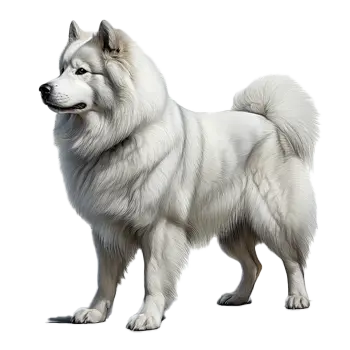

Growth & Physical Development

The juvenile period for a Samoyed spans roughly from three months to around 18 months of age, during which the breed undergoes dramatic physical transformation. By three months, a Samoyed puppy may weigh between 15 and 25 pounds, and growth continues at a rapid pace through the first year. Males typically reach their full height by 12 to 14 months, though they continue to fill out and develop muscle mass well into their second year.

During this stage, the Samoyed's iconic double coat begins to develop in earnest. The soft puppy fluff gradually gives way to the dense, weather-resistant undercoat topped by longer, harsher guard hairs. This coat transition can be patchy and uneven, which is entirely normal. Regular brushing during this period helps manage shedding and keeps the developing coat healthy.

Bone and joint development is a particular concern for medium to large breeds like the Samoyed. Rapid growth places significant stress on developing skeletal structures, and improper nutrition or excessive high-impact exercise during this window can contribute to orthopedic problems later in life. Monitoring your Samoyed's growth rate and body condition is essential to ensuring healthy development.

Growth plates in the long bones remain open until the dog reaches skeletal maturity, which for Samoyeds generally occurs between 12 and 18 months. Until the growth plates close, activities that involve repetitive jumping, sharp turns on hard surfaces, or sustained running on pavement should be limited. Allowing the puppy to set its own pace during play on soft, varied terrain is a safer approach.

Nutrition & Diet Transition

Feeding an adolescent Samoyed requires a careful balance between supporting rapid growth and preventing the problems associated with growing too quickly. A high-quality puppy food formulated specifically for medium to large breed puppies is recommended, as these formulas contain controlled levels of calcium and phosphorus that promote steady, healthy bone development.

Feeding schedules typically shift from three meals per day at three months of age to two meals per day by six months. Free-feeding is generally discouraged for Samoyeds, as the breed can be prone to weight gain and free access to food makes it difficult to monitor intake. Measured meals allow you to track exactly how much your dog is eating and adjust portions as growth demands change.

The transition from puppy food to adult food generally occurs between 12 and 18 months, depending on the individual dog's growth trajectory. This switch should be made gradually over the course of seven to ten days, mixing increasing proportions of adult food with decreasing amounts of puppy food to avoid digestive upset. Your veterinarian can help determine the optimal timing based on your Samoyed's specific development.

Treats are an important training tool during adolescence but should not exceed ten percent of the dog's total daily caloric intake. Many commercial treats are calorie-dense and can contribute to excessive weight gain if used liberally. Small pieces of lean meat, vegetables like carrots or green beans, and purpose-made training treats offer lower-calorie alternatives that most Samoyeds find equally motivating.

Behavioral Changes

Adolescence in Samoyeds brings a predictable but sometimes frustrating set of behavioral shifts. Around six to eight months of age, many owners notice that their once-obedient puppy becomes more independent, distracted, and prone to testing boundaries. This is a normal part of canine development and reflects the dog's growing confidence and desire to explore the world on its own terms.

Samoyeds are an intelligent and social breed with a well-documented independent streak rooted in their history as working dogs in Siberia. During adolescence, this independence can manifest as selective hearing, increased interest in exploring rather than staying close to the handler, and creative problem-solving that may include opening gates, raiding counters, or dismantling toys in record time.

Chewing and mouthing often intensify during this period, partly driven by the discomfort of teething and partly by the natural urge to explore objects with the mouth. Providing a variety of appropriate chew toys and redirecting mouthing behavior consistently is far more effective than punishment. Samoyeds respond poorly to harsh corrections and can become anxious or shut down when training methods are overly forceful.

Some adolescent Samoyeds develop nuisance barking, which is a breed tendency that requires early management. Samoyeds were bred to vocalize as part of their work, and an adolescent Samoyed discovering the power of its voice can be persistent. Teaching a reliable quiet command and ensuring adequate mental and physical stimulation are the most effective strategies for managing excessive vocalization.

Training Priorities

Training during the juvenile and adolescent period is arguably the most important investment a Samoyed owner can make. The foundation laid during these months determines the behavioral patterns that will define the dog's adult personality. Positive reinforcement methods work exceptionally well with this breed, which is eager to please but quick to disengage from repetitive or punitive training sessions.

Recall training deserves particular emphasis for Samoyeds. Their independent nature and strong prey drive mean that a reliable recall can be a challenge to achieve but is absolutely essential for safety. Building recall through high-value rewards, gradually increasing distractions, and never punishing a dog for coming when called — even if it took longer than desired — creates a foundation of trust that pays dividends throughout the dog's life.

Leash manners are another priority. Samoyeds are a sled dog breed and pulling comes naturally to them. Without consistent leash training during adolescence, an adult Samoyed can be a formidable puller. Reward-based loose-leash walking techniques, front-clip harnesses, and frequent short training sessions are more effective than long walks where pulling is inadvertently reinforced.

Basic obedience commands including sit, down, stay, leave it, and drop it should be practiced regularly in varied environments. Adolescent Samoyeds often perform beautifully at home but seem to forget everything they know when in a new or exciting setting. This is normal and reflects the developmental stage rather than a training failure. Practicing commands in progressively more stimulating environments helps generalize learned behaviors.

Exercise & Activity

Balancing an adolescent Samoyed's seemingly boundless energy with the need to protect developing joints requires thoughtful planning. The general guideline of five minutes of structured exercise per month of age, twice daily, provides a reasonable starting framework, though individual dogs may need adjustments based on their energy levels and physical development.

Free play on varied terrain is one of the best forms of exercise for growing Samoyeds. Off-leash time in safely enclosed areas allows the dog to run, stop, and change direction at its own pace, which is less stressful on developing joints than forced marches or extended jogging on hard surfaces. Swimming is an excellent low-impact exercise option that many Samoyeds enjoy, though not all take to water naturally.

Mental stimulation is equally important during this stage and should not be overlooked in favor of physical exercise alone. Puzzle feeders, scent work games, training sessions, and interactive toys help tire an adolescent Samoyed's busy mind. A Samoyed that is physically exercised but mentally understimulated may channel its restless energy into destructive behaviors.

Samoyeds were bred to work in cold climates and are most comfortable during cooler weather. During warm months, exercise should be scheduled for early morning or evening hours when temperatures are lower. Overheating is a genuine risk for this heavily coated breed, and adolescent dogs may not yet have learned to self-regulate their activity levels in the heat. Watch for signs of heat stress including excessive panting, drooling, and reluctance to continue moving.

Spay/Neuter Considerations

The decision of when to spay or neuter a Samoyed is an important one that should be discussed with your veterinarian in the context of your individual dog's health and circumstances. Current research suggests that for medium to large breed dogs, delaying spay or neuter until the dog has reached skeletal maturity may offer orthopedic and developmental benefits.

For male Samoyeds, some veterinary professionals recommend waiting until at least 12 to 18 months of age before neutering. Testosterone plays a role in proper bone and joint development, and early neutering has been associated with an increased risk of certain orthopedic conditions in larger breeds. However, intact males may exhibit hormone-driven behaviors such as roaming, marking, and inter-dog aggression that some owners find difficult to manage.

For female Samoyeds, the timing decision involves balancing the benefits of allowing the dog to reach physical maturity against the risks associated with heat cycles, including the possibility of unwanted pregnancy and a slightly increased risk of mammary tumors with each successive heat. Many veterinarians now recommend allowing female Samoyeds to experience one or two heat cycles before spaying.

Regardless of the timing chosen, responsible pet ownership requires preventing unplanned breeding. Intact males and females must be securely contained, and owners should be vigilant about supervision during heat cycles. If you are unsure about the best timeline for your specific dog, your veterinarian can provide personalized guidance based on your Samoyed's development and your household circumstances.

Socialization & Exposure

While the primary socialization window closes around 12 to 14 weeks of age, continued socialization throughout adolescence is critical for Samoyeds. The months between three and twelve months represent a period when the dog is actively forming lasting impressions of the world, and positive experiences during this time contribute to a confident, well-adjusted adult.

Exposure to a wide variety of people is particularly important. Samoyeds are naturally friendly and people-oriented, but without continued positive encounters with diverse individuals — including people wearing hats, uniforms, or carrying unusual objects — some dogs may develop wariness or reactivity. Regular visits to dog-friendly establishments, outdoor markets, and community events provide natural opportunities for positive social encounters.

Interactions with other dogs should be carefully managed during adolescence. Not every dog-to-dog interaction will be positive, and a single frightening encounter can leave a lasting impression on a young Samoyed. Well-run puppy classes, supervised playgroups with appropriately matched dogs, and controlled introductions with known, stable adult dogs are all preferable to unstructured encounters at dog parks where the behavior of other animals is unpredictable.

Environmental socialization is equally valuable. Exposing your adolescent Samoyed to different surfaces, sounds, locations, and situations helps build resilience and adaptability. Rides in the car, visits to the veterinary office for positive-only social visits, walks in urban and rural settings, and encounters with common household items like vacuums and umbrellas all contribute to a well-rounded companion.

Always consult a qualified professional before making any health-related decisions. This content is provided for informational reference only and should not replace professional guidance specific to your animal.