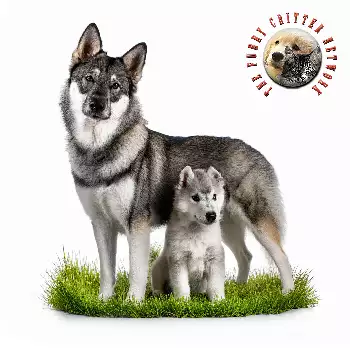

Growth & Physical Development

Norwegian Elkhound puppies enter the juvenile stage around eight weeks of age and continue developing rapidly through roughly twelve to fourteen months. During this period, the breed's characteristic sturdy frame and dense double coat begin to take shape. Growth is not always linear, and owners should expect alternating phases of rapid gains followed by brief plateaus as the body allocates resources between skeletal growth, muscle development, and coat maturation.

Most Elkhound puppies reach approximately half their adult weight by four months and approach their full height between ten and twelve months, though filling out and muscling up continues well beyond that point. Males tend to be slightly larger and heavier than females, typically reaching forty-eight to fifty-five pounds at maturity while females settle closer to forty to forty-eight pounds.

The double coat undergoes significant changes during adolescence. The soft, fluffy puppy fur gradually gives way to the coarser, weather-resistant outer coat that the breed is known for. This transition often involves heavy shedding and an awkward intermediate stage where the coat appears patchy or uneven. Regular brushing during this period helps manage loose fur and encourages healthy new growth.

Joint and bone development deserve particular attention in a medium-sized, active breed like the Elkhound. Avoid high-impact activities such as prolonged running on hard surfaces or repetitive jumping until the growth plates have closed, which typically occurs between twelve and eighteen months. Your veterinarian can help determine when your individual dog's skeletal development is sufficiently complete for more demanding physical activity.

Nutrition & Diet Transition

Juvenile Norwegian Elkhounds require a balanced diet formulated for medium-breed puppies that supports steady growth without promoting excessive weight gain. The breed has a well-earned reputation for enthusiastic eating, and overfeeding during the growth phase can place unnecessary strain on developing joints and predispose the dog to obesity later in life.

Most Elkhound puppies transition from three meals per day to two meals per day between four and six months of age. Portion sizes should be adjusted regularly based on body condition rather than relying solely on the feeding guidelines printed on the food packaging. You should be able to feel your puppy's ribs without pressing hard, and there should be a visible waist when viewed from above.

The switch from puppy food to adult food typically occurs between twelve and fourteen months, depending on the individual dog's rate of development. Transition gradually over the course of seven to ten days, blending increasing amounts of the new food with decreasing amounts of the puppy formula to avoid digestive upset. Norwegian Elkhounds can have sensitive stomachs, so patience during dietary changes pays dividends.

Fresh water should be available at all times, and treats should account for no more than ten percent of the daily caloric intake. Use treats strategically during training sessions rather than offering them freely throughout the day. High-value training treats can be especially useful with this intelligent but sometimes independent breed.

Behavioral Changes

Adolescence brings a marked shift in Norwegian Elkhound behavior. The compliant, eager-to-please puppy often gives way to a more independent and occasionally headstrong adolescent. This is entirely normal for the breed, which was developed to work independently in rugged Scandinavian terrain, tracking and holding large game at bay until the hunter arrived. That self-reliant heritage means the juvenile Elkhound may test boundaries more assertively than breeds with a stronger desire to please.

Increased vocalization is common during this stage. Elkhounds are a naturally vocal breed, and adolescence often amplifies this tendency. Barking at perceived intruders, alert barking during walks, and enthusiastic vocalizations during play are all typical. While some barking is inherent to the breed, establishing clear expectations early helps prevent excessive noise from becoming an ingrained habit.

Resource guarding and possessive behavior can emerge during adolescence if not addressed proactively. Practice trading games in which you offer something of equal or higher value in exchange for an item the puppy has. This teaches the dog that relinquishing possessions leads to positive outcomes rather than loss.

Some juvenile Elkhounds go through a fear period between eight and eleven months in which previously familiar objects, people, or situations suddenly provoke anxiety. Respond with calm, matter-of-fact reassurance rather than coddling or forcing the dog to confront the trigger. Most fear periods resolve on their own within a few weeks, provided the dog is not subjected to traumatic experiences during this sensitive window.

Training Priorities

Training a juvenile Norwegian Elkhound requires a blend of patience, consistency, and respect for the breed's independent nature. Positive reinforcement methods work best with this breed, as harsh corrections tend to produce stubbornness rather than compliance. Keep training sessions short, varied, and engaging to hold the Elkhound's attention, and end on a successful note to maintain motivation.

Reliable recall is arguably the single most important command for any Elkhound owner. The breed's strong prey drive and independent decision-making mean that an off-leash Elkhound who picks up an interesting scent can quickly become a disappearing Elkhound. Build recall in stages, starting in low-distraction environments and gradually increasing the level of competing stimuli. Always reward generously for a successful recall, making the return to you far more rewarding than whatever the dog was investigating.

Leash manners are another priority. Norwegian Elkhounds are powerful for their size and naturally inclined to pull forward, especially when excited. Begin structured leash walking early, using consistent directional changes and rewards for maintaining a loose leash. A front-clip harness can provide additional management while the dog is learning.

Basic obedience commands such as sit, down, stay, and leave it should be practiced daily in short sessions. The Elkhound's intelligence means it learns quickly, but that same intelligence can lead to creative avoidance if the dog perceives training as repetitive or unrewarding. Rotate between different commands, introduce new challenges regularly, and incorporate training into everyday routines like mealtimes and walks.

Exercise & Activity

Norwegian Elkhounds are an active, athletic breed that requires substantial daily exercise throughout adolescence. A bored Elkhound with excess energy will find its own outlets, often in the form of digging, chewing, or persistent barking. Plan for at least sixty to ninety minutes of physical activity per day, divided between structured walks, play sessions, and mental enrichment.

Hiking is an ideal activity for this breed once the dog is old enough for sustained trail work. The Elkhound's sure-footedness and endurance make it a natural trail companion, and the variety of terrain and scent provides excellent mental stimulation. Begin with shorter, moderate hikes and gradually build distance and difficulty as the dog's fitness and skeletal maturity allow.

Mental exercise is just as important as physical exertion for this intelligent breed. Puzzle feeders, scent work games, and hide-and-seek with favorite toys all engage the Elkhound's problem-solving abilities. Training sessions themselves serve as mental workouts, and incorporating novel challenges keeps the dog engaged and reduces the likelihood of boredom-driven misbehavior.

Be mindful of temperature during exercise. The Norwegian Elkhound's dense double coat provides excellent cold-weather insulation but makes the breed prone to overheating in warm climates. Schedule vigorous activity for cooler parts of the day during summer months, provide ample water, and watch for signs of heat stress such as excessive panting, drooling, or reluctance to continue.

Spay/Neuter Considerations

The decision of when to spay or neuter a Norwegian Elkhound is best made in consultation with your veterinarian, taking into account the individual dog's health, behavior, and lifestyle. Current research suggests that allowing medium-sized breeds to reach skeletal maturity before altering may offer orthopedic benefits, as sex hormones play a role in growth plate closure and musculoskeletal development.

For male Elkhounds, some veterinarians recommend waiting until twelve to eighteen months of age to neuter. This allows the dog to benefit from the developmental effects of testosterone while still addressing the procedure before behavioral patterns associated with intact males become deeply established. Discuss the timing with your veterinarian, who can evaluate your dog's individual growth trajectory.

For females, the timing discussion often revolves around whether to spay before or after the first heat cycle. There are valid arguments on both sides, and the best choice depends on factors including your living situation, ability to manage a dog in heat, and any breed-specific health considerations your veterinarian identifies.

Regardless of timing, the surgical procedure itself is routine and recovery is generally straightforward. Plan for a quiet recovery period of ten to fourteen days during which activity is restricted. Young Elkhounds may find this enforced rest frustrating, so have puzzle toys and frozen enrichment items ready to keep the dog occupied without physical exertion.

Socialization & Exposure

The juvenile period represents a critical window for socialization in Norwegian Elkhounds. While the breed is naturally confident and alert, a well-socialized Elkhound is far more adaptable and enjoyable to live with than one whose world has been limited to the home and yard. Expose your adolescent Elkhound to a wide variety of people, animals, environments, sounds, and surfaces in a positive and controlled manner.

Group puppy classes provide valuable structured socialization with other dogs in a supervised setting. Norwegian Elkhounds can develop same-sex dog aggression or selective tolerance as they mature, so early positive experiences with a variety of dogs help establish a foundation of social flexibility. Choose classes led by instructors who emphasize appropriate play styles and intervene when interactions become too intense.

Urban environments, car rides, veterinary offices, grooming salons, and outdoor markets all present excellent opportunities for controlled exposure. Pair each new experience with treats and calm praise so the dog forms positive associations. Avoid flooding the puppy with too many novel stimuli in a single outing, as this can produce overwhelm rather than confidence.

Socialization with children, elderly individuals, and people using mobility aids or wearing unusual clothing helps prevent the wariness toward unfamiliar human appearances that some Elkhounds develop. Supervise all interactions closely and advocate for your puppy by removing it from any situation that produces genuine fear rather than mild uncertainty. The goal is to build the dog's confidence, not to prove it can tolerate distress.

Always consult a qualified professional before making any health-related decisions. This content is provided for informational reference only and should not replace professional guidance specific to your animal.