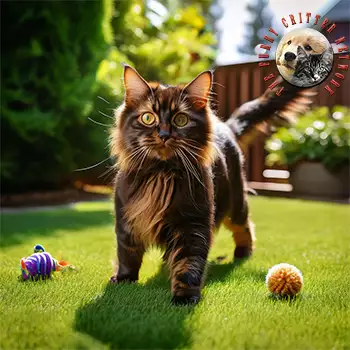

The York Chocolate traces its origins to a single farm cat born in 1983 in New York State, when a black-and-white domestic longhair named Blacky produced a chocolate-brown kitten in a litter sired by a longhaired black male. Breeder Janet Chiefari recognized the striking color and began a selective breeding program to establish the trait. The resulting breed was named for both the state of its origin and its signature chocolate coat color. Understanding this foundation story is essential for any prospective breeder, because the York Chocolate's relatively recent development from domestic longhair stock shapes both its genetic diversity profile and the breeding challenges it presents.
The breed's genetic makeup centers on the recessive chocolate gene (b/b at the Brown locus), which is a dilution of black pigment in the eumelanin pathway. When paired with the dilution modifier (d/d), the chocolate phenotype lightens to lavender, the other accepted color in the breed standard. Both parents must carry at least one copy of the chocolate allele for any offspring to express the chocolate color, and both must carry the dilution gene for lavender offspring. Breeders must thoroughly understand these inheritance patterns to predict litter outcomes and make informed pairing decisions that advance the breed while maintaining coat color consistency.
Because the York Chocolate descends from a small founder population, genetic diversity is a primary concern. A narrow gene pool increases the risk of homozygosity for deleterious recessive alleles and can lead to inbreeding depression manifesting as reduced fertility, smaller litter sizes, weakened immune function, and increased susceptibility to disease. Responsible breeders use coefficient-of-inbreeding calculations and pedigree analysis to select pairings that minimize relatedness while preserving the breed's defining characteristics. Where registry rules permit, carefully planned outcrosses to domestic longhairs carrying the chocolate gene can introduce fresh genetic material without compromising type.
Genetic testing has become an indispensable tool for responsible cat breeders. At a minimum, breeding York Chocolates should be screened for common feline genetic diseases including hypertrophic cardiomyopathy, polycystic kidney disease, and progressive retinal atrophy. While no breed-specific genetic tests exist exclusively for the York Chocolate, the panel tests available for domestic cats cover the mutations most likely to be present in a breed derived from domestic longhair stock. Blood type should also be determined, as neonatal isoerythrolysis, a potentially fatal condition caused by blood type incompatibility between queen and kittens, can be prevented through informed mate selection.