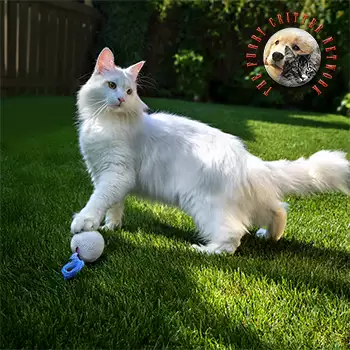

Turkish Angoras enter the juvenile phase around eight weeks of age and continue through roughly twelve months, though full physical maturity may not arrive until closer to two years. During this period, the kitten undergoes a dramatic transformation from a compact, round-faced baby into a lithe, elegant young cat with the breed's characteristic fine-boned frame and graceful proportions.
Growth in Turkish Angoras tends to be steady rather than explosive. They are a medium-sized breed, and most juveniles will reach a significant portion of their adult weight by six to eight months of age, with males typically outpacing females by a pound or two. The long, silky coat begins developing more noticeably around four to five months, with the tail plume and neck ruff filling in gradually over the first year.
Monitor your kitten's body condition regularly by feeling along the ribs and observing the waistline from above. A healthy juvenile Turkish Angora should have ribs that are easily felt but not prominently visible beneath the developing coat. Rapid weight gain or a potbellied appearance can indicate overfeeding or intestinal parasites and should be evaluated by your veterinarian.
Dental development is a notable feature of this stage. Deciduous teeth give way to permanent teeth between three and a half and six months of age. You may notice your kitten chewing on objects more frequently during this transition. Provide appropriate chew toys and monitor for retained baby teeth, which occasionally require veterinary extraction to prevent misalignment of the adult dentition.