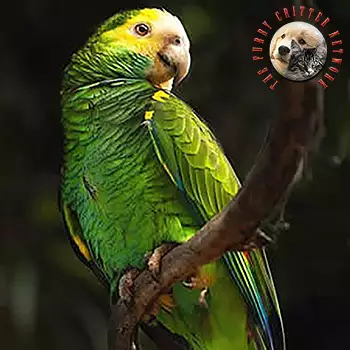

White-Fronted Amazons reach sexual maturity between three and five years of age, although behavioral signs of hormonal development may appear somewhat earlier. Amazona albifrons is one of the few Amazon parrot species that exhibits reliable visual sexual dimorphism in adult plumage, with males displaying red feathering on the alula and primary coverts while females lack this coloring entirely. This dimorphism simplifies sex identification for breeding purposes, though DNA sexing remains the gold standard for confirmation, particularly in younger birds whose adult plumage has not yet fully developed.
Sexual maturity alone does not constitute breeding readiness. A bird intended for breeding should be in excellent overall health, free from chronic illness, at an ideal body weight, and exhibiting normal feather condition and behavioral stability. Both prospective parents should undergo a comprehensive veterinary examination before any breeding attempt, including blood work to screen for infectious diseases that can be transmitted vertically to offspring, such as Psittacine Beak and Feather Disease, Avian Polyomavirus, and Chlamydia psittaci. A breeding pair carrying one of these pathogens risks producing infected chicks that may be chronically ill, unmarketable, or fatal to other birds they contact.
Hormonal conditioning for breeding involves environmental manipulation that mimics the natural seasonal triggers experienced by wild White-Fronted Amazons in their native range across Mexico and Central America. Gradually increasing the photoperiod to 13 to 14 hours of light per day over a period of several weeks signals the onset of breeding season. Simultaneously increasing the proportion of soft, warm foods such as cooked legumes, sprouted seeds, and fresh vegetables mimics the abundance of food resources that triggers reproductive readiness in wild populations. These environmental cues work in concert to stimulate gonadal development and the hormonal cascade that prepares both sexes for mating.
The decision to breed White-Fronted Amazons should never be taken lightly. The breeder must have a clear plan for the placement of offspring before any eggs are laid, sufficient resources and expertise to hand-rear chicks if necessary, and a commitment to producing well-socialized, healthy birds that will thrive as companions or contribute positively to captive breeding populations. Breeding without adequate preparation contributes to the surplus of poorly socialized parrots that overwhelm rescue organizations and live diminished lives in inappropriate homes.