
The Weaning Transition

Weaning is one of the most consequential transitions in a young Sulphur-Crested Cockatoo's life, and how it is managed has lasting effects on the bird's physical health, emotional security, and relationship with food. In the wild, cockatoo chicks are weaned gradually by their parents over a period of several months, learning to forage by observing and imitating adult behavior while still receiving supplemental feedings. Captive weaning should mirror this natural timeline as closely as possible rather than forcing an artificially accelerated schedule.

For hand-raised Sulphur-Crested Cockatoos, the weaning process typically begins around ten to twelve weeks of age, when the chick starts showing consistent interest in solid foods. Signs of weaning readiness include mouthing and chewing on objects, picking up and manipulating food items, reduced enthusiasm for formula feedings, and an increasing tendency to refuse the syringe at some meals. These signals should be welcomed and encouraged, not overridden. The chick is communicating that its neurological and digestive development has reached a stage where it is ready to begin processing whole foods.

The process should be abundance-based, meaning the chick has constant access to a wide variety of appropriate solid foods while formula feedings are gradually reduced in frequency rather than volume. Offer soft, easy-to-manipulate items first: warm cooked sweet potato, steamed broccoli florets, soaked and sprouted legumes, soft fruits like banana and papaya, and small pieces of whole-grain bread or cooked pasta. As the chick gains confidence and dexterity, introduce harder items such as raw vegetables, nuts in the shell, and formulated pellets designed for large cockatoos.

Abrupt weaning, where formula is simply cut off at a predetermined age, is harmful and can cause lasting psychological damage in cockatoos. Sulphur-Crested Cockatoos are emotionally complex birds, and the loss of the feeding ritual before the chick is developmentally ready can trigger anxiety, excessive screaming, and even self-directed behaviors such as feather plucking that may persist into adulthood. Allow the chick to set the pace. Most Sulphur-Crested Cockatoos complete weaning between fourteen and eighteen weeks of age, though some individuals take longer, and that is entirely normal.

Fledging & Physical Development

Fledging marks the period when a juvenile Sulphur-Crested Cockatoo develops the physical capacity for flight, and it represents a critical milestone in the bird's motor and cognitive development. Even for birds that will ultimately be wing-clipped as household companions, experiencing the fledging process fully is increasingly recognized by avian behaviorists as important for building coordination, spatial awareness, confidence, and cardiovascular fitness that benefit the bird throughout its life.

The first flight attempts typically occur between ten and fourteen weeks of age, depending on the individual bird's feather growth and muscle development. Early flights are clumsy, short, and often end in ungraceful landings. The chick is learning to coordinate wing beats, adjust pitch and yaw, gauge distances, and execute controlled decelerations. This learning process requires a safe environment free of hazards such as ceiling fans, open water, hot surfaces, uncovered windows, and gaps behind furniture where a disoriented young bird could become trapped.

Physical development during the juvenile period extends well beyond flight. The skeletal system continues to mature and harden, a process that depends heavily on adequate calcium, phosphorus, and vitamin D3 intake. The beak undergoes significant growth and keratinization, developing the formidable crushing strength for which cockatoos are known. Juvenile Sulphur-Crested Cockatoos begin exercising their beak extensively during this stage, chewing on everything within reach. Providing abundant appropriate chewing materials such as untreated wood blocks, palm fronds, leather strips, and foraging toys is essential both for beak health and for channeling this natural drive away from furniture, moldings, and electrical cords.

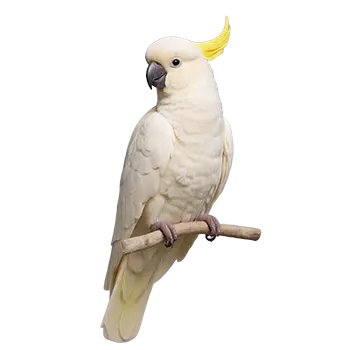
The full juvenile plumage comes in during this period, replacing the softer, fluffier feathering of the neonatal stage with the sleek, tight contour feathers of a young adult. The iconic sulphur-yellow crest reaches its full length, and the undersides of the tail and wing feathers show the characteristic wash of pale yellow. Juvenile plumage is often slightly duller and less sharply defined than mature adult plumage, and the periorbital skin ring may not yet show the full color development seen in adults. These subtle differences gradually resolve over the first two to three years as the bird matures.

Diet & Nutritional Needs

A juvenile Sulphur-Crested Cockatoo's dietary requirements shift substantially from the formula-based nutrition of the neonatal period to a complex, varied whole-food diet that must support continued growth, feather development, immune maturation, and an ever-increasing energy expenditure as the bird becomes more active. Getting the diet right during this stage establishes eating habits and nutritional preferences that will shape the bird's health for decades to come.

The foundation of the juvenile diet should be a high-quality formulated pellet designed for large cockatoos, comprising approximately 50 to 60 percent of total intake. Pellets provide a balanced, consistent nutritional baseline that compensates for the natural selectivity birds exhibit when offered a varied diet. Not all pellets are equal, however, and those with artificial colors, added sugars, or excessive preservatives should be avoided. Transitioning a newly weaned cockatoo to pellets requires patience, as many chicks initially prefer softer, sweeter foods and will need repeated exposure before accepting pellets as a dietary staple.

Fresh vegetables should constitute roughly 25 to 30 percent of the diet. Dark leafy greens such as kale, Swiss chard, dandelion greens, and mustard greens provide calcium, iron, and essential vitamins. Orange and red vegetables including sweet potato, carrot, bell pepper, and butternut squash deliver beta-carotene and additional micronutrients. Cruciferous vegetables like broccoli, cauliflower, and Brussels sprouts offer phytonutrients and fiber. Vegetables can be offered raw, lightly steamed, or in foraging arrangements that encourage the chick to work for its food, combining nutritional and behavioral enrichment.

Fruits, seeds, and nuts round out the remaining portion of the diet but must be offered judiciously. Fruits are high in natural sugars and should be treated as a supplementary component rather than a dietary pillar. Berries, apple slices, pomegranate seeds, and mango are nutritious choices in moderation. Seeds and nuts, while highly palatable and a source of essential fatty acids, are calorie-dense and can contribute to obesity if overfed. Offer them as training rewards, foraging incentives, or small daily portions rather than allowing free access. Sulphur-Crested Cockatoos have a strong natural preference for sunflower seeds and will preferentially select them over more nutritious options if given the chance, making portion control a practical necessity.

Certain foods must be strictly excluded from the diet. Avocado, chocolate, caffeine, alcohol, onion, garlic, and any food containing xylitol are toxic to birds. Uncooked beans contain hemagglutinins that are dangerous to avian digestive systems. High-salt and high-fat processed human foods contribute to liver and kidney damage over time. Establishing clear dietary boundaries during the juvenile period is far easier than attempting to correct entrenched preferences in an adult cockatoo that has spent years eating an inappropriate diet.

Behavioral Development & Training Foundations

The juvenile period is the single most important window for shaping the behavioral repertoire of a Sulphur-Crested Cockatoo. These birds are intelligent, highly social, and emotionally intense, qualities that make them extraordinary companions when channeled constructively and deeply challenging when neglected. The habits, boundaries, and communication patterns established during adolescence form the behavioral scaffolding the bird will rely on for the rest of its potentially 60-plus-year life.

Positive reinforcement training should begin as soon as the chick is weaned and physically active enough to participate. Start with simple target training, teaching the bird to touch its beak to the end of a stick or your finger on cue. This foundational behavior is the gateway to more complex training later, including step-up, station, recall, and cooperative care behaviors. Use small food rewards, verbal praise, and gentle head scratches as reinforcers, and keep training sessions short, no more than five to ten minutes, to match the juvenile's limited attention span.

Boundary setting is equally critical during this period. Juvenile Sulphur-Crested Cockatoos will test limits constantly, exploring what behaviors elicit responses from their caregivers. Screaming, biting, and demanding attention through loud vocalizations are natural behaviors in the wild, where they serve important flock communication functions. In a domestic setting, however, these behaviors must be managed from the outset. The key principle is to reinforce the behaviors you want and avoid inadvertently reinforcing the ones you do not. Reacting to a scream with attention, even negative attention such as shouting or rushing over, teaches the bird that screaming is an effective strategy for engaging its humans.

Independence training is a concept that is particularly important for cockatoos and is often overlooked by well-meaning caregivers. Because Sulphur-Crested Cockatoos bond so intensely, there is a natural temptation to spend every possible moment interacting with the bird. While bonding is essential, a bird that is never required to occupy itself will develop an unhealthy dependence on human attention that leads to separation anxiety, incessant contact calling, and destructive behavior when left alone. Teach the juvenile to play independently with toys, forage on its own, and remain calm in its cage or on a play stand for gradually increasing periods. This is not neglect but a vital life skill that protects the bird's emotional health.

Socialization should continue to broaden during the juvenile stage. Introduce the bird to new people, environments, sounds, and experiences in a controlled, positive manner. Take the young cockatoo to different rooms of the house, allow it to observe outdoor activities through a window, and expose it to visitors of varying ages and appearances. Every positive novel experience during this period adds to the bird's reservoir of confidence and reduces the likelihood of fear-based reactions later in life.

Cage Setup & Environmental Enrichment

A juvenile Sulphur-Crested Cockatoo's living environment must accommodate its rapid physical growth, insatiable curiosity, and extraordinary destructive capacity. The cage and play areas established during this stage need to be both physically secure and psychologically stimulating, because a bored juvenile cockatoo will find its own entertainment, usually at the expense of the cage, its contents, or anything else within beak reach.

The cage itself should be the largest you can accommodate and afford, with a minimum interior dimension of 36 inches wide by 24 inches deep by 48 inches tall for a single juvenile, though larger is always better. Bar spacing should be approximately one inch, wide enough for the bird to climb comfortably but narrow enough to prevent head entrapment. Construction must be heavy-gauge stainless steel or powder-coated wrought iron, as Sulphur-Crested Cockatoos are among the most powerful chewers in the parrot world, and lightweight cages made of thinner wire or inferior welds will be dismantled with disturbing speed. Cage locks should be secure, as these birds are notorious escape artists capable of manipulating simple latches.

Perch variety is important for foot health and musculoskeletal development. Provide natural wood perches of varying diameters, textures, and orientations. Branches from safe tree species such as eucalyptus, bottlebrush, or untreated fruit woods offer both perching surfaces and chewing opportunities. Avoid dowel perches of uniform diameter, which contribute to pressure sores and foot problems over time. Rope perches and heated perches can supplement the perch inventory but should not be the sole options. Position perches at different heights and angles to encourage climbing and movement throughout the cage.

Environmental enrichment is not a luxury but a requirement for juvenile cockatoos. Foraging toys that require the bird to manipulate, disassemble, or problem-solve to access food rewards engage the same cognitive and motor skills that wild cockatoos use daily. Rotate toys frequently, as even the most engaging toy loses its appeal once the bird has mastered it. Destructible items such as untreated pine blocks, cardboard boxes, palm leaf bundles, and woven grass toys satisfy the chewing drive and are consumed quickly enough to warrant regular replacement. Puzzle feeders, shreddable foot toys, and in-cage foraging stations all contribute to a rich, stimulating environment.

The cage should be positioned in a socially active area of the home where the bird can observe and interact with family activity, but with at least one side against a wall to provide a sense of security. Avoid placing the cage in direct sunlight, near drafts, in the kitchen where cooking fumes pose a danger, or in isolated rooms where the bird will feel cut off from its flock. A play stand or tree outside the cage gives the juvenile a supervised space to exercise, explore, and interact with its humans during out-of-cage time, which should be provided daily.

Health Monitoring & Veterinary Care

The juvenile period brings its own set of health considerations as the Sulphur-Crested Cockatoo transitions from the closely monitored neonatal stage to a more independent existence. While the bird is physically sturdier than it was as a hatchling, its immune system is still maturing, and the stresses of weaning, fledging, and adapting to new environments can create windows of vulnerability to illness. Consistent health monitoring and a proactive veterinary relationship remain essential.

A comprehensive wellness examination should be performed by an avian veterinarian as the bird transitions into the juvenile stage, typically around three to four months of age. This visit should include a physical examination, complete blood panel, and follow-up testing for Psittacine Beak and Feather Disease if the bird was not conclusively tested during the neonatal period. PBFD is of particular concern in cockatoos, as they are among the most susceptible genera, and the virus can remain latent before manifesting clinical signs. A confirmed negative test at this stage provides significant peace of mind.

Daily health monitoring at home should become a habitual part of the caregiver's routine. Observe the bird's droppings each morning for consistency, color, and volume. Healthy droppings maintain the three-component structure of formed feces, white urates, and clear urine. Monitor the bird's weight weekly using a gram-accurate digital scale, and track the trend over time. A juvenile that is growing normally will gradually gain weight, but the rate of gain slows compared to the neonatal period. Sudden weight loss or failure to maintain weight warrants veterinary investigation.

The juvenile stage is also the ideal time to acclimate the bird to cooperative care behaviors that will make veterinary visits and home health checks far less stressful throughout its long life. Train the bird to step onto a scale willingly, to allow gentle examination of its feet, wings, and beak, and to remain calm while being wrapped in a towel. These behaviors, taught through positive reinforcement during a period when the bird is naturally receptive to learning, transform veterinary care from a traumatic ordeal into a manageable routine.

Watch for specific health concerns that are more common during the juvenile stage. Crop infections may flare during the weaning transition, particularly if the bird is still receiving occasional formula feedings alongside solid foods. Feather abnormalities such as stress bars, retained sheaths, or abnormal coloration can indicate nutritional deficiencies or underlying disease. Respiratory infections remain a concern, especially in environments with poor ventilation, dusty substrates, or exposure to other birds of unknown health status. Any sign of respiratory compromise, including tail-bobbing, nasal discharge, or audible breathing, requires prompt veterinary attention.

Common Juvenile Challenges

The adolescent months present a distinctive set of behavioral and management challenges that are normal for the species but can be overwhelming for unprepared caregivers. Understanding that these challenges are developmental, not personal, helps maintain perspective during what can be a trying period. Sulphur-Crested Cockatoos are among the most demanding parrot species to raise, and the juvenile stage is where many of the species-typical behavioral tendencies first emerge in full force.

Biting is perhaps the most commonly reported juvenile challenge. As the young cockatoo explores its world, it uses its beak as a primary investigative tool, and the line between exploratory mouthing and painful biting can be crossed quickly. Juvenile cockatoos also bite to test boundaries, express overstimulation, and communicate displeasure. The key to managing biting is consistency and composure. Never react to a bite with a dramatic response, as this can reinforce the behavior. Instead, calmly remove the bird from the situation, redirect it to an appropriate chewing item, and reinforce gentle beak interactions with praise and treats.

Noise is another hallmark of the juvenile Sulphur-Crested Cockatoo. These birds are among the loudest parrots in existence, capable of producing calls that exceed 120 decibels. During the juvenile period, the bird is learning to use its voice, and vocalizations will be frequent, varied, and sometimes startlingly loud. While it is neither possible nor desirable to silence a cockatoo entirely, the juvenile stage is the time to establish expectations around acceptable and unacceptable noise behavior. Reinforce moderate vocalizations, talking, whistling, and singing with attention and interaction. Ignore screaming episodes completely, leaving the room if necessary, and return only when the bird is quiet. This approach takes patience and consistency over weeks and months but is the most effective long-term strategy.

Separation distress is a natural phase for juvenile cockatoos that are forming primary bonds with their caregivers. The bird may scream, pace, or display agitation when its preferred person leaves the room or the house. While some degree of protest is normal, it is important to manage this phase carefully to prevent it from escalating into clinical separation anxiety. Practice short departures and returns without fanfare, gradually extending the duration. Ensure the bird has engaging activities available when alone, and avoid making your departures and arrivals emotionally charged events.

Destructive chewing, while technically a healthy behavior, becomes a management challenge when directed at household items. Juvenile Sulphur-Crested Cockatoos can demolish wooden furniture, strip wallpaper, chew through drywall, and destroy electrical cords with remarkable efficiency. Supervision during out-of-cage time is mandatory, and the bird's environment should be proofed to remove or protect vulnerable items. Redirecting the chewing drive toward appropriate outlets, including a generous supply of destructible toys, is far more effective than attempting to suppress it, which will only increase frustration and redirect the behavior to other targets.

Always consult a qualified professional before making any health-related decisions. This content is provided for informational reference only and should not replace professional guidance specific to your animal.