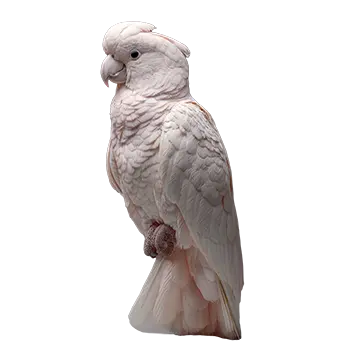

Weaning is one of the most consequential periods in a Goffin's Cockatoo's development, and how it is managed has lasting effects on the bird's physical health, emotional stability, and relationship with food. Unlike some parrot species that wean relatively quickly, cockatoos as a group tend to have a prolonged weaning process, and Goffin's are no exception despite their smaller size. Forcing weaning on an arbitrary timeline to meet a sale date or personal convenience is one of the most damaging things a caregiver can do. Abundance weaning, where the chick is offered unlimited access to solid foods while hand-feedings are gradually reduced at the chick's own pace, produces the most confident and well-adjusted birds.
The weaning process for a Goffin's Cockatoo typically begins around eight to ten weeks of age and may not be fully complete until the bird is fourteen to sixteen weeks old. The first signs of readiness include the chick showing interest in the caregiver's food, picking up and manipulating solid items with its beak, and occasionally refusing or showing reduced enthusiasm for hand-feeding formula. These behaviors should be encouraged, not forced. Begin placing small dishes of warm, softened foods near the chick after its regular hand-feedings so it can explore at its own pace.
Appropriate first foods include cooked sweet potato, warm cooked brown rice, softened pellets moistened with warm water, finely diced steamed vegetables, and small pieces of ripe fruit such as banana or papaya. Avoid anything high in sugar, salt, or fat, and never offer avocado, chocolate, caffeine, or any food from the allium family. Present foods in shallow dishes that the chick can easily access, and expect significant mess. A weaning Goffin's will fling food, dunk items in its water, and trample through dishes as part of its exploration. This is normal and healthy learning behavior.
Weight monitoring remains critical during weaning. A chick that is weaning naturally will experience a modest weight dip of roughly five to ten percent as it transitions from calorie-dense formula to solid foods. This dip is expected and should stabilize once the chick is eating solids consistently. However, a weight loss exceeding ten percent, prolonged weight loss over more than a few days, or a chick that is losing weight while simultaneously refusing both formula and solids requires intervention. Resume supplemental hand-feedings and consult an avian veterinarian to rule out illness masking as a behavioral feeding change.