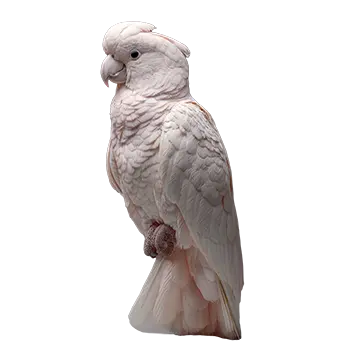

Breeding Goffin's Cockatoos is a serious undertaking that should only be pursued by experienced aviculturists with the resources, knowledge, and long-term commitment to do so responsibly. The Goffin's Cockatoo is classified as Near Threatened by the International Union for Conservation of Nature, with wild populations declining due to habitat loss and trapping on the Tanimbar Islands of Indonesia. Captive breeding programs, when conducted ethically, contribute to the sustainability of the species in aviculture and reduce pressure on wild populations. However, producing chicks without a clear plan for their lifetime placement is irresponsible and contributes to the surplus of unwanted cockatoos in rescue organizations.
Goffin's Cockatoos typically reach sexual maturity between three and five years of age, though full behavioral and physiological breeding readiness may not occur until the bird is four to six years old. Sexual maturity alone does not indicate breeding readiness. Both birds in a prospective pair must be in excellent physical health, confirmed by a thorough veterinary examination including blood work, disease screening, and reproductive assessment. Breeding a bird with undetected Psittacine Beak and Feather Disease, Polyomavirus, or Chlamydiosis risks transmitting these diseases to offspring and to the partner.
Pair compatibility is the most unpredictable and most critical element of cockatoo breeding. Cockatoos are among the parrot species most prone to mate aggression, where one bird, most commonly the male, attacks its partner with potentially fatal ferocity. Simply placing a male and female Goffin's together and hoping for the best is dangerous. Pair introduction should be gradual, beginning with the birds housed in adjacent cages where they can see and hear each other without physical contact. Monitor their body language carefully over a period of weeks. Mutual preening through the cage bars, synchronized movements, and calm coexistence are positive indicators. Aggression, persistent avoidance, or fearful body language from either bird indicates incompatibility.
Genetic diversity must be considered when selecting breeding pairs. Inbreeding depression in captive cockatoo populations leads to reduced fertility, increased susceptibility to disease, and congenital abnormalities in offspring. If possible, obtain lineage information for both birds and avoid pairing closely related individuals. Participation in studbook programs or coordination with aviculture organizations that maintain genetic records for captive Goffin's populations is strongly encouraged.