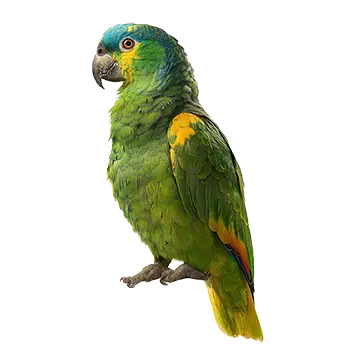

Breeding Readiness & Pair Selection

Breeding Blue-Fronted Amazons is a commitment that extends years beyond the act of producing chicks, and it begins with a careful assessment of whether breeding is appropriate and whether the birds involved are ready. Blue-Fronted Amazons generally reach sexual maturity between three and five years of age, though some individuals may not display reliable breeding behavior until they are older. Sexual maturity alone does not constitute breeding readiness. Both birds must be in excellent physical health, genetically unrelated, and free of infectious diseases before pairing is considered.

Sex determination is the first practical step, as Blue-Fronted Amazons are monomorphic, meaning males and females are visually indistinguishable. Surgical sexing has largely been replaced by DNA sexing, which requires a small blood sample or freshly plucked feather and provides definitive results within days. Pairing two birds without confirmed sex determination is a waste of time at best and a source of aggression and injury at worst, as same-sex pairs housed together may fight severely once hormonal behavior intensifies.

Pre-breeding health screening for both birds should include a comprehensive physical examination, complete blood count and biochemistry panel, screening for Psittacine Beak and Feather Disease, Avian Polyomavirus, and Chlamydia psittaci, fecal analysis, and assessment of body condition. Breeding places enormous physiological demands on both the hen and the cock, and birds carrying subclinical infections, nutritional deficiencies, or organ compromise are at risk of breeding failure, egg binding, or producing chicks with congenital health problems. Both birds should be at optimal weight, neither overweight nor underweight, before breeding is attempted.

Genetic diversity is an important consideration for responsible breeders. Blue-Fronted Amazons have been bred in captivity for decades, and some bloodlines have become concentrated through repeated inbreeding. Where possible, pair birds from unrelated lineages, and maintain records of parentage for all offspring. Breeders working with wild-caught founder stock have a particular responsibility to manage genetic diversity, as these birds represent irreplaceable genetic resources for the captive population. Consult studbook records or breed registries when available to inform pairing decisions.

Pair Bonding & Courtship Behavior

Blue-Fronted Amazons are monogamous in the wild and form pair bonds that can last for the lifetime of both birds. In captivity, establishing a compatible pair requires patience, careful introduction, and close observation. Not every male-female pairing will result in a functional breeding pair, and forcing incompatible birds to cohabit leads to stress, aggression, and potential injury rather than successful reproduction.

Introduce prospective mates gradually, beginning with placement in separate cages positioned within visual and auditory range of each other. Over the course of several weeks, observe the birds' reactions to each other. Positive indicators include mutual preening through the cage bars, synchronized feeding, contact calling, and relaxed body language in each other's presence. Negative indicators include aggressive posturing, persistent lunging at the barrier, stress behaviors such as feather ruffling or pacing, and retreat to the far side of the cage away from the other bird.

Once the birds demonstrate consistent positive interactions through the barrier, they can be introduced into a shared space under close supervision. The shared space should be neutral territory rather than either bird's established cage, as territorial aggression in a resident bird's cage can be intense. Provide multiple feeding stations, water sources, and perch options so neither bird can monopolize resources. Supervise all shared time during the initial days and be prepared to separate the birds immediately if aggression escalates beyond mild posturing.

Courtship behavior in Blue-Fronted Amazons involves a repertoire of displays that indicate the pair bond is strengthening. The cock typically initiates courtship with head bobbing, eye pinning, tail fanning, and vocalizations directed at the hen. Mutual preening, particularly around the head and neck where the bird cannot reach itself, is a strong bonding behavior. Regurgitation of food from one bird to the other is a significant milestone, as it mimics the mate-feeding behavior that sustains the hen during incubation in wild breeding pairs. Copulation may follow once the pair bond is well established, though some pairs require months or even years of cohabitation before they progress to mating.

Be aware that pair-bonded Blue-Fronted Amazons often become significantly more aggressive toward humans and other birds during the breeding season. This is normal protective behavior, and the breeder should adjust handling protocols accordingly. Minimize unnecessary intrusion into the breeding space, use a stick or perch rather than a bare hand for any necessary interactions, and respect the pair's territorial boundaries to avoid provoking attacks.

Nest Box Setup & Breeding Environment

Providing an appropriate nesting environment is essential for stimulating breeding behavior and ensuring the safety of eggs and chicks. Blue-Fronted Amazons are cavity nesters in the wild, selecting tree hollows at moderate to high elevations for their nests. The captive nest box must replicate the key features of a natural cavity while allowing the breeder sufficient access for monitoring and intervention when necessary.

The nest box for a Blue-Fronted Amazon pair should measure approximately 12 inches wide by 12 inches deep by 24 inches tall, constructed from untreated hardwood or thick plywood. A circular entrance hole with a diameter of approximately 4 inches should be positioned near the top of the front panel, with an internal ladder or hardware cloth strip running from the entrance to the floor to allow the hen safe entry and exit. The interior should be left rough or scored to provide grip surfaces, and the floor should be slightly concave to prevent eggs from rolling to the corners where they may not receive adequate incubation contact.

Bedding material on the nest box floor provides cushioning and insulation for the eggs. Pine shavings, processed corncob, or a mixture of shavings and clean wood chips to a depth of approximately two to three inches is appropriate. Some hens are meticulous about rearranging bedding to their preference, while others will remove it entirely. If the hen ejects all bedding, allow her this choice but monitor the eggs for damage from contact with the hard floor surface.

The breeding flight or enclosure should provide adequate space for the pair to exercise and exhibit natural behaviors alongside the nest box. A minimum enclosure size of 6 feet long by 3 feet wide by 4 feet tall is recommended, though larger spaces are preferable. Position the nest box high on the enclosure wall, as Amazons strongly prefer elevated nesting sites. Ensure the enclosure offers privacy from foot traffic and visual disturbances, as breeding pairs are highly sensitive to perceived threats and may abandon eggs or harm chicks if they feel insecure.

Environmental triggers play a significant role in stimulating breeding readiness. A gradual increase in photoperiod to 13 to 14 hours of light per day, combined with increased humidity, a diet enriched with fresh produce, soft foods, and calcium sources, and the introduction of the nest box, collectively signal to the pair that conditions are favorable for reproduction. Timing these environmental adjustments to align with the species' natural breeding season, which in the Southern Hemisphere wild populations occurs from October through March, maximizes the likelihood of a productive breeding cycle.

Egg Laying, Incubation & Hatching

Once mating has occurred and the hen is reproductively primed, egg laying typically begins within one to three weeks. A Blue-Fronted Amazon hen usually produces a clutch of two to four eggs, depositing one egg every 24 to 48 hours until the clutch is complete. The hen may begin incubating after the first or second egg is laid, which results in asynchronous hatching where chicks emerge on different days. In some cases, the hen waits until the clutch is complete before committing to steady incubation, producing more synchronous hatching.

Egg binding, a condition where the hen is unable to pass a fully formed egg, is a serious and potentially fatal complication. Risk factors include calcium deficiency, obesity, lack of exercise, cold temperatures, and first-time laying in hens that have not been conditioned for breeding. Signs of egg binding include straining, tail bobbing, lethargy, fluffed feathers, time spent on the cage floor, and a distended abdomen. Egg binding is a veterinary emergency requiring immediate professional intervention, which may include calcium and oxytocin administration, fluid therapy, or surgical extraction in severe cases.

The incubation period for Blue-Fronted Amazon eggs is approximately 26 to 28 days. The hen performs the majority of incubation duties, leaving the nest only briefly for feeding and elimination. The cock bird typically guards the nest entrance and feeds the hen during this period. Monitor the nest box with minimal disturbance, ideally using a small inspection mirror or camera system that allows you to check egg condition without repeatedly opening the box and stressing the pair. Excessive intrusion can cause the hen to abandon the clutch.

Candling the eggs at approximately 7 to 10 days after the onset of incubation provides information about fertility and embryonic viability. Fertile eggs will show visible vascular development and a darkening embryonic mass when held before a bright, focused light source in a darkened room. Infertile eggs appear clear, and eggs with early embryonic death show a dark ring or irregular mass without organized vasculature. Remove confirmed infertile eggs to allow the hen to concentrate her incubation effort on viable eggs, but exercise caution if the hen is sitting on only one or two eggs, as removing an egg may cause her to abandon the remaining clutch.

As hatching approaches, the developing chick will begin vocalizing faintly from within the egg, and the egg may display a small external pip, a crack or raised area on the shell where the chick has begun using its egg tooth to break through. The hatching process can take 24 to 48 hours from the first pip to full emergence. Resist the urge to assist unless the chick has made no progress for more than 24 hours after the initial pip, as premature intervention can cause hemorrhage from blood vessels in the membrane that have not yet fully retracted.

Post-Hatch Management & Parental Care

The period immediately following hatching is critical for chick survival, and the breeder's role during this time depends on whether the chicks will be parent-raised, co-parented, or pulled for hand-rearing. Each approach has advantages and trade-offs that should be considered well in advance of the breeding season rather than decided in the moment after chicks appear.

Parent-raised Blue-Fronted Amazon chicks benefit from the natural feeding regimen, social instruction, and warmth that their parents provide. Experienced pairs are generally attentive and capable parents, though first-time breeders may be clumsy or inattentive during their initial clutch. Monitor the nest daily for signs that the chicks are being fed, including full crops visible through the translucent skin and steady weight gains when the chicks are briefly weighed during nest checks. If a chick's crop is consistently empty or the chick is losing weight, supplemental hand-feeding or full removal for hand-rearing may be necessary.

The breeder's nutritional support of the parent birds becomes especially important during the chick-rearing period. Both the hen and the cock are now working to feed themselves and their offspring, and their caloric and nutritional demands increase substantially. Offer unlimited access to a high-quality pellet diet, abundant fresh produce, calcium sources such as cuttlebone or mineral block, and small amounts of cooked egg or legumes for supplemental protein. Soft, warm foods are particularly valuable during this period, as they are easier for the parents to regurgitate for the chicks.

If the decision is made to pull chicks for hand-rearing, the optimal timing depends on the breeder's goals. Pulling at 10 to 14 days of age allows the chicks to receive the immunological and digestive benefits of parental feeding during the most vulnerable neonatal window while still being young enough to imprint strongly on human caregivers. Pulling at hatch requires round-the-clock dedication from the hand-feeder and carries higher risk but produces the most human-bonded birds. Pulling at three to four weeks offers a compromise, with chicks that are more physically robust and easier to hand-feed but may retain some wariness of humans that requires patient socialization to overcome.

Regardless of the rearing method, maintain scrupulous records of each clutch, including laying dates, fertility rates, incubation observations, hatch dates, chick weights, and any complications. These records inform future breeding decisions, help identify patterns of fertility or health issues in specific pairs, and contribute to the broader knowledge base for the species in captive aviculture.

Breeding Ethics & Responsible Aviculture

The decision to breed Blue-Fronted Amazons carries ethical responsibilities that extend far beyond the mechanics of producing chicks. Every breeding decision should be made with consideration for the welfare of the parent birds, the future of each chick produced, and the broader context of the species' conservation status and the companion parrot market.

Blue-Fronted Amazons are listed under Appendix II of the Convention on International Trade in Endangered Species, reflecting the significant pressure that wild populations face from habitat loss and historical trapping for the pet trade. Captive breeding programs have an important role in reducing demand for wild-caught birds and maintaining a genetically viable captive population. Responsible breeders contribute to this effort by prioritizing genetic diversity, maintaining accurate pedigree records, and participating in cooperative breeding programs when available.

Before breeding, identify confirmed homes for every potential chick. Blue-Fronted Amazons are long-lived, demanding companion animals that require decades of dedicated care, and producing chicks without secure placement arrangements contributes to the surplus of unwanted parrots in rescue organizations and sanctuaries. Screening prospective buyers or adopters for their knowledge, experience, resources, and long-term commitment is as important as any aspect of the breeding program itself.

Limit the number of clutches each pair produces per year and per lifetime. Continuous breeding places enormous physical strain on the hen, depleting calcium reserves, stressing the reproductive tract, and increasing the risk of egg binding, oviductal prolapse, and metabolic exhaustion. Most avian veterinarians and experienced breeders recommend no more than one to two clutches per year, with rest seasons between breeding attempts that allow both birds to recover physiologically and behaviorally.

The socialization and health of every chick produced is the breeder's responsibility until that chick is placed in its permanent home. Chicks must receive proper veterinary screening, appropriate vaccination, DNA sexing, and thorough socialization before placement. Provide new owners with comprehensive care documentation, dietary instructions, health records, and ongoing support. A responsible breeder remains a resource for the life of every bird they produce, willing to answer questions, offer guidance, and accept the bird back if the owner can no longer provide care.

Always consult a qualified professional before making any health-related decisions. This content is provided for informational reference only and should not replace professional guidance specific to your animal.