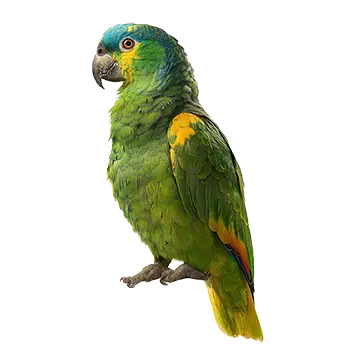

Daily Diet & Weight Management

The adult Blue-Fronted Amazon has reached its full physical size and metabolic equilibrium, making the prime years the ideal period to establish and maintain the dietary discipline that will protect the bird's health for decades. Amazon parrots as a genus are notoriously prone to obesity and the cascade of conditions it triggers, including hepatic lipidosis, atherosclerosis, and metabolic syndrome. The Blue-Fronted Amazon is no exception, and its enthusiastic appetite combined with a relatively sedentary captive lifestyle makes caloric management a central concern.

A formulated pelleted diet should remain the nutritional cornerstone throughout the adult years, comprising approximately 60 to 70 percent of daily food intake. Select a pellet designed for Amazon or large parrot species, as these formulations account for the specific caloric density and nutrient ratios appropriate for the genus. Avoid pellets with added sugars, artificial colors, or excessive fat content. If the bird was properly weaned onto pellets during the juvenile phase, maintaining pellet acceptance should be straightforward, though even well-established pellet eaters may occasionally need variety in pellet brand or formulation to sustain interest.

Fresh produce should constitute 25 to 35 percent of the daily diet and should be offered in generous variety. Emphasize nutrient-dense vegetables such as dark leafy greens, bell peppers, broccoli, sweet potatoes, and winter squash. Fruits provide valuable vitamins but also carry significant sugar loads, so they should be offered in moderation, favoring lower-sugar options like berries, papaya, and melon over high-sugar fruits like grapes and bananas. Rotate offerings daily so the bird experiences a wide spectrum of nutrients and does not fixate on a narrow set of preferred foods.

Weigh the adult Blue-Fronted Amazon weekly on a consistent schedule, recording each measurement to track trends over months and years. Establish the bird's ideal weight in consultation with your avian veterinarian, based on body condition scoring that accounts for pectoral muscle mass and fat deposition. A healthy adult Blue-Fronted Amazon typically weighs between 275 and 510 grams, but the individual's optimal weight depends on its frame size and muscle development. Gradual weight gain of even a few grams per month compounds over the bird's long lifespan and should be addressed through dietary adjustment and increased activity before it becomes a clinical problem.

Table foods and human snacks are a persistent temptation that must be managed firmly. Blue-Fronted Amazons are social eaters that relish sharing mealtime with their human companions, and this can be accommodated safely with appropriate selections. Plain cooked grains, steamed vegetables, and small amounts of lean protein are acceptable. Avoid all processed foods, anything containing salt, sugar, caffeine, alcohol, or chocolate, and never offer avocado, which is acutely toxic to parrots.

Hormonal Cycles & Seasonal Behavior

One of the most challenging aspects of living with an adult Blue-Fronted Amazon is managing the behavioral shifts driven by hormonal cycles. Amazon parrots are among the most hormonally reactive parrot groups, and the Blue-Fronted Amazon experiences pronounced seasonal hormonal surges that can dramatically alter its temperament. Understanding the biological basis of these changes and implementing environmental strategies to moderate them is essential for maintaining a safe and harmonious household.

Hormonal behavior in Blue-Fronted Amazons is typically triggered by increasing daylight hours, dietary abundance, and the availability of perceived nesting opportunities. In the Northern Hemisphere, this surge most commonly occurs between late winter and early summer, though the timing varies among individuals. Hormonal behaviors include heightened territoriality, increased aggression, excessive vocalization, regurgitation directed at favored people or objects, and persistent attempts to seek out dark, enclosed spaces for nesting. Males may display pinning eyes, fanned tails, and raised nape feathers during aggressive or sexually motivated episodes.

The most effective strategy for moderating hormonal intensity is photoperiod management. Ensure the bird receives no more than 10 to 12 hours of light per day during the hormonal season, covering the cage or moving the bird to a dark, quiet sleeping room at a consistent time each evening. Artificial light, including television and ambient room lighting, extends the perceived day length and stimulates hormonal production. Even a few extra hours of light per evening can significantly amplify hormonal behavior over the course of a season.

Dietary adjustments complement light management. During hormonal periods, reduce or eliminate warm, soft foods that mimic the regurgitated food a breeding pair would share. Limit high-fat items such as nuts and seeds, and avoid offering sugary fruits in excess. Some avian veterinarians recommend a temporary increase in the pellet-to-produce ratio during the most intense hormonal weeks to reduce the dietary cues that signal breeding readiness.

Handling an aggressively hormonal Blue-Fronted Amazon requires patience, consistency, and respect for the bird's altered state. Do not reach into the cage if the bird is displaying territorial aggression, as bites during hormonal episodes can be severe. Use a perch or stick for step-up requests when the bird is visibly aroused. Avoid petting the bird on the back, under the wings, or near the tail, as these areas are erogenous and stimulate hormonal behavior. Limit physical affection to head scratches and gentle beak contact during the hormonal season, and ensure that all family members follow the same handling protocols to maintain consistency.

Behavioral Enrichment & Mental Health

An adult Blue-Fronted Amazon is a cognitively sophisticated animal with problem-solving abilities, emotional complexity, and social needs that rival those of some primates. Meeting these intellectual demands is not an optional aspect of care but a fundamental requirement. A Blue-Fronted Amazon that is bored, under-stimulated, or socially isolated will develop behavioral pathologies including feather destructive behavior, excessive screaming, stereotypic movements, and aggression. These problems are far easier to prevent through proactive enrichment than to resolve once they are established.

Foraging enrichment should occupy a central place in the bird's daily routine. In the wild, Blue-Fronted Amazons spend a significant portion of their day searching for, manipulating, and processing food items. In captivity, a bird that receives its entire daily ration in an open dish has its foraging drive completely unsatisfied in under ten minutes. Transition a substantial portion of the daily diet into foraging opportunities by wrapping food in paper, hiding it inside destructible toys, placing it in puzzle feeders, or scattering it among clean, bird-safe substrates. The goal is to extend the time and cognitive effort the bird invests in acquiring its food.

Social enrichment is equally important. Blue-Fronted Amazons form strong bonds with their human companions and expect meaningful daily interaction. Dedicate at least two to three hours of direct interactive time to the bird each day, distributed across the morning, afternoon, and evening. This time should include structured activities such as training sessions, trick practice, or vocal interaction, as well as unstructured companionship such as having the bird perch nearby while you work or relax. A bird that receives attention only when it screams learns that screaming is the path to social contact, a pattern that becomes deeply entrenched and extremely difficult to break.

Physical enrichment and exercise are critical for maintaining the bird's musculoskeletal health and preventing the obesity that plagues captive Amazons. If the bird is flighted, supervised flight sessions in a safe room provide the most complete form of exercise. For clipped birds, climbing structures, ladders, and rope gyms encourage movement and muscle engagement. A play stand or tree perch outside the cage provides a change of scenery and additional activity space during out-of-cage time.

Rotate toys and enrichment items on a regular schedule, introducing new items at least weekly while retiring others temporarily. Blue-Fronted Amazons are naturally neophilic compared to some other parrot species, meaning they are generally curious about new objects rather than fearful of them. Take advantage of this trait by offering a diverse array of materials, textures, and challenges. Toys that can be shredded, disassembled, or solved provide the most sustained engagement. Avoid toys with small parts that could be swallowed, clips that could trap toes, or chains with links small enough to catch a beak.

Routine Veterinary Care

Regular veterinary care during the prime adult years is the most effective investment you can make in your Blue-Fronted Amazon's longevity and quality of life. Many avian diseases develop insidiously over months or years, producing no visible symptoms until organ damage is advanced. Annual or semi-annual wellness examinations allow your avian veterinarian to detect subtle changes that you might not notice at home, establishing a longitudinal health record that becomes increasingly valuable as the bird ages.

A comprehensive annual examination for an adult Blue-Fronted Amazon should include a thorough physical assessment, body weight and body condition scoring, a complete blood count and biochemistry panel, Gram stain analysis of choana and cloacal swabs, and a fecal parasite screen. The blood work is particularly important for Amazons, as early signs of hepatic lipidosis, kidney compromise, and metabolic imbalance appear in blood chemistry values well before clinical symptoms manifest. Triglyceride and cholesterol levels deserve special attention in this obesity-prone species.

Radiographic imaging may be recommended periodically, even in apparently healthy birds. Whole-body radiographs reveal information about organ size, air sac clarity, bone density, and the presence of metallic foreign bodies that cannot be assessed through external examination alone. Amazons are curious chewers that occasionally ingest fragments of metal from cage hardware, jewelry, or household items, and heavy metal toxicosis is a recognized risk in the species. A baseline set of radiographs taken when the bird is healthy provides a reference for comparison if illness or injury occurs later.

Between veterinary visits, the caregiver's ongoing monitoring serves as the early warning system. Track the bird's weight weekly and note any unexplained fluctuations. Observe droppings daily, watching for changes in color, consistency, volume, or the ratio of fecal matter to urates and urine. Monitor food and water consumption patterns, as a sudden increase or decrease in either may signal metabolic or organ dysfunction. Changes in vocalization patterns, activity levels, feather condition, or social behavior can all be early indicators of health problems that warrant veterinary evaluation.

Maintain a current relationship with an avian veterinarian rather than waiting until an emergency arises. After-hours avian emergency services are not available in all areas, and a veterinarian who is already familiar with your bird's history and baseline values can respond more effectively to an urgent situation than one encountering the bird for the first time.

Common Adult Health Concerns

Adult Blue-Fronted Amazons are generally hardy birds when maintained under proper husbandry conditions, but the species is susceptible to several health conditions that caregivers should understand. Awareness of these conditions facilitates early recognition and timely intervention, which significantly improves outcomes in most cases.

Hepatic lipidosis, or fatty liver disease, is arguably the most prevalent health concern in captive Amazon parrots. The condition develops when excessive dietary fat and calories overwhelm the liver's processing capacity, leading to fat accumulation within hepatic tissue that progressively impairs organ function. Early signs include an overgrown or flaky beak, feather color changes, lethargy, and an increase in urate coloration from white to yellow or green. Blood work revealing elevated bile acids, liver enzymes, and cholesterol levels confirms the diagnosis. Treatment involves dietary correction, weight management, and in some cases hepatoprotective medications, but the condition is far more effectively prevented through lifelong dietary discipline.

Respiratory disease, including aspergillosis and bacterial pneumonia, represents another significant risk. Aspergillus fumigatus, the fungal organism responsible for aspergillosis, is ubiquitous in the environment, and healthy birds with competent immune systems are generally resistant. However, stress, poor ventilation, dusty environments, nutritional deficiencies, or concurrent illness can create the conditions for an opportunistic Aspergillus infection. Symptoms include labored breathing, voice changes, exercise intolerance, and tail bobbing. Diagnosis may require radiography, endoscopy, or specific blood assays, and treatment with antifungal medications is prolonged and not always successful if the disease is advanced.

Feather destructive behavior, while technically a behavioral condition, warrants discussion in the health context because it frequently has underlying medical contributors. Blue-Fronted Amazons are somewhat less prone to feather destruction than some other parrot species, but it does occur, particularly in birds that are under-stimulated, socially deprived, or experiencing chronic low-grade health issues. A thorough diagnostic workup, including blood chemistry, thyroid function assessment, heavy metal screening, and infectious disease testing, should precede any purely behavioral diagnosis.

Atherosclerosis is an increasingly recognized condition in aging Amazon parrots, though it can begin developing during the prime adult years in birds fed high-fat diets. The condition involves the buildup of fatty plaques within arterial walls, restricting blood flow and predisposing the bird to stroke, heart failure, or sudden death. Because atherosclerosis is difficult to diagnose in living birds without advanced imaging, prevention through diet and exercise is the most practical approach. Your avian veterinarian may recommend periodic cholesterol and triglyceride monitoring as part of the bird's annual wellness profile.

The Human-Parrot Bond

The relationship between a Blue-Fronted Amazon and its primary caregiver is one of the most complex and rewarding interspecies bonds achievable in companion animal keeping. Blue-Fronted Amazons are deeply social, emotionally expressive birds that form attachments of remarkable intensity and duration. Nurturing this bond through the adult years requires understanding the bird's emotional needs, respecting its autonomy, and maintaining the trust that was built during the formative juvenile period.

Blue-Fronted Amazons frequently develop a pronounced preference for one person in the household, which can create challenges in multi-person families. The favored person receives affectionate attention, solicitation for interaction, and cooperative behavior, while other family members may face indifference or active aggression. Managing this dynamic requires that all household members participate in the bird's care and positive interactions on a daily basis. Feeding, training sessions, and treat delivery should be shared responsibilities so the bird learns to associate positive experiences with multiple people rather than concentrating its social investment in a single individual.

Communication between a Blue-Fronted Amazon and its human companion operates on multiple channels simultaneously. Vocalizations, body posture, feather position, eye pinning, and beak movements all convey information about the bird's emotional state and intentions. Learning to read these signals accurately prevents misunderstandings that can damage trust. A bird with pinning eyes and a fanned tail is in an aroused state that may escalate to aggression. A bird with relaxed, slightly fluffed feathers, half-closed eyes, and soft grinding of the beak is content and comfortable. Responding appropriately to these cues demonstrates respect for the bird's communication and deepens mutual understanding.

Consistency is the currency of trust in the human-Amazon relationship. Blue-Fronted Amazons thrive on predictable routines and reliable social contracts. If the bird learns that stepping onto your hand results in a positive experience, that expectation must be honored reliably. Inconsistent responses, where the same behavior is rewarded one day and punished or ignored the next, erode trust and create anxiety. Establish household rules for interaction and ensure that every person who handles the bird follows them without exception.

The longevity of the Blue-Fronted Amazon means that the human-parrot bond is a relationship measured in decades, not years. Planning for the bird's long-term care, including provisions for its welfare in the event of the caregiver's incapacity or death, is a responsible and often overlooked aspect of ownership. Identify a trusted individual or organization willing to assume care of the bird if needed, and include specific provisions in your estate planning. A bird that has lived with one family for thirty years faces enormous psychological stress if it is suddenly rehomed without preparation.

Always consult a qualified professional before making any health-related decisions. This content is provided for informational reference only and should not replace professional guidance specific to your animal.