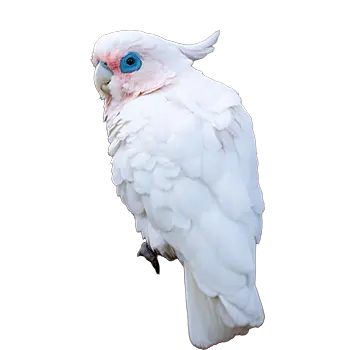

The Weaning Transition

Weaning is one of the most consequential developmental milestones in a young Bare-Eyed Cockatoo's life, and it requires patience, observation, and a willingness to follow the bird's lead rather than imposing an arbitrary schedule. The weaning process for this species typically begins between eight and twelve weeks of age, though individual variation is significant. Some chicks show early interest in solid food while still eagerly accepting formula, while others cling to hand-feeding well into their third month. Both patterns fall within the normal range, and forcing a premature wean can cause lasting physical and psychological harm.

The process begins when the chick starts mouthing, manipulating, and occasionally swallowing soft solid foods placed in its enclosure. Offer a variety of options including warm soft vegetables such as steamed sweet potato and carrot, cooked grains like brown rice and quinoa, and a high-quality pelleted diet formulated for cockatoos. Scatter these items on a shallow dish placed at floor level where the chick can explore them during its active periods. The goal at this stage is not caloric replacement but familiarization. The chick is learning textures, flavors, and the mechanics of cracking and chewing food with its beak.

As the chick begins consuming meaningful quantities of solid food, usually evidenced by changes in droppings consistency and the presence of visible food remnants in the feces, begin reducing the number of daily formula feedings rather than the volume per feeding. A chick that was receiving three formula feedings per day might move to two, then one, typically retaining the evening feeding as the last to be dropped. Continue weighing the bird daily throughout the weaning period. A gradual decline in weight of up to ten percent from peak pre-weaning weight is normal as the chick transitions from the caloric density of formula to the lower energy density of whole foods. Weight loss beyond ten percent, or loss that occurs rapidly, signals that the wean is proceeding too quickly.

Abundance weaning, where solid foods are offered in generous variety and quantity while formula feedings are gradually reduced based on the chick's voluntary decrease in formula consumption, is the safest and most psychologically sound method for cockatoos. Bare-Eyed Cockatoos are emotionally sensitive birds, and the weaning period is already a time of significant stress as the chick's relationship with its primary caregiver shifts from one of total dependence to emerging independence. Forcing the transition by abruptly withdrawing formula can trigger anxiety, regression, and behavioral problems that persist long after weaning is complete.

Fledging & Physical Development

Fledging, the point at which a young bird makes its first flights, represents a critical intersection of physical maturation and neurological development in the Bare-Eyed Cockatoo. Most chicks of this species achieve their first sustained flight between ten and fourteen weeks of age, though the groundwork for this milestone begins weeks earlier with vigorous wing-flapping exercises that strengthen the pectoral muscles and flight feathers. The importance of allowing a cockatoo to fledge naturally cannot be overstated, as the coordination, spatial awareness, and confidence gained through early flight experience shape the bird's physical and psychological health for life.

As the chick approaches fledging age, its body undergoes visible changes. The flight feathers reach their full juvenile length, the tail feathers elongate to provide steering capability, and the pectoral musculature becomes more prominent. The chick's weight may plateau or even dip slightly as metabolic energy is redirected toward feather completion and muscle development. Wing-flapping sessions become longer and more intense, often accompanied by the chick lifting off its perch momentarily before settling back down. These brief hovers are practice runs for the real thing.

The first flight is rarely graceful. Expect crash landings, awkward turns, and a general lack of directional control. This is entirely normal. The chick is calibrating a complex system of proprioceptive feedback, visual processing, and motor coordination that will improve rapidly with practice. Ensure the fledging environment is safe by removing ceiling fans, covering mirrors and windows, closing doors to prevent escape, and padding hard surfaces where possible. Supervise all early flight sessions, as a panicked fledgling can injure itself by colliding with walls or becoming trapped behind furniture.

There is ongoing debate in aviculture about whether companion cockatoos should be allowed to remain flighted or should be wing-clipped. From a developmental perspective, the evidence strongly favors allowing the juvenile bird to fledge and gain flight proficiency before any decision about clipping is made. Birds that are clipped before fledging miss a developmental window that cannot be fully recovered later. They tend to be less coordinated, more prone to falls and injuries, and often develop a learned helplessness that manifests as excessive dependence on the caregiver. If wing clipping is ultimately chosen for safety reasons, it should be done only after the bird has fledged and gained reasonable flight competence, typically around four to six months of age.

Beyond flight, the juvenile Bare-Eyed Cockatoo's physical development includes refinement of beak dexterity and foot coordination. The beak is a cockatoo's primary tool for manipulating the environment, and juveniles spend considerable time chewing, shredding, and deconstructing objects as they build the jaw strength and fine motor control needed for adult foraging. Provide an abundance of chewable, destructible materials such as untreated pine blocks, palm fronds, and woven grass toys. This satisfies the developmental need while protecting furniture and household items from the chick's exploratory demolition.

Diet & Nutritional Needs

A juvenile Bare-Eyed Cockatoo's nutritional requirements differ markedly from both the formula-dependent neonate and the maintenance-phase adult. The juvenile period is characterized by rapid skeletal growth, feather replacement during the first molt, high physical activity levels, and the metabolic demands of a developing immune system. A diet that meets these demands must be varied, nutrient-dense, and presented in a way that encourages the bird to develop healthy eating habits and foraging skills.

The foundation of the juvenile diet should be a high-quality pelleted food formulated for cockatoos or medium-sized parrots. Pellets provide a nutritionally balanced baseline that ensures the bird receives adequate vitamins, minerals, amino acids, and trace elements regardless of what fresh foods it happens to prefer on a given day. Pellets should comprise approximately 50 to 60 percent of the total diet by volume. Select a pellet that is appropriately sized for the bird's beak and avoid artificially colored varieties, as the dyes offer no nutritional value and may contain compounds of questionable safety for long-term consumption.

Fresh vegetables and fruits should make up 30 to 40 percent of the diet. Dark leafy greens such as kale, collard greens, Swiss chard, and dandelion greens are excellent sources of calcium, vitamin A precursors, and other micronutrients critical during the growth phase. Orange and yellow vegetables including sweet potato, butternut squash, and carrot provide beta-carotene. Fresh fruits such as apple, pear, papaya, mango, and berries add dietary variety and natural sugars, though fruit should be offered in moderation due to its sugar content. All produce should be washed thoroughly and served fresh, with uneaten portions removed within a few hours to prevent bacterial growth.

Seeds and nuts should be limited to no more than 10 percent of the diet and used primarily as training rewards or foraging enrichment rather than staple foods. Bare-Eyed Cockatoos, like many cockatoo species, are prone to obesity and fatty liver disease when offered excessive seed and nut mixes, which are high in fat and deficient in calcium and vitamin A. Sunflower seeds and peanuts are particular culprits due to their palatability and fat content. If seeds are offered, opt for smaller, lower-fat varieties such as millet, canary grass seed, or hemp seed.

Presentation matters as much as composition during the juvenile stage, because this is when the bird forms lifelong food preferences and foraging behaviors. Offer food in a variety of ways: chopped in a bowl, threaded on skewers, tucked inside foraging toys, or clipped to cage bars. Bare-Eyed Cockatoos are naturally ground foragers in the wild, so scattering food on a clean tray encourages species-appropriate feeding behavior. Rotate the selection of fresh foods regularly to prevent the bird from fixating on a narrow range of preferred items, a common problem in companion cockatoos that becomes increasingly difficult to correct with age.

Behavioral Development & Training

The juvenile period is the most formative window for behavioral development in the Bare-Eyed Cockatoo, and the habits, boundaries, and communication patterns established during this time will define the quality of the human-bird relationship for decades. Bare-Eyed Cockatoos are exceptionally playful, intelligent, and clownish birds with a strong drive for social interaction. These traits make them enormously rewarding companions when channeled constructively, and enormously challenging ones when left undirected.

Basic training should begin as soon as the bird is weaned and settled into its permanent living space. The step-up command, where the bird steps onto the hand or arm on cue, is the foundational behavior from which all other training flows. Use positive reinforcement exclusively. A small piece of a preferred food item, paired with verbal praise and a consistent marker word or sound, delivered immediately after the desired behavior, creates a clear association in the bird's mind. Bare-Eyed Cockatoos learn quickly and respond enthusiastically to training sessions that are kept short, varied, and rewarding.

Biting is a normal exploratory behavior in juvenile cockatoos but must not be reinforced. A young Bare-Eyed Cockatoo uses its beak to test textures, boundaries, and the reactions of the people around it. If a bite elicits a dramatic response, whether a yelp, a sharp withdrawal, or an angry verbal reprimand, the bird learns that biting produces interesting and controllable reactions from its environment. The most effective response to an exploratory bite is a calm, neutral reaction followed by a brief withdrawal of attention. This teaches the bird that biting produces the opposite of what it wants: social disengagement rather than engagement.

Screenaming and excessive vocalization are arguably the most commonly cited behavioral complaints in cockatoo ownership, and the juvenile period is when these patterns take root. Bare-Eyed Cockatoos are naturally vocal birds with a loud, piercing call. A certain amount of morning and evening vocalization is normal flock behavior and should be accepted as part of living with a cockatoo. However, demand screaming, where the bird screams to summon attention, is a learned behavior that intensifies when it works. Never respond to screaming by approaching the bird, talking to it, or giving it food. Instead, reward quiet behavior and moderate vocalizations with attention and interaction. This requires consistency from every member of the household.

Independence training is uniquely important for cockatoos because of their intense social drive. A Bare-Eyed Cockatoo that is given constant attention during its juvenile period often develops an inability to tolerate any separation from its preferred person, leading to separation anxiety, self-destructive behaviors, and incessant screaming when left alone. Teach the young bird from the start that periods of solitary play are normal and safe. Provide engaging foraging toys and chewable enrichment that occupy the bird when you are not directly interacting with it. Gradually increase the duration and distance of separations, starting with stepping out of the room for a few minutes and working up to longer absences. This builds the emotional resilience that is essential for a well-adjusted companion cockatoo.

Socialization & Enrichment

A juvenile Bare-Eyed Cockatoo's social and environmental education during this period determines whether it becomes a flexible, confident adult or a rigid, fearful one. Socialization in the juvenile stage builds on the foundation laid during the neonatal period but expands dramatically in scope. The bird is now mobile, perceptive, and cognitively capable of processing complex social and environmental information. Every positive new experience deposits into a reserve of confidence that the bird will draw on throughout its life.

Expose the juvenile bird to as many different people as possible in controlled, positive circumstances. Guests should be coached to approach the bird calmly, offer treats, and avoid sudden movements. The goal is for the bird to learn that unfamiliar humans are generally safe and often rewarding to interact with. This is especially critical for Bare-Eyed Cockatoos, which have a strong tendency to become one-person birds if their social circle is not actively broadened during the juvenile window. A bird that is comfortable with multiple people is also far easier to rehome if circumstances change, a relevant consideration for a species that can live fifty years or more.

Environmental enrichment during the juvenile stage should challenge the bird physically, cognitively, and sensorially. Rotate toys and foraging devices on a weekly basis to prevent habituation. Bare-Eyed Cockatoos are prolific chewers and can demolish even robust toys in short order, so keep a stockpile of replacements available. Foraging opportunities are particularly important because they replicate the time budget of wild corellas, which spend a significant portion of their day searching for and processing food. Puzzle feeders, food wrapped in paper, treats hidden in crumpled newspaper, and food items threaded onto stainless steel skewers all encourage problem-solving and sustained engagement.

Introduce the juvenile bird to routine household activities and environments. Carry the bird on your hand or a portable perch while you move through the house, allowing it to observe cooking, laundry, cleaning, and other daily tasks. Take the bird outdoors in a secure carrier or harness for brief sessions, exposing it to sunlight, wind, outdoor sounds, and the visual complexity of the natural world. Outdoor exposure also provides valuable natural UV light, which supports vitamin D synthesis and contributes to vibrant feather condition. Ensure the bird is securely contained during outdoor excursions, as even a clipped cockatoo can gain unexpected lift from a gust of wind.

Play is not frivolous for a juvenile cockatoo; it is developmental infrastructure. Bare-Eyed Cockatoos are among the most playful cockatoo species, and their play behavior includes object manipulation, wrestling, hanging upside down, rolling on their backs, and interactive games with their caregivers. Encourage and participate in play daily. Structured play sessions strengthen the bond between bird and caregiver, provide physical exercise, and satisfy the bird's intense need for mental stimulation. A bored juvenile cockatoo will find ways to entertain itself, and those ways frequently involve destructive behavior, excessive screaming, or the development of stereotypic behaviors such as repetitive pacing or head-swinging.

The First Molt

The first molt is a significant physiological event for a juvenile Bare-Eyed Cockatoo, typically occurring between six and twelve months of age. During this process, the bird gradually replaces its juvenile feathers with its first set of adult plumage. While the color difference between juvenile and adult feathers is subtle in this predominantly white species, the adult feathers are denser, more tightly structured, and provide superior insulation and waterproofing. The molt is a taxing process that places considerable demands on the bird's nutritional reserves and can produce noticeable changes in behavior and mood.

The molt usually progresses symmetrically, with feathers falling from both wings, both sides of the body, and the tail in a balanced pattern that preserves the bird's ability to fly and thermoregulate throughout the process. Caregivers may notice an increase in feather debris on the cage floor and surrounding area. Pin feathers, the new feathers emerging in waxy keratin sheaths, appear across the bird's body as old feathers are shed. These pin feathers are supplied by blood vessels during their growth phase, earning them the name blood feathers. A broken blood feather can bleed profusely and may require manual removal of the feather shaft with hemostats to control the bleeding.

Nutritional support during the molt should be increased to meet the elevated protein and mineral demands of feather production. Keratin, the structural protein of feathers, requires adequate dietary protein and the amino acid methionine in particular. Ensure the bird's pellet intake remains consistent and supplement with protein-rich fresh foods such as cooked egg, cooked legumes, and sprouted seeds. A calcium supplement or cuttlebone should be available at all times, and the bird's access to natural or full-spectrum artificial lighting supports the vitamin D metabolism needed for calcium absorption.

Behavioral changes during the molt are common and should be met with understanding rather than frustration. Many juvenile Bare-Eyed Cockatoos become more irritable, less tolerant of handling, and more inclined to bite during heavy molt periods. This is partly because pin feathers, especially on the head and neck where the bird cannot preen them itself, are sensitive and sometimes painful when touched. You can help by gently rolling mature pin feathers between your fingers to crack the keratin sheath and release the emerging feather, but only when the bird solicits this by lowering its head toward you. Forcing pin feather grooming on an unwilling bird damages trust and reinforces the association between human hands and discomfort.

Monitor the progress of the molt for any abnormalities. Feathers that grow in with stress bars, visible lines of weakness running perpendicular to the feather shaft, indicate that the bird experienced nutritional or physiological stress during the period when that section of the feather was being produced. Persistent bare patches where feathers fail to regrow, feathers that emerge malformed or discolored, or a molt that seems to stall without completing may indicate underlying health issues such as Psittacine Beak and Feather Disease, liver dysfunction, or hormonal imbalance. Report any of these observations to your avian veterinarian for evaluation.

Common Health Concerns

Juvenile Bare-Eyed Cockatoos face a distinct set of health challenges that reflect their developmental stage, dietary transition, and increasing environmental exposure. Awareness of these common concerns allows caregivers to recognize early warning signs and seek prompt veterinary attention, which consistently improves outcomes for avian patients. Preventive care during the juvenile period also establishes the baseline health data and veterinary relationship that will serve the bird throughout its long life.

Respiratory infections are among the most frequently encountered health issues in juvenile cockatoos. The developing immune system is still maturing, and exposure to new environments, other birds, and airborne pathogens increases during this period. Symptoms include nasal discharge, sneezing, tail bobbing, open-mouth breathing, decreased appetite, and lethargy. Aspergillosis, a fungal respiratory infection caused by Aspergillus species commonly found in the environment, is a particular concern for cockatoos housed in damp or poorly ventilated spaces. Maintain clean, dry cage conditions with adequate air circulation to minimize risk.

Gastrointestinal problems related to the weaning transition are common. A bird transitioning from formula to solid food may experience episodes of loose droppings, decreased droppings volume, or changes in droppings color as its digestive system adapts to processing whole foods. These transient changes are usually benign, but persistent diarrhea, undigested food particles in the droppings, or droppings with an unusually foul odor warrant veterinary investigation. Proventricular Dilatation Disease, caused by avian bornavirus, is an important differential diagnosis for gastrointestinal symptoms in young cockatoos and can present with weight loss, regurgitation, and undigested seeds in the droppings.

Behavioral health concerns that emerge during the juvenile period deserve the same attention as physical ailments. Feather destructive behavior, where the bird chews, plucks, or barbering its own feathers, can begin during adolescence and is notoriously difficult to resolve once established. In Bare-Eyed Cockatoos, feather destruction is most often rooted in insufficient enrichment, social isolation, lack of foraging opportunities, or anxiety. If you observe any feather damage that the bird is inflicting on itself, address it immediately by evaluating the bird's environment, social schedule, diet, and sleep quality. An avian veterinarian should also perform a workup to rule out medical causes such as skin infection, parasites, or nutritional deficiency before attributing the behavior to psychological factors.

Schedule a comprehensive veterinary wellness examination at least once during the juvenile period, ideally around the time of the first molt. This visit should include a physical examination, complete blood count, blood chemistry panel, and screening for common avian diseases if not previously tested. Establishing normal baseline values during the juvenile period is invaluable for interpreting future test results, as what constitutes a normal range can vary between individual birds. Discuss a vaccination protocol if applicable, dietary optimization, and any behavioral concerns with your veterinarian during this visit.

Always consult a qualified professional before making any health-related decisions. This content is provided for informational reference only and should not replace professional guidance specific to your animal.