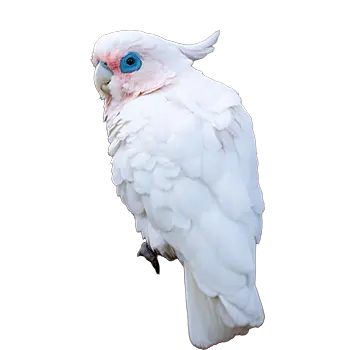

An adult Bare-Eyed Cockatoo thrives on a predictable daily structure that balances social interaction, independent activity, and rest. These birds are creatures of habit that find security in routine, and a well-designed daily schedule addresses their physical needs while managing their intense social drive in a way that is sustainable for both bird and caregiver over the decades of the relationship. The adult phase, which spans roughly from two years of age through the onset of geriatric changes in the late twenties or thirties, is the longest period in the bird's life and the one during which care routines become deeply ingrained.
The day should begin with uncovering the cage at a consistent time, ideally coordinated with natural sunrise or at least with the household's wake-up schedule. Bare-Eyed Cockatoos require ten to twelve hours of uninterrupted sleep per night in a dark, quiet environment to maintain hormonal balance and overall health. Chronic sleep deprivation contributes to irritability, hormonal dysregulation, feather destructive behavior, and immune suppression. If the bird's cage is in a room where household activity continues after the bird's bedtime, consider a separate, dedicated sleeping cage in a quieter room.
Morning tasks include refreshing food and water, cleaning the cage floor of overnight droppings, and a brief wellness check. Observe the bird's posture, eye brightness, feather condition, and droppings as it wakes. A healthy adult Bare-Eyed Cockatoo greets the morning with vocal enthusiasm, a raised crest, and eager movement toward its food dishes. Any departure from this baseline, including fluffed feathers, closed or half-closed eyes, reluctance to move, or abnormal droppings, warrants closer monitoring and possibly a veterinary consultation.
Structured out-of-cage time is essential and should total at least two to four hours daily, split between supervised free time and direct interaction with the caregiver. During out-of-cage periods, the bird should have access to a play stand or tree equipped with perches of varying diameters, foraging stations, and an assortment of destructible toys. The bird's cage itself should be spacious enough to allow full wing extension, climbing, and play even during periods when the bird is confined. Minimum recommended cage dimensions for a Bare-Eyed Cockatoo are 36 inches wide by 24 inches deep by 48 inches tall, though larger is always better for a species this active.