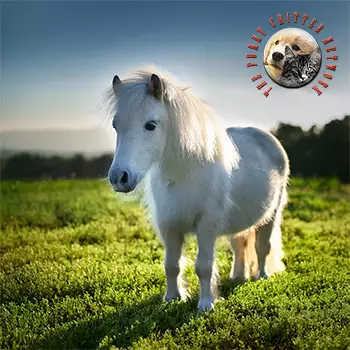

Miniature Horse Breed Guide - Furry Critter Network

Miniature Horse

Quick Facts

🔬 Scientific Name
Equus ferus caballus
📋 Breed Registry
American Miniature Horse Association (AMHA) / American Miniature Horse Registry (AMHR)
📊 Care Level
Intermediate
😊 Temperament
Gentle
📏 Height
Under 34-38 inches
⏱️ Lifespan
25-35 years
⚖️ Weight
150-350 lbs
🎨 Coat Colors
All colors including Bay, Black, Chestnut, Palomino, Pinto, Appaloosa patterns
🍽️ Diet Type
Herbivore
🌍 Origin
Europe/United States
📐 Size
Small

Miniature Horse - Names & Recognition

The Miniature Horse—often affectionately called "Mini"—represents a height breed rather than a distinct breed developed from single foundation stock. These tiny equines have been selectively bred from various pony and small horse breeds to produce animals displaying the proportions and characteristics of full-sized horses in dramatically reduced stature. Though genetically more similar to ponies, they are deliberately bred to avoid the stocky, cobby proportions typical of pony breeds.

Two major registries govern the breed in the United States. The American Miniature Horse Association (AMHA), founded in 1978 in Arlington, Texas, registers only horses measuring 34 inches or less at the last hairs of the mane. The registry closed in 1987, accepting only offspring of AMHA-registered parents thereafter. The American Miniature Horse Registry (AMHR), a division of the American Shetland Pony Club established in 1972, maintains two divisions: Division A for horses 34 inches and under, and Division B for horses between 34 and 38 inches.

Internationally, several other registries and breed societies recognize Miniature Horses, including organizations in Europe, Australia, and South Africa. The South African Miniature Horse, developed since 1945, represents a distinct population with its own breed society and studbook. The Falabella of Argentina, while sometimes confused with Miniature Horses, constitutes a separate breed with its own registry and bloodlines.

The term "Miniature Horse" specifically denotes horses bred to display horse-like rather than pony-like characteristics. Breed standards emphasize refined, well-proportioned conformation resembling scaled-down versions of full-sized light horses. This distinguishes them from simply "small ponies," though the genetic distinction between horses and ponies is negligible.

Miniature Horse Physical Description

The Miniature Horse's defining characteristic is its dramatically reduced size combined with horse-like proportions. Standing no taller than 34 inches (AMHA standard) or 38 inches (AMHR Division B) measured at the last hairs of the mane rather than the withers, these tiny equines weigh between 150 and 350 pounds depending on their height and build. Despite their small stature, properly bred Miniature Horses display the refined, balanced conformation of full-sized light horses rather than the stocky build of ponies.

The ideal Miniature Horse head is refined and well-proportioned, with large, expressive eyes set wide apart, small alert ears, and a straight or slightly concave profile. The head should appear neither too large nor too fine for the body. The neck is of medium length with a clean throatlatch, blending smoothly into well-angled shoulders. The overall expression should be intelligent and kind.

Body conformation emphasizes balance and proportion. The back should be short and strong, neither swayed nor roached, connecting to a level or slightly sloped croup. The chest is moderately broad with good depth through the heartgirth. Legs are straight and clean with flat bone, well-defined joints, and strong pasterns. Hooves are proportionate, round, and strong. The overall impression should be of a miniature version of a well-built light horse breed.

Miniature Horses display remarkable color diversity. All colors and patterns found in the equine world appear in Minis, including solid colors like bay, black, chestnut, palomino, and buckskin, as well as pinto patterns, appaloosa spotting, and combinations like "pintaloosa." Some colors rare in full-sized American horses, such as silver dapple, appear with relative frequency in Miniatures. All coat colors, eye colors, and markings are acceptable for registration.

Two general "types" exist within the breed: those resembling refined Arabs or light horses, and those displaying the heavier build of draft horses in miniature. Both types can be found within registries, reflecting the diverse ancestry from which modern Miniature Horses descend. Quality breeding programs select for balanced, correct conformation regardless of type.

Riding Suitability
Miniature Horses cannot be ridden by anyone except the smallest children due to their diminutive size. However, they excel in driving, in-hand showing, obstacle courses, and as companion animals. Their small stature makes them ideal for ground-based activities and therapy work.
Temperament
Miniature Horses display exceptionally gentle, affectionate temperaments that make them ideal companions. They are eager to please, enjoy human interaction, and form strong bonds with their owners. Their friendly natures suit them perfectly for therapy work and as family pets.
Activity Level
Moderate activity levels characterize the breed. Miniature Horses enjoy regular exercise and mental stimulation through training, driving, and play. They benefit from daily activity but don't require the extensive exercise programs that larger, athletic breeds need.
Space Requirements
Minimal space requirements make Miniature Horses accessible to owners with limited property. As few as 1/4 to 1/2 acre can house a Mini comfortably, though more space is always beneficial. Their small size allows keeping in situations where full-sized horses would be impractical.
Grooming Requirements
Standard grooming maintains Miniature Horses in good condition. Regular brushing, mane and tail care, and routine hoof maintenance are necessary. Their smaller size makes grooming physically easier than with larger horses, though the same attention to detail is required.
Climate Adaptability
Miniature Horses adapt well to various climates, growing thick winter coats for cold weather. They handle temperature extremes reasonably well with appropriate shelter. Their small body mass may make them more susceptible to temperature extremes than larger horses.
Health Hardiness
While generally hardy, Miniature Horses face breed-specific health concerns including dental problems due to crowded teeth, obesity, hyperlipemia, and potential dwarfism-related issues. Careful breeding selection and attentive management prevent many problems.
Feed Management
Careful feed management is critical for Miniature Horses, who are extremely prone to obesity and metabolic issues. Their efficient metabolisms require strictly controlled intake. Overfeeding poses serious health risks including laminitis and hyperlipemia. Most need restricted grazing and limited hay.

Temperament

The Miniature Horse's temperament ranks among its most appealing characteristics—a gentle, affectionate, and people-oriented disposition that makes these tiny horses exceptional companions. Bred for generations as pets and novelty animals rather than for work requiring independent thinking or athletic performance, Miniature Horses have developed remarkably human-focused personalities.

Their affectionate natures manifest in obvious enjoyment of human attention and physical contact. Unlike some horse breeds that remain aloof or wary, well-socialized Miniature Horses actively seek interaction with their people. They respond enthusiastically to grooming, scratching, and handling, often following their owners around like dogs. This people-oriented behavior makes them particularly suited to therapy work, where their genuine enjoyment of human contact enhances therapeutic interactions.

Intelligence characterizes the breed, though this intelligence sometimes expresses as cleverness that requires management. Miniature Horses learn quickly—both desired behaviors and unwanted ones. They can figure out latches, escape from inadequate fencing, and manipulate soft-hearted owners into providing excessive treats. This intelligence makes them highly trainable when owners maintain consistent boundaries while providing mental stimulation.

Despite their gentle natures, Miniature Horses remain horses with horse behaviors and instincts. They can kick, bite, and display dominance behaviors, particularly if not properly trained and handled. Their small size sometimes leads owners to neglect basic training, resulting in spoiled horses that present handling challenges. Treating them as horses—with appropriate training, boundaries, and respect—produces well-mannered animals regardless of their diminutive stature.

Social needs reflect their equine nature. Miniature Horses benefit from companionship, whether from other horses, ponies, or other animals. Solitary Minis may develop behavioral issues or depression. Many owners keep Minis in pairs or small groups, or house them with other companion animals. Their adaptable natures allow them to bond with goats, donkeys, or even dogs.

The breed's gentle temperament makes them suitable for interaction with children, elderly individuals, and those with disabilities. This, combined with their manageable size, underlies their popularity as therapy animals. Certified therapy Miniature Horses visit hospitals, nursing homes, and special education facilities, bringing comfort and joy to people who might not otherwise experience equine interaction.

Facilities & Management

Housing Miniature Horses requires adapting standard equine facilities to their diminutive scale while avoiding the temptation to treat them as large pets rather than small horses. Their compact size offers significant advantages for owners with limited space, but proper equine housing principles still apply. Understanding their specific needs ensures healthy, well-managed Minis.

Shelter requirements can be more modest than for full-sized horses. Small run-in sheds, converted outbuildings, or purpose-built mini barns provide adequate protection from weather. Stalls should be sized appropriately—8x8 feet is often adequate, though larger stalls prevent feelings of confinement. Ceiling height matters less than with tall horses, but adequate ventilation remains essential. Some owners successfully convert large dog houses or garden sheds for single Minis, though purpose-built structures are preferable.

Pasture needs are dramatically reduced compared to full-sized horses, making Miniature Horse ownership feasible on small properties. A quarter to half acre can sustain one or two Minis, though more space is always beneficial. However, their efficient metabolisms and easy-keeper tendencies mean lush pastures may require restricted access. Many owners utilize dry lots with controlled hay feeding rather than allowing unlimited grazing.

Fencing requires attention to the breed's small size and occasional cleverness. Standard horse fencing may have gaps large enough for Minis to squeeze through, while some Miniatures learn to duck under rails. Four-board fencing with reduced spacing, mesh fencing, or electric fencing properly installed at Mini height all work well. Gates should have latches that clever Minis cannot manipulate.

Water and feeding facilities need appropriate scaling. Water buckets or small automatic waterers placed at comfortable heights ensure adequate hydration. Feed tubs should be sized for their small muzzles. Slow-feeders designed for Miniature Horses help extend eating time while controlling intake—important for these obesity-prone animals.

Transportation differs significantly from hauling full-sized horses. Some Miniature Horses travel in dog crates or modified vans, while others ride in small trailers or the rear compartments of SUVs. Purpose-built miniature horse trailers allow safe transport for multiple animals. Whatever conveyance is used, adequate ventilation, secure footing, and protection from weather are essential.

The breed's small size and indoor trainability enable housing situations impossible for larger horses, including urban and suburban properties with appropriate zoning. This accessibility has contributed significantly to the breed's popularity, allowing horse ownership for people without traditional equine facilities.

Feeding & Nutrition

Feeding Miniature Horses demands careful attention and restraint, as these tiny equines face serious health risks from overfeeding that wouldn't affect larger horses. Their remarkably efficient metabolisms, evolved from pony breeds adapted to survival on sparse forage, become problematic when combined with abundant modern feeding. Understanding and respecting this efficiency is essential for maintaining healthy Minis.

Obesity represents the most significant nutritional threat to Miniature Horses. They gain weight quickly on rations that would leave larger horses thin, and excess weight predisposes them to serious conditions including laminitis, equine metabolic syndrome, and hyperlipemia—a potentially fatal condition where fat mobilization overwhelms the liver. Maintaining appropriate body condition requires constant vigilance and willingness to restrict intake.

Quality forage should comprise the majority of the diet, but quantities must be carefully controlled. Low-calorie grass hay rather than rich legume hay suits most Minis. Rather than feeding 2% of body weight as often recommended for horses, many Miniatures require closer to 1.5% or even less to maintain appropriate condition. For a 200-pound Mini, this might mean only 3 pounds of hay daily—a surprisingly small amount.

Pasture access requires management strategies that prevent overconsumption. Grazing muzzles allow turnout benefits while limiting grass intake. Dry lots with controlled hay feeding offer another approach. Limited turnout time, particularly during spring when grass sugars peak, helps prevent founder and excessive weight gain. Some Minis cannot safely have any pasture access and must be maintained entirely on dry lots with measured hay.

Concentrate feeding is rarely necessary and often counterproductive. Most Miniature Horses should receive no grain whatsoever. When additional nutrients are needed—for breeding animals, growing youngsters, or the rare hard keeper—very small amounts of low-starch, low-calorie feeds should be used. A ration balancer providing vitamins and minerals without significant calories often works best for Minis needing supplementation.

Vitamin and mineral supplementation addresses potential gaps in forage-only diets. A balanced supplement or ration balancer ensures micronutrient adequacy. Salt should be available free-choice—miniature-sized salt blocks are available. Fresh, clean water must always be accessible, though Minis drink proportionately less than larger horses.

Feeding schedules should provide small, frequent meals or continuous access to appropriate forage through slow feeders. Their small digestive systems function best with steady forage intake. Slow-feeder hay nets with small openings extend eating time while preventing rapid consumption. Multiple feedings throughout the day prevent the boredom and digestive upset that can accompany meal feeding with restricted portions.

Miniature Horse Health & Lifespan

Miniature Horses face a unique constellation of health concerns stemming from their selectively bred small size. While generally hardy animals that often live 25-35 years, they are predisposed to conditions rare in larger horses while being spared from others. Understanding these breed-specific vulnerabilities enables proactive management that prevents many problems before they develop.

The Miniature Horse's health profile requires owners to be particularly vigilant about weight management and dental care—the two areas where breed-specific problems most commonly arise. Working with veterinarians experienced in Miniature Horse care helps owners navigate these challenges and maintain their tiny horses in excellent health throughout their remarkably long lives.

Common Health Issues

  • Dental problems occur frequently due to full-sized teeth crowded into small jaws - Misalignment, overcrowding, and retained caps require regular veterinary dental care to prevent pain and eating difficulties.
  • Obesity and metabolic syndrome threaten Miniature Horses more severely than most breeds - Their efficient metabolisms readily store excess calories, leading to dangerous fat accumulation and insulin resistance.
  • Hyperlipemia—a potentially fatal condition where excessive fat mobilization overwhelms the liver—can occur when obese Minis stop eating due to stress - Illness, or rapid diet changes.
  • Laminitis risk is elevated due to metabolic susceptibility - Obese Minis with insulin resistance face particular danger from this painful, potentially crippling hoof condition.
  • Dystocia (difficult foaling) affects breeding Minis because foals may be disproportionately large relative to the mare's small pelvis - Making veterinary supervision during foaling essential.
  • Dwarfism from ACAN gene mutations produces severely disproportionate horses with health problems - Responsible breeding programs test for and avoid producing affected individuals.

Preventive Care & Health Monitoring

  • Annual or biannual dental examinations with floating as needed address the dental crowding inherent to the breed - Starting dental care young helps manage developing problems.
  • Weight management through strict dietary control and regular body condition scoring prevents the obesity-related conditions that claim many Miniature Horse lives. - Weight management through strict dietary control and regular body condition scoring prevents the obesity-related conditions that claim many Miniature Horse lives.
  • Regular hoof care every 6-8 weeks maintains hoof health, particularly important given the breed's elevated laminitis risk - Farriers experienced with Minis understand their specific needs.
  • Genetic testing before breeding identifies carriers of dwarfism genes and other hereditary conditions - Allowing responsible breeding decisions.

Training & Handling

Training Miniature Horses requires the same fundamental principles applied to full-sized horses, though their small size introduces some unique considerations. The most important training principle is treating Minis as horses rather than pets—maintaining appropriate boundaries and expectations despite their diminutive, appealing appearance. Well-trained Miniature Horses are a pleasure to own; spoiled ones create significant handling problems.

Ground manners form the essential foundation for all Miniature Horse training. Basic handling—leading, standing, yielding to pressure, accepting grooming and hoof care—should be taught consistently from an early age. Their small size can make handlers complacent about training, but a 300-pound Mini that pushes, bites, or kicks still presents real dangers and is unpleasant to handle.

Driving represents the primary performance discipline for Miniature Horses, and they excel at it. Their willing temperaments, manageable size, and often flashy movement make them popular cart horses. Training to drive follows standard progressive methods: introduction to harness, ground driving, and eventually hitching to an appropriately sized vehicle. Pleasure driving, competitive driving, and obstacle driving all suit the breed well.

In-hand showing showcases Miniature Horses' conformation and movement. Halter classes require horses to stand correctly for examination and move freely at the handler's direction. Showmanship classes evaluate the handler's presentation skills. Liberty classes demonstrate the horse's movement and personality without a lead. All require specific training to present the horse to best advantage.

Obstacle and trail courses provide mental stimulation and showcase the breed's versatility. Miniature Horses navigate bridges, walk over tarps, pass through narrow spaces, and handle various challenges. These activities build confidence and partnership while providing excellent training for therapy horses who may encounter similar situations in their work.

Therapy horse training requires specialized preparation for Minis entering this field. Certification programs evaluate temperament, basic training, and specific therapy skills. Therapy Minis must accept handling from various people including those with unsteady movements or unusual behaviors. They must remain calm in hospital corridors, nursing home common areas, and classroom settings.

Their intelligence makes Miniature Horses candidates for trick training, which many owners enjoy teaching. Bowing, nodding "yes" and "no," fetching, and various other behaviors appeal to the breed's quick minds. Such training provides mental enrichment while strengthening the human-horse bond.

Suitability & Considerations

Miniature Horses suit specific owners and purposes particularly well while being less appropriate for others. Their unique characteristics—tiny size, gentle temperament, specialized care needs—make them ideal for some situations while presenting challenges in others. Honest evaluation of expectations and capabilities helps prospective owners make good decisions.

Companion animal seekers find Miniature Horses appealing alternatives to traditional pets. For horse lovers unable to ride due to age, disability, or simple lack of interest, Minis provide equine companionship in a manageable package. Their long lifespans—often 25-35 years—mean adopting a Mini represents a serious long-term commitment comparable to dog ownership but measured in decades rather than years.

Therapy programs increasingly utilize Miniature Horses for their gentle temperaments, portable size, and novel appeal. Certified therapy Minis visit facilities where full-sized horses couldn't go, bringing equine therapy to people who would otherwise lack access. Those interested in animal-assisted therapy find Miniature Horses excellent candidates, though certification requires significant training investment.

Driving enthusiasts appreciate Miniature Horses as manageable driving animals. Their size allows easier handling during hitching and training than full-sized horses, while their flashy movement and willing attitudes produce attractive turnouts. Competitive driving offers outlets for those seeking showing opportunities, while pleasure driving provides recreation without competition pressure.

Families with children may find Miniature Horses appropriate with important caveats. While too small for riding, Minis can teach children horsemanship basics—grooming, handling, feeding, and care—in safer, more manageable packages than full-sized horses. However, children still require supervision, as even small horses can injure young handlers.

Space-limited horse lovers find Miniature Horses accessible where larger horses would be impossible. Suburban properties with appropriate zoning, small acreages, and even some urban situations can accommodate Minis. This accessibility represents a significant advantage for those lacking traditional equine facilities.

Challenges requiring honest consideration include their specialized health management, particularly weight control and dental care. Owners unwilling to maintain strict feeding discipline will have unhealthy Minis. Breeding considerations include dwarfism risk and foaling difficulties. Cost of veterinary care, particularly dental work and any specialized treatment, remains comparable to larger horses despite the animals' small size.

Those seeking riding horses should look elsewhere—Miniature Horses cannot serve this purpose. Similarly, those wanting low-maintenance pets may be disappointed by equine care requirements that apply regardless of horse size. Successful Miniature Horse ownership requires commitment to proper equine husbandry adapted to their specific needs.