
Albino Cory Care Guide - Furry Critter Network

Albino Cory

Quick Facts

🔬 Scientific Name
Corydoras aeneus (albino variant)
⭐ Care Level
Beginner
😊 Temperament
Peaceful
📏 Adult Size
2-2.5 inches
⏱️ Lifespan
5-8 years
🐟 Tank Size Minimum
20 gallons
🌡️ Temperature Range
72-80°F
⚗️ Ph Range
6.0-7.5
🍽️ Diet Type
Omnivore
🌍 Origin
South America (captive-bred variant)

Albino Cory - Names & Recognition

The Albino Cory represents a captive-bred color variant of the Bronze Corydoras (Corydoras aeneus), selectively bred over generations to establish the characteristic lack of pigmentation. This popular aquarium fish carries numerous common names reflecting both its appearance and origin, including Albino Corydoras, Albino Catfish, Albino Aeneus, and White Cory. These names all refer to the same genetic variant developed entirely within the aquarium trade rather than occurring naturally in wild populations.

The scientific classification places this fish within the family Callichthyidae, commonly known as armored catfish, characterized by overlapping bony plates covering their bodies rather than traditional scales. The genus Corydoras encompasses over 170 described species, making it one of the largest catfish genera. The species name "aeneus" derives from Latin meaning "bronze" or "copper," referencing the metallic coloration of the wild-type form rather than this albino variant.

Within the aquarium trade, Albino Corys sometimes face confusion with other pale Corydoras species or variants. True albinos display the characteristic red or pink eyes resulting from the absence of melanin, distinguishing them from leucistic fish that retain normal eye coloration. The consistency of captive breeding programs has established this variant as one of the most commonly available Corydoras in the hobby, often more readily found than the wild-type Bronze Cory from which it derives.

The development of the Albino Cory through selective breeding demonstrates the influence of aquarium hobbyists on fish genetics and availability. While wild Bronze Corydoras range throughout South America, virtually all Albino Corys available in the trade descend from captive breeding programs, primarily established in commercial facilities throughout Asia and Florida. This captive heritage contributes to their exceptional hardiness and adaptability to aquarium conditions.

Albino Cory Physical Description

The Albino Cory presents a distinctive appearance immediately recognizable among aquarium fish. Adults typically reach 2 to 2.5 inches in length, with females growing slightly larger and considerably plumper than males, particularly when carrying eggs. Their compact, armored bodies display the typical Corydoras profile: a rounded, somewhat triangular shape when viewed from above, with a flat ventral surface adapted for substrate contact.

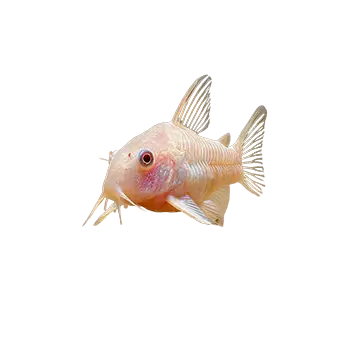
The defining characteristic of this variant is its complete lack of melanin pigmentation, resulting in a pale coloration ranging from creamy white to light pink depending on lighting and individual variation. The underlying flesh tones show through the unpigmented skin, creating a warm, almost translucent appearance. Under strong lighting, blood vessels may be visible through the skin, contributing to the pinkish cast many specimens display. This absence of pigmentation extends throughout the body, including the distinctive bony plates that armor Corydoras species.

The eyes provide the most striking feature distinguishing true albinos from other pale color variants. Lacking melanin in the iris, Albino Cory eyes appear bright pink to ruby red, created by blood vessels visible through unpigmented tissue. These distinctive eyes sometimes raise concerns among new hobbyists unfamiliar with the variant, though this coloration is completely normal and healthy for albino specimens.

Like all Corydoras, Albino Corys possess three pairs of barbels surrounding their downturned mouths. These sensory organs probe substrate continuously while foraging, detecting food items buried in sand or gravel. The barbels remain sensitive to damage from rough substrates, making substrate selection an important husbandry consideration. Sharp gravel can abrade these delicate appendages, potentially leading to bacterial infections.

Sexual dimorphism becomes apparent in mature specimens. Females develop noticeably rounder bodies when viewed from above, particularly when gravid with eggs. Males remain more slender throughout their lives and typically display slightly more pointed pectoral and dorsal fins. Both sexes possess the sharp pectoral fin spines characteristic of Corydoras, which can entangle in nets and cause minor injuries to handlers unfamiliar with proper catching techniques.

Temperament
Albino Corys are exceptionally peaceful fish showing zero aggression toward tank mates of any species. Their gentle nature and social behavior make them perfect additions to any community aquarium regardless of existing inhabitants.
Care Level
Among the easiest fish to maintain, Albino Corys tolerate a wide range of conditions and adapt readily to aquarium life. Their forgiving nature regarding water parameters makes them excellent choices for beginners establishing their first tanks.
Diet
Enthusiastic omnivores accepting sinking pellets, wafers, frozen foods, and leftover flakes with equal enthusiasm. Their scavenging nature ensures thorough substrate cleaning while requiring minimal specialized feeding attention.
Water Conditions
Hardy and adaptable to various water chemistries within reasonable tropical ranges. They prefer slightly soft to neutral water but tolerate moderate hardness well. Stable conditions matter more than hitting exact parameters.
Tank Size
Their small adult size allows keeping in tanks as small as 20 gallons for a proper school. Groups of six or more thrive in standard community setups, requiring minimal dedicated space beyond substrate area.
Compatibility
Perfect community fish compatible with virtually any peaceful species from tetras to gouramis. Their bottom-dwelling nature minimizes competition with midwater fish, and their armor protects against minor harassment.
Activity Level
Active foragers constantly sifting through substrate and exploring tank furnishings throughout the day. Social interactions within their school create entertaining displays as they rest together and forage in loose groups.
Hardiness
Robust fish rarely succumbing to common aquarium diseases when maintained in clean conditions. Their armored bodies and established captive lineages contribute to reliable health in properly maintained aquariums.

Natural Habitat & Range

While Albino Corys exist exclusively as a captive-bred variant, understanding the natural habitat of their wild Bronze Corydoras ancestors informs appropriate aquarium husbandry. Corydoras aeneus enjoys one of the widest distributions of any Corydoras species, ranging throughout South America from Trinidad and Venezuela southward through Colombia, Peru, Bolivia, and into Argentina. This extensive range encompasses diverse aquatic environments, contributing to the species' renowned adaptability.

Wild Bronze Corydoras inhabit slow-moving streams, tributaries, and backwaters of larger river systems. They prefer shallow areas with soft substrates composed of sand, fine gravel, or accumulated organic debris. Leaf litter accumulating along banks and in quiet pools provides both foraging opportunities and shelter from predators. These environments typically feature moderate vegetation, including both submerged and emergent plants creating shade and additional cover.

Water conditions across their natural range vary considerably, demonstrating the adaptability that makes captive populations so hardy. Wild populations experience temperatures ranging from the low 60s during cool seasons to the mid-80s Fahrenheit during warm periods. Water chemistry spans soft, acidic blackwater conditions to harder, more neutral parameters depending on specific locality. This natural variation explains the exceptional tolerance captive Albino Corys display toward diverse aquarium conditions.

The social nature of wild Corydoras strongly influences captive behavior. Wild populations form large aggregations, sometimes numbering in the hundreds or thousands of individuals. These groups forage together across substrate surfaces, their coordinated movement potentially confusing predators while improving food detection efficiency. This strong social drive persists in captive populations, making group keeping essential for psychological well-being. Isolated individuals often become shy, stressed, and fail to display natural behaviors.

Seasonal flooding patterns in South American rivers trigger reproductive activity in wild populations. Rising water levels, temperature changes, and increased food availability stimulate spawning behavior. While captive fish no longer experience these natural cycles, the underlying instincts remain intact, making captive breeding achievable through environmental manipulation simulating these seasonal changes.

Albino Cory Temperament & Behavior

Albino Corys exemplify peaceful community fish behavior, displaying virtually no aggression toward tank mates regardless of species. Their gentle disposition, combined with their bottom-dwelling nature, allows them to coexist harmoniously with virtually any non-predatory aquarium inhabitants. This exceptional compatibility has established them as staple community fish recommended for nearly every peaceful freshwater setup.

Social behavior dominates Albino Cory activity, as these fish display strong preferences for conspecific company. They naturally form loose schools that forage together, rest together, and explore their environment as a coordinated group. Watching a group of Corydoras rest in a pile or suddenly dart across the tank in unison provides endless entertainment for observers. This social nature necessitates keeping them in groups of six or more individuals to display natural behaviors and maintain psychological health.

Their activity patterns follow a crepuscular schedule, with peak activity occurring during dawn and dusk periods. However, captive specimens adapt readily to aquarium lighting schedules and often remain active throughout illuminated hours, particularly during feeding periods. They spend their active time methodically working across substrate surfaces, using their sensitive barbels to locate food particles missed by other tank inhabitants.

One of the most endearing Corydoras behaviors involves their habit of surfacing to gulp atmospheric air. While primarily gill-breathers, Corydoras possess the ability to absorb oxygen through their intestinal lining, allowing supplemental respiration in oxygen-poor conditions. Healthy fish in well-oxygenated tanks still perform this behavior occasionally, rapidly swimming to the surface, taking a gulp of air, and descending quickly. Frequent or frantic surface breathing may indicate water quality issues requiring investigation.

Interactions with other species remain universally peaceful. Albino Corys ignore fish occupying different tank levels entirely and share substrate space with other bottom dwellers without conflict. Their armored bodies provide protection against minor harassment from nippy species, though their barbels remain vulnerable. Even during breeding periods, males compete for female attention through pursuit rather than aggression, and no territorial behavior develops around spawning sites.

The characteristic Corydoras "wink" or eye movement often captivates observers. These fish can rotate their eyes independently, creating an appearance of winking or deliberate glancing. This adaptation likely aids in monitoring surroundings while the head remains pressed against substrate during foraging.

Tank Setup & Requirements

Creating appropriate habitat for Albino Corys requires attention to substrate selection above all other considerations. These dedicated bottom dwellers spend their lives in contact with substrate, constantly probing with sensitive barbels. Fine sand represents the ideal choice, allowing natural foraging behavior while protecting delicate barbels from damage. Pool filter sand, play sand, or aquarium-specific fine substrates all work excellently. If using gravel, select smooth, rounded varieties with no sharp edges that might abrade barbel tissue.

Tank size recommendations start at 20 gallons for a school of six Albino Corys, though larger tanks provide better conditions and allow for larger groups. Floor space matters more than height for these bottom dwellers, making long, shallow tanks preferable to tall designs. Standard 20-gallon long aquariums offer ideal dimensions, maximizing substrate area within reasonable space constraints.

Filtration requirements balance the need for biological capacity against flow preferences. Corydoras prefer gentle to moderate water movement rather than strong currents that impede their bottom-dwelling lifestyle. Sponge filters provide excellent biological filtration while generating minimal current, and their intake designs eliminate any risk of injuring small fish or trapping barbels. Hang-on-back filters work well with flow reducers or spray bars directing output along the surface. Canister filters offer superior capacity for larger communities but require flow adjustment for Corydoras comfort.

Decoration choices should include hiding spots where groups can retreat and rest together. Driftwood pieces, rocky caves, PVC pipes, or dense plant clusters all provide suitable shelter. Corydoras often select specific resting locations, returning to favorite spots repeatedly throughout the day. Providing multiple options allows groups to establish comfortable routines while giving shy individuals security.

Live plants benefit Albino Cory setups both aesthetically and functionally. Broad-leaved plants like Amazon swords and Anubias provide shade over substrate areas where Corydoras rest. Floating plants dim lighting naturally while creating more comfortable conditions for these fish that lack protective pigmentation. Their pale coloration becomes less washed-out under subdued lighting, and fish often display more confident behavior in planted tanks.

Lighting considerations deserve special attention for albino fish. Their lack of protective melanin makes them potentially more sensitive to intense illumination. Moderate lighting levels, achieved through floating plants or appropriate fixture selection, create more comfortable conditions. If strong lighting is necessary for plant growth, ensure adequate shaded resting areas where fish can retreat from brightness.

Water Parameters

Albino Corys demonstrate impressive adaptability regarding water chemistry, tolerating a broader range of conditions than many tropical fish. This flexibility reflects their ancestry from wild Bronze Corydoras populations adapted to varying conditions across an extensive South American range. However, understanding preferred parameters helps optimize health and longevity in captive populations.

Temperature tolerance spans from 72°F to 80°F, with optimal conditions falling between 74°F and 78°F. They survive brief excursions outside this range but prolonged exposure to temperature extremes increases stress and disease susceptibility. Unlike some tropical fish requiring consistently warm temperatures, Albino Corys actually appreciate slightly cooler conditions than many community tank inhabitants. This preference makes them excellent companions for temperate species and allows flexibility in community tank heating.

The acceptable pH range extends from 6.0 to 7.5, covering soft acidic conditions through neutral water chemistry. Most municipal water supplies fall within this range without modification, simplifying setup for beginning aquarists. Extremely alkaline water above pH 8.0 may cause long-term stress and should be addressed through blending with softer water or controlled treatment. Stability matters more than hitting specific targets, as Corydoras tolerate gradual changes far better than sudden fluctuations.

Water hardness tolerance spans soft to moderately hard conditions (2-15 dGH), again accommodating most tap water without adjustment. Very hard water above 15 dGH remains acceptable for short-term keeping but may impact long-term health and breeding potential. Softening extremely hard water through dilution with reverse osmosis water benefits fish from naturally soft-water environments.

Water quality maintenance requires consistent attention despite Corydoras hardiness. These fish remain sensitive to ammonia and nitrite, making proper cycling essential before adding fish to new setups. Nitrate levels should stay below 40 ppm through regular water changes. Their bottom-dwelling nature exposes them to accumulated waste settling on substrate surfaces, making thorough gravel vacuuming during water changes particularly important for Corydoras health.

Weekly water changes of 25-30% maintain optimal conditions under normal stocking levels. More frequent changes benefit heavily stocked tanks or those with less efficient filtration. Always match replacement water temperature closely to tank temperature to prevent thermal shock, particularly important for fish lacking protective pigmentation. Dechlorinating tap water remains essential, as chlorine and chloramine cause gill damage and stress.

Albino Cory Health & Lifespan

Albino Corys generally prove hardy fish with good disease resistance when maintained in appropriate conditions. Their captive breeding heritage has produced robust lineages adapted to aquarium life over many generations. Under proper care, these fish commonly live 5-8 years, with well-maintained specimens occasionally exceeding a decade. While generally healthy, they remain susceptible to certain conditions, particularly those affecting their sensitive barbels and the issues common to bottom-dwelling fish exposed to substrate-level waste accumulation.

Albino Corys reward attentive husbandry with years of entertaining behavior and reliable health. Their adaptability makes them forgiving of minor husbandry mistakes, though they thrive best in well-maintained systems with stable parameters. Regular observation during feeding reveals early health changes, as reduced appetite, color fading, clamped fins, or isolation from the group often indicate developing problems requiring attention. Maintaining clean substrate conditions proves particularly crucial for these constant bottom foragers.

Common Health Issues

  • Barbel erosion occurs when sensitive barbels contact rough substrate or deteriorate due to bacterial infection in poor water quality - Causing feeding difficulties and requiring substrate replacement and water quality improvement.
  • Ich (white spot disease) affects Corydoras as readily as other tropical fish - Appearing as white spots on body and fins, requiring elevated temperature and medication while being cautious with salt treatments.
  • Red blotch disease presents as reddish patches on the belly and fins - Associated with bacterial infection often triggered by poor water quality or stress, requiring antibiotic treatment and environmental improvement.
  • Fungal infections appear as cottony white growths on body or fins - Typically secondary to injuries or stress, requiring antifungal medication and addressing underlying causes.
  • Internal parasites cause weight loss - Lethargy, and abnormal feces in affected fish, often introduced through live foods or infected new arrivals, requiring specific antiparasitic medications.
  • Swim bladder issues manifest as buoyancy problems causing abnormal swimming positions - Often resulting from overfeeding, constipation, or bacterial infection requiring dietary adjustment and possible medication.

Preventive Care & Health Monitoring

  • Provide smooth, fine substrate - Preferably sand, to protect sensitive barbels from abrasion that can lead to bacterial infection and feeding impairment.
  • Maintain excellent water quality through regular testing - Water changes, and thorough substrate vacuuming to prevent bacterial buildup where these bottom dwellers feed constantly.
  • Quarantine all new fish for 2-4 weeks before adding to established tanks - As Corydoras are susceptible to diseases introduced by new arrivals from potentially stressful retail conditions.
  • Avoid medications containing copper or high salt concentrations - As scaleless areas of Corydoras make them more sensitive to these common treatments than fully-scaled fish.

Albino Cory Feeding & Diet

Albino Corys demonstrate enthusiastic omnivorous appetites, readily accepting a wide variety of prepared, frozen, and live foods. Their role as dedicated bottom feeders means they naturally consume food that reaches the substrate, including excess food from other tank inhabitants. However, relying solely on leftover food fails to meet their nutritional needs, and dedicated feeding ensures proper health and longevity.

Sinking foods designed for bottom feeders should form the dietary foundation. Quality sinking pellets, wafers, and tablets provide balanced nutrition in formats that reach these substrate dwellers before other tank inhabitants intercept food. Shrimp pellets, catfish wafers, and bottom feeder tablets all receive eager acceptance. Drop foods after lights-out occasionally to ensure Corydoras receive adequate nutrition in community tanks with competitive feeders.

Frozen foods provide excellent supplemental nutrition generating enthusiastic feeding responses. Bloodworms rank among the most eagerly consumed options, creating feeding frenzies when introduced. Brine shrimp, daphnia, and tubifex worms all provide variety and protein content. Thaw frozen foods in tank water before feeding to prevent digestive issues from consuming ice-cold food. Feed frozen foods 2-3 times weekly as part of a varied rotation.

Live foods generate the most intense feeding response while providing enrichment through natural foraging behavior. Blackworms, live brine shrimp, daphnia, and microworms all make excellent choices. Live foods prove particularly valuable when conditioning fish for breeding, as the nutritional density and stimulating feeding experience help trigger spawning readiness. Ensure live food sources are clean and parasite-free to prevent disease introduction.

Vegetable matter deserves occasional inclusion, as wild Corydoras consume plant material opportunistically. Blanched vegetables including zucchini, cucumber, and shelled peas provide fiber and variety. Spirulina-containing wafers offer plant nutrition in convenient sinking formats. While not strictly necessary for health, vegetable foods add dietary diversity and may prevent excessive protein consumption.

Feeding frequency should provide 2-3 small meals daily for adults, with quantities consumed within 5-10 minutes. Their foraging nature means Corydoras continue working over substrate long after food introduction, so immediate feeding frenzy followed by continued activity indicates appropriate amounts. Overfeeding contributes to water quality deterioration and obesity, both problematic for long-term health. One fasting day weekly benefits digestive health and water quality. Juveniles require more frequent feeding of smaller portions to support growth.

Tank Mates & Breeding

Albino Corys demonstrate exceptional compatibility with virtually any peaceful community species, their gentle nature and bottom-dwelling habits minimizing competition and conflict with tank mates. Few fish offer such universal compatibility, establishing Corydoras as recommended additions to nearly every community aquarium regardless of existing inhabitants.

Small to medium tetras make ideal companions, occupying midwater zones while leaving substrate territory to Corydoras. Cardinal tetras, rummy-nose tetras, ember tetras, and black phantom tetras all coexist peacefully in South American biotope arrangements. Their active schooling behavior complements the busy bottom activity of Corydoras, creating visually dynamic community tanks.

Rasboras and danios provide equally compatible options with Asian origins. Harlequin rasboras, celestial pearl danios, and zebra danios share similar peaceful dispositions and water requirements. Their different swimming levels ensure no competition for space or food, and their schooling nature creates attractive movement throughout the water column.

Other peaceful catfish coexist well with Albino Corys. Different Corydoras species often school together, allowing mixing of species for visual variety. Otocinclus catfish share gentle dispositions and similar size ranges. Bristlenose plecos occupy different ecological niches despite similar bottom-dwelling tendencies, focusing on algae while Corydoras target detritus and leftover food.

Gouramis, particularly smaller species like honey gouramis and sparkling gouramis, make suitable tank mates. Their calm demeanor and midwater occupation complement Corydoras activity without conflict. Avoid larger, more aggressive gourami species that might bully bottom dwellers during feeding.

Species to avoid include aggressive cichlids, large predatory fish, and known fin nippers. Oscars, Jack Dempseys, and most Central American cichlids pose predation risks or may injure Corydoras through aggression. Even if not eaten, harassment from aggressive species stresses Corydoras, suppressing natural behaviors and potentially impacting health.

Breeding Albino Corys occurs readily in home aquariums with proper conditioning and environmental triggers. Cool water changes simulating rainfall trigger spawning behavior. Males pursue gravid females intensively, eventually achieving the characteristic "T-position" where the female holds milt in her pelvic fins while passing eggs through to fertilize. Females deposit adhesive eggs on glass, plants, and decorations. Removing adults or eggs prevents predation, as Corydoras readily consume their own eggs.