Sage Ghafghazi

Afghan Hound

Quick Facts

🐕 Breed Group
Hound Group
📏 Size Category
Large
📏 Height
Males: 27-29 inches, Females: 25-27 inches
⚖️ Weight
Males: 60-70 pounds, Females: 50-60 pounds
⏱️ Life Expectancy
12-15 years
🧣 Coat Type
Long, thick, silky coat with fine texture
🎨 Coat Colors
Black, cream, red, blue, brindle, domino, white, silver
😀 Temperament
Dignified, aloof, independent, loyal, playful, sensitive
🏃 Exercise Needs
High
🎓 Training Difficulty
High - independent and strong-willed
👶 Good with Children
Better with older children who understand boundaries
🐾 Good with Other Pets
Moderate; high prey drive with small animals

Other Names & Breed Recognition

The Sage Ghafghazi is one of several traditional names used for the breed most widely known in the Western world as the Afghan Hound. The name Sage Ghafghazi translates roughly from Persian as the hound of the Ghafghazi people, referencing the historical communities in Afghanistan's mountainous regions that bred and maintained these dogs for centuries. Other names include Tazi, Baluchi Hound, Barakzai Hound, and Shalgar Hound, each reflecting a different regional or tribal association within the breed's homeland.

The use of the name Sage Ghafghazi connects the breed directly to its Persian-speaking heritage and to the cultural traditions of the Afghan plateau. Unlike the Anglicized name Afghan Hound, which became standard through British colonial-era dog shows, Sage Ghafghazi preserves the breed's identity as understood by the people who originally bred it. This distinction carries cultural significance for breed historians and enthusiasts who wish to honor the dog's roots.

The breed is recognized by all major international kennel clubs, though registration is typically under the name Afghan Hound. The American Kennel Club recognized the breed in 1926, and it holds recognition with the United Kennel Club, Canadian Kennel Club, the Kennel Club of the United Kingdom, and the Federation Cynologique Internationale. Regardless of the name used, the breed standard remains consistent across registries, describing the same elegant, long-coated sighthound with a distinctive aristocratic bearing.

Breed enthusiasts sometimes use Sage Ghafghazi in scholarly or historical contexts to distinguish between the original landrace dogs of Afghanistan and the refined show lines developed in the West. Some modern breeders working with dogs imported directly from Afghanistan prefer this designation to emphasize the working heritage and original type of these hounds, as distinguished from dogs bred primarily for conformation shows.

Sage Ghafghazi Organizations & Standards

The primary breed club in the United States is the Afghan Hound Club of America, which serves as the AKC parent club and maintains the official breed standard. This organization oversees breed education, supports health research, and hosts national specialty shows that draw exhibitors and breeders from across the country. The club also manages rescue efforts and provides resources for prospective owners seeking reputable breeders.

Internationally, the breed is governed by standards set forth by the Federation Cynologique Internationale, which classifies the Afghan Hound within Group 10 as a long-haired sighthound. The FCI standard provides detailed specifications for structure, movement, coat, and temperament that are used by kennel clubs in dozens of countries worldwide. The Kennel Club in the United Kingdom maintains its own standard with minor variations in emphasis and wording.

Breed-specific rescue organizations play a vital role in the Sage Ghafghazi community. Organizations such as Afghan Hound Rescue and various regional rescue groups work to rehome dogs that have been surrendered, abandoned, or found as strays. These groups are particularly important given the breed's demanding grooming requirements and independent temperament, which can lead to placement in homes unprepared for the breed's needs.

Health research for the breed is coordinated through various canine health foundations and breed club health committees. Ongoing studies focus on conditions prevalent in the breed, including chylothorax, anesthesia sensitivity, and eye disorders. The Afghan Hound Club of America Health Committee works with organizations like the Orthopedic Foundation for Animals and the Canine Health Information Center to encourage health testing and data collection among breeders.

Kennel Club Recognition

  • American Kennel Club (AKC): Recognized in 1926, Hound Group
  • United Kennel Club (UKC): Recognized, Sighthound & Pariah Group
  • Canadian Kennel Club (CKC): Recognized, Hound Group
  • FCI: Recognized, Group 10: Sighthounds
  • The Kennel Club (UK): Recognized, Hound Group

Sage Ghafghazi Physical Description

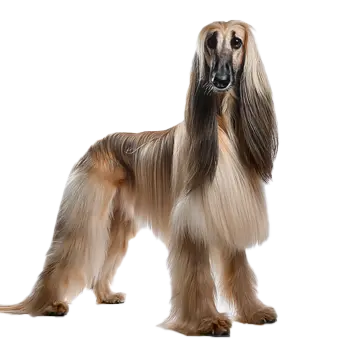
The Sage Ghafghazi presents a picture of aristocratic elegance and athletic power. This is a tall, refined sighthound standing 25 to 29 inches at the shoulder with a lean, muscular build designed for speed and endurance over rough terrain. The overall silhouette is one of balanced proportions, with prominent hip bones, a deep chest, and a distinctive ring-curled tail carried high. The dog's entire bearing suggests dignity and aloofness, giving the impression of looking through rather than at those around it.

The head is long and refined with a prominent occiput, a slightly Roman nose, and dark, almond-shaped eyes that convey an almost Eastern expression often described as gazing into the distance. The ears are set low and far back on the skull, hanging close to the head and covered with long, silky hair that blends into the coat. The muzzle is long with powerful jaws, reflecting the breed's heritage as a coursing hound capable of taking game in harsh terrain.

The coat is the breed's most striking feature and the characteristic that demands the most owner commitment. Long, thick, and silky with an extremely fine texture, the coat flows freely from the body and can reach considerable length on the legs, flanks, ribs, and ears. A distinctive short-haired saddle along the back is a hallmark of the mature Sage Ghafghazi, creating an elegant contrast with the surrounding long hair. The topknot of long, fine hair crowning the head completes the breed's regal appearance.

Coat colors span a wide spectrum, including black, cream, red, blue, brindle, domino, white, and silver, among others. All colors are permitted by the breed standard, and no single color is preferred. The domino pattern, featuring a dark facial mask with lighter body coloring, is particularly associated with the breed. Movement is fluid and springy, with a powerful, ground-covering gait that showcases the breed's natural athleticism. When running at full speed, the Sage Ghafghazi displays the effortless, floating movement that has captivated admirers for centuries.

Affectionate With Family
The Sage Ghafghazi forms deep bonds with its family but expresses affection on its own terms. This is not a clingy or overtly demonstrative breed. Instead, the Sage Ghafghazi shows loyalty through quiet companionship, choosing to be near its people without demanding constant physical contact. Owners who appreciate a more reserved, cat-like affection style will find this breed deeply rewarding, as the moments of tenderness feel genuinely earned.
Good With Young Children
The Sage Ghafghazi is a sensitive and dignified breed that generally does better with older children who can respect its space. Young children who grab, pull, or make sudden loud movements can overwhelm this breed, leading to avoidance rather than aggression. The dog's large size and tendency to bolt when startled also present practical challenges around toddlers. Families with young children should supervise all interactions carefully and teach respectful handling from the start.
Good With Other Dogs
The Sage Ghafghazi can coexist peacefully with other dogs, particularly when raised alongside them. This breed does not typically seek out canine companionship with the enthusiasm of more social breeds, preferring a dignified tolerance over boisterous play. Same-sex pairings can occasionally lead to tension, and introductions to unfamiliar dogs should be handled calmly. Early socialization helps the Sage Ghafghazi develop comfortable manners around other dogs in a variety of settings.
Shedding Level
The Sage Ghafghazi sheds moderately throughout the year, with seasonal increases during spring and fall. The long, silky coat does release hair, though it tends to tangle within the coat rather than scatter around the home the way shorter-coated breeds shed. Regular grooming reduces the amount of loose hair significantly. Owners should expect some hair on furniture and clothing but will find shedding manageable with a consistent brushing routine.
Coat Grooming Frequency
The Sage Ghafghazi's magnificent flowing coat demands extensive and regular grooming. Daily brushing is strongly recommended to prevent mats and tangles, especially behind the ears, under the legs, and along the chest. Many owners bathe this breed weekly or biweekly and follow up with conditioning treatments to maintain coat health and texture. Professional grooming sessions are common. Neglecting the coat even briefly can lead to severe matting that may require shaving, so prospective owners must commit to this demanding grooming schedule.
Drooling Level
The Sage Ghafghazi is a very clean breed with minimal drooling. Its refined, narrow muzzle structure does not lend itself to excess saliva production. Owners will rarely encounter drool on furniture, clothing, or hands. This trait makes the breed appealing to those who prefer a tidy household. Occasional light drooling may occur in anticipation of food or during periods of intense heat, but it is negligible compared to breeds with loose jowls.
Coat Type
The Sage Ghafghazi possesses one of the most distinctive coats in the canine world. The hair is long, fine, and silky with a texture similar to human hair, flowing freely across the body. A characteristic short-haired saddle runs along the back, contrasting with the longer hair on the legs, ribs, and ears. The topknot of long, silky hair on the head is a hallmark feature. This coat originally served as insulation against the harsh mountain climates of Afghanistan, providing warmth at high altitudes and protection from cold winds.
Openness To Strangers
The Sage Ghafghazi is characteristically aloof with strangers, maintaining a dignified distance rather than rushing to greet newcomers. This reserve is a fundamental part of the breed's temperament, not a sign of fear or poor socialization. The breed may acknowledge visitors politely but rarely seeks attention from unfamiliar people. This natural wariness means the Sage Ghafghazi will not be the dog that charms every guest at a party, but its loyalty to its inner circle runs exceptionally deep.
Playfulness Level
The Sage Ghafghazi has a playful streak that can surprise those who only know the breed's reputation for dignified aloofness. When the mood strikes, this breed can be remarkably silly and energetic, engaging in spontaneous bursts of speed and clownish behavior around the house. Play sessions tend to be on the breed's own schedule rather than on demand. The Sage Ghafghazi particularly enjoys running at full speed in safe, enclosed areas, where its remarkable athleticism and grace become evident.
Watchdog/Protective Nature
The Sage Ghafghazi is not a natural watchdog or protection breed. While it may alert to unusual sounds or visitors, it lacks the territorial drive and confrontational instinct seen in guardian breeds. Its response to perceived threats is more likely to be indifferent avoidance than protective engagement. The breed's independent nature means it will not reliably respond to threats on behalf of its family. Those seeking a breed with strong protective instincts should look elsewhere, as the Sage Ghafghazi's strengths lie in companionship and elegance rather than guarding.
Adaptability Level
The Sage Ghafghazi can adapt to various living environments, including apartments, provided it receives adequate daily exercise. The breed is relatively quiet indoors and can be surprisingly laid-back when its exercise needs are met. However, changes in routine, household upheaval, or noisy environments can stress this sensitive breed. The Sage Ghafghazi does best in calm, stable homes where routines are consistent. Access to a securely fenced yard or regular opportunities to run freely contribute greatly to its overall well-being and contentment.
Trainability Level
The Sage Ghafghazi is widely recognized as one of the more challenging breeds to train using conventional methods. This is not due to a lack of intelligence but rather to a deeply independent and self-directed temperament. The breed was developed to hunt independently in rugged terrain, making autonomous decisions without human direction. Repetitive drills bore this breed quickly, and harsh corrections will cause it to shut down entirely. Positive reinforcement, patience, short training sessions, and realistic expectations are essential. The Sage Ghafghazi will learn basic commands but is unlikely to perform with the eager precision of a retriever or herding breed.

Sage Ghafghazi History & Development

The Sage Ghafghazi is among the oldest of all domestic dog breeds, with roots tracing back thousands of years to the mountainous regions of Afghanistan, Pakistan, and surrounding areas of Central and South Asia. Archaeological evidence and DNA analysis place this breed's ancestors among the most ancient sighthound types, predating most modern breeds by millennia. The breed was developed by nomadic peoples and settled mountain communities who needed a fast, agile hunting dog capable of pursuing game across rugged, high-altitude terrain.

In its homeland, the Sage Ghafghazi was a prized hunting companion used to course hare, gazelle, fox, and even larger quarry such as wolves and snow leopards. The dog's remarkable speed, keen eyesight, and independent hunting instinct made it invaluable in the harsh mountain landscape where human hunters on foot or horseback could not always follow. The breed's thick, flowing coat provided essential insulation against bitter cold at high elevations, while its large, padded feet offered traction on rocky ground.

The breed first came to Western attention in the late 19th and early 20th centuries, when British military officers and diplomats stationed in Afghanistan and the Northwest Frontier brought dogs back to England. Two distinct types emerged in early Western breeding: the Bell-Murray dogs, which were lighter in build and originated from the lowland desert regions, and the Ghazni dogs, which were heavier-coated mountain types brought by Major T. Doig from the Kabul area. These two lines were eventually blended to create the foundation of the modern Western show Afghan Hound.

The breed arrived in America in the 1920s, with Zeppo Marx of the Marx Brothers being among the early prominent owners. The American Kennel Club granted recognition in 1926, and popularity grew steadily through the mid-20th century. The breed reached peak popularity in the 1970s, becoming a symbol of glamour and counterculture style. While show ring and pet popularity has fluctuated, dedicated breeding programs worldwide continue to preserve both the breed's beauty and its athletic function.

In Afghanistan itself, decades of conflict have devastated the native population of Sage Ghafghazi dogs. Conservation efforts have been limited, though some breed enthusiasts have worked to locate and preserve dogs from original landrace lines. These efforts highlight the tension between the refined Western show type and the rugged, working dogs still found in remote areas of the breed's homeland.

Sage Ghafghazi Temperament & Personality

The Sage Ghafghazi possesses a temperament unlike most other breeds, combining aristocratic dignity with unexpected moments of clownish playfulness. This breed is fundamentally independent and self-directed, traits that were essential for a dog bred to hunt autonomously across vast, difficult terrain without constant human guidance. Owners accustomed to eager-to-please breeds often find the Sage Ghafghazi's independent streak puzzling or frustrating, but those who appreciate the breed understand that its apparent aloofness is a form of quiet, confident self-assurance.

With its own family, the Sage Ghafghazi is loyal and often deeply sensitive to the moods and emotions of its people. This breed picks up on household tension quickly and can become withdrawn or anxious in chaotic environments. The bond between a Sage Ghafghazi and its primary person tends to be particularly intense, though the dog may extend varying degrees of warmth to other family members. This is a one-family dog that does not transfer allegiance easily, making rehoming a significant emotional challenge for the breed.

The breed's relationship with strangers ranges from polite indifference to complete disregard. The Sage Ghafghazi does not seek attention from unfamiliar people and may actively move away from those who attempt to pet or engage it. This is not shyness or fear but a genuine lack of interest in social interaction outside its established circle. First-time visitors to the home should be advised not to pursue or corner the dog, as forced interaction creates stress and erodes trust.

Despite its dignified reputation, the Sage Ghafghazi has a well-documented silly side that emerges in private moments with trusted people. The breed can engage in zoomies, steal household items for impromptu keep-away games, and display a mischievous sense of humor that delights its owners. These playful episodes are entirely on the dog's schedule and cannot be reliably prompted, which only adds to their charm.

The prey drive in the Sage Ghafghazi is exceptionally strong and essentially hardwired. Small animals, including cats in some cases, can trigger an intense chase response that overrides all training. This instinct is not aggression but a deeply embedded hunting behavior that has been refined over thousands of years. Owners must accept this trait as immutable and manage the environment accordingly, rather than attempting to train it away.

Sage Ghafghazi Family Life & Living Requirements

Living with a Sage Ghafghazi requires thoughtful preparation and ongoing commitment to meeting the breed's physical and emotional needs. Despite its large size, this breed can adapt to apartment living provided it receives sufficient daily exercise, as it tends to be calm and quiet indoors. The breed is not prone to excessive barking and generally maintains a dignified composure within the home, making it a surprisingly suitable urban companion for owners willing to invest in daily outings.

The ideal home environment for a Sage Ghafghazi is calm, predictable, and free from excessive noise or chaos. This breed is highly sensitive to environmental stressors and does not thrive in households with frequent upheaval, loud arguments, or constant commotion. A stable routine with consistent feeding times, exercise schedules, and rest periods helps the Sage Ghafghazi feel secure. Sudden changes in household dynamics, such as a new baby, a move, or the addition of another pet, should be managed with extra care and gradual introduction.

Fencing is a non-negotiable requirement for any yard accessible to a Sage Ghafghazi. The breed's combination of powerful prey drive, explosive speed, and athletic jumping ability means that standard four-foot fencing is wholly inadequate. A minimum of six feet is recommended, and some owners install angled extensions or coyote rollers to prevent escape. Underground electronic fences are ineffective for this breed, as the momentary discomfort will not override the pursuit instinct once the dog locks onto prey.

The Sage Ghafghazi does best with older children who understand the concept of respecting an animal's personal space. The breed is not typically aggressive toward children but will remove itself from situations it finds overwhelming, and a startled Sage Ghafghazi in flight mode can inadvertently knock over small children. Families with young children should supervise all interactions and provide the dog with a quiet retreat space where it can rest undisturbed.

Regarding other pets, the Sage Ghafghazi can coexist with other dogs, particularly other sighthounds or dogs of similar temperament. Relationships with cats and small animals are unpredictable due to the breed's intense prey drive. Some individuals raised with cats from puppyhood will accept the household cat as family while still chasing unfamiliar cats outdoors. Small pets such as rabbits, ferrets, or guinea pigs should never be left accessible to a Sage Ghafghazi.

Sage Ghafghazi Training & Exercise Needs

Training a Sage Ghafghazi requires a fundamental shift in expectations for anyone accustomed to working with more biddable breeds. This breed was never selected for obedience or cooperation with human handlers. Its genetic legacy is one of independent decision-making at high speed across challenging terrain, and that heritage shapes every aspect of its response to training. Owners who approach training as a collaborative negotiation rather than a command-and-compliance exercise will find far more success and satisfaction.

Positive reinforcement is the only effective training approach for this breed. The Sage Ghafghazi is exceptionally sensitive to corrections, and harsh methods will cause it to shut down, refuse to engage, or develop anxiety-based behavioral problems. High-value food rewards, play, and calm verbal praise work best. Training sessions must be kept short, varied, and interesting, as the breed's tolerance for repetition is extremely low. Expecting a Sage Ghafghazi to perform the same exercise fifteen times in a row is a recipe for mutual frustration.

Recall training is perhaps the single most critical area of focus, and also the most difficult. The Sage Ghafghazi should never be considered reliable off-leash in unsecured areas, regardless of training investment. The prey drive is simply too powerful to override with verbal commands once activated. Training should focus on strong recall in low-distraction environments and on building the dog's desire to check in with its handler, while accepting that management and containment are the primary safety tools.

Exercise needs are substantial despite the breed's calm indoor demeanor. The Sage Ghafghazi requires daily opportunities to stretch out and run, ideally in a large, securely fenced area. Lure coursing provides an excellent outlet for the breed's natural hunting instincts in a controlled setting and is a sport where the Sage Ghafghazi excels. Regular leash walks are necessary but insufficient as the sole form of exercise. Without adequate physical outlets, the breed can develop destructive behaviors or become depressed.

Mental stimulation is equally important, though it takes different forms than with breeds that enjoy puzzle toys or structured training games. The Sage Ghafghazi benefits from varied walking routes, opportunities to explore new environments, and sensory enrichment. The breed's keen eyesight means it is constantly scanning and processing visual information, and environments that offer interesting sights and scents contribute meaningfully to its psychological well-being.

Sage Ghafghazi Health Concerns

The Sage Ghafghazi is generally a healthy breed with a relatively long lifespan for its size, typically living 12 to 15 years with proper care. However, like all breeds, it is predisposed to certain health conditions that prospective owners and breeders should understand. Responsible health screening and awareness of breed-specific medical considerations are essential components of owning this breed.

One of the most important health considerations unique to sighthound breeds, including the Sage Ghafghazi, is sensitivity to anesthesia and certain medications. The breed's low body fat percentage means that fat-soluble drugs are distributed differently than in other breeds of similar weight. Standard anesthetic protocols can be dangerous, and barbiturate-based anesthetics should be avoided entirely. Owners must ensure their veterinarian is experienced with sighthound physiology or is willing to consult with sighthound-knowledgeable colleagues before any procedure requiring sedation.

Chylothorax, a condition involving the accumulation of lymphatic fluid in the chest cavity, occurs in the Sage Ghafghazi at higher rates than in most other breeds. Symptoms include difficulty breathing, coughing, and lethargy. Treatment ranges from dietary management and chest drainage to surgical intervention in severe cases. The cause is not always identifiable, and prognosis varies depending on the underlying trigger and the dog's response to treatment.

Hip dysplasia, while less prevalent in the Sage Ghafghazi than in many large breeds, does occur and should be screened for in breeding stock. Bloat, or gastric dilatation-volvulus, represents a life-threatening emergency that the breed's deep-chested conformation predisposes it to. Owners should learn to recognize the signs of bloat, including unproductive retching, abdominal distension, and restlessness, and understand that immediate veterinary intervention is critical.

Eye conditions including cataracts and corneal dystrophy have been documented in the breed. Regular ophthalmologic examinations, particularly for breeding animals, help identify these conditions early. Hypothyroidism is another condition seen in the breed, presenting with symptoms such as weight gain, coat deterioration, and lethargy. It is easily diagnosed through blood work and managed effectively with daily thyroid hormone supplementation.

Common Health Issues

  • Hip Dysplasia - A developmental condition where the hip joint does not fit properly into the socket, leading to arthritis and pain. The Sage Ghafghazi can be affected, and screening through radiographic evaluation is recommended before breeding.
  • Cataracts - Opacity of the lens that can develop in the Sage Ghafghazi at various ages, potentially leading to impaired vision or blindness if left untreated. Regular ophthalmologic exams help detect early formation.
  • Hypothyroidism - An underproduction of thyroid hormones that can cause weight gain, lethargy, coat changes, and skin issues in the Sage Ghafghazi. Diagnosis is straightforward through blood testing, and the condition is manageable with daily medication.
  • Chylothorax - A condition involving the accumulation of chyle in the pleural cavity, which can cause breathing difficulties. The Sage Ghafghazi appears predisposed to this condition compared to many other breeds, and treatment may require surgical intervention.
  • Laryngeal Paralysis - A condition where the muscles controlling the laryngeal cartilages weaken, leading to breathing difficulties, especially during exercise or in hot weather. The Sage Ghafghazi can develop this condition particularly in middle to older age.
  • Sensitivity to Anesthesia - Due to its low body fat percentage and lean physique, the Sage Ghafghazi is notably sensitive to anesthesia and sedation drugs. Veterinarians experienced with sighthounds should be consulted for any procedures requiring sedation, as standard dosing can be dangerous.
  • Bloat (Gastric Dilatation-Volvulus) - A life-threatening condition in which the stomach fills with gas and may twist on its axis. The Sage Ghafghazi's deep chest conformation increases its susceptibility. Preventive measures include feeding smaller meals and avoiding vigorous exercise around feeding times.

Preventive Care & Health Monitoring

  • Daily Coat Maintenance - The Sage Ghafghazi's long, silky coat requires daily brushing with a pin brush and wide-toothed comb to prevent matting. Focus on areas prone to tangling such as behind the ears, the chest, and under the legs. Regular conditioning treatments help maintain coat health.
  • Regular Bathing and Conditioning - Bathe the Sage Ghafghazi every one to two weeks using a high-quality shampoo and conditioner formulated for long-coated breeds. Thorough rinsing and proper drying are essential to prevent skin irritation and coat damage.
  • Sighthound-Aware Veterinary Care - Ensure your veterinarian is experienced with sighthound breeds and understands their unique sensitivities to anesthesia, differing normal blood value ranges, and lean body composition. Standard drug dosages and reference ranges used for other breeds can be inappropriate for this breed.
  • Secure Exercise Areas - The Sage Ghafghazi has a powerful prey drive and exceptional speed. All off-leash exercise must take place in securely fenced areas with fencing at least six feet high, as this breed can clear lower barriers. Never trust off-leash recall in unfenced environments.
  • Bloat Prevention Protocol - Feed two to three smaller meals daily rather than one large meal. Use a slow-feeder bowl if the dog eats rapidly. Avoid strenuous activity for at least an hour before and after meals. Discuss prophylactic gastropexy with your veterinarian.

Sage Ghafghazi Grooming & Maintenance

The grooming demands of the Sage Ghafghazi are among the most intensive of any breed, and prospective owners must honestly assess their willingness and ability to maintain this commitment before acquiring one. The breed's long, fine, silky coat is breathtakingly beautiful when properly maintained but can quickly become a matted, uncomfortable mess without regular attention. Grooming is not optional with this breed; it is a fundamental aspect of responsible ownership.

Daily brushing is the cornerstone of Sage Ghafghazi coat care. Using a quality pin brush and a wide-toothed comb, the entire coat should be worked through systematically, paying particular attention to areas prone to tangling: behind the ears, under the front legs, between the hind legs, and along the chest and belly. Brushing should be done gently on a dog that has been trained from puppyhood to accept and ideally enjoy the process. Forcing a resistant dog through grooming sessions creates a cycle of stress and avoidance that makes future grooming progressively more difficult.

Bathing should occur every one to two weeks, using high-quality shampoo and conditioner specifically formulated for long-coated breeds. The coat should be thoroughly wetted, shampooed, rinsed completely, conditioned, and rinsed again. Incomplete rinsing leads to residue buildup that dulls the coat and can irritate the skin. After bathing, the coat should be gently towel-dried and then blown dry using a forced-air dryer on a low-heat setting while simultaneously brushing to prevent tangles from forming as the coat dries.

Beyond coat care, routine grooming includes weekly ear cleaning, regular nail trimming, and dental care. The Sage Ghafghazi's pendant ears with heavy hair covering create a warm, moist environment conducive to ear infections, so checking and cleaning the ears regularly is essential. Nails should be trimmed or ground every two to three weeks, and dental health should be maintained through brushing or veterinarian-recommended dental care products.

Many Sage Ghafghazi owners develop a close relationship with a professional groomer who understands the breed's coat and temperament. Some owners choose to keep companion dogs in a shorter trim that reduces daily maintenance while preserving the breed's general outline. This is a practical choice that does not diminish the dog's quality of life, and responsible breeders support owners who prioritize the dog's comfort and cleanliness over maintaining a full show coat.