Decker Rat Terrier

Rat Terrier (Decker strain)

Quick Facts

🐕 Breed Group
Terrier Group
📏 Size Category
Medium
📏 Height
Males: 16-19 inches, Females: 16-17 inches
⚖️ Weight
Males: 25-40 pounds, Females: 22-35 pounds
⏱️ Life Expectancy
15-18 years
🧣 Coat Type
Short, smooth, dense, close-lying coat
🎨 Coat Colors
White with patches of black, red, lemon, blue, chocolate, orange, or tan; tri-color patterns common
😀 Temperament
Loyal, intelligent, energetic, versatile, calm indoors, keen hunter
🏃 Exercise Needs
Moderate to high
🎓 Training Difficulty
Low to moderate - eager to please with occasional independence
👶 Good with Children
Yes - sturdy and patient
🐾 Good with Other Pets
Conditional - good with dogs when socialized; high prey drive toward small animals

Other Names & Breed Recognition

The Decker Rat Terrier is a larger strain of the Rat Terrier breed developed by Milton Decker in the 1970s near Eugene, Oregon. The strain goes by several names depending on the context and the registry involved. It is most commonly called the Decker Rat Terrier or simply the Decker, but it also appears as the Decker Giant, the Decker Hunting Terrier, and the Giant Rat Terrier. More recently, a movement among dedicated Decker breeders has proposed the name Old Dominion Terrier to establish the strain as an independent breed with its own registry and standard, distinct from the standard Rat Terrier. The Old Dominion Terrier Club of America maintains a separate registry for dogs of documented Decker lineage.

The Decker's formal recognition status is complex and reflects an ongoing debate about whether it constitutes a distinct breed or simply a size variety within the Rat Terrier. The AKC and UKC both register Deckers as Rat Terriers - the name Decker is not permitted on UKC registration paperwork, and both registries treat the Decker as falling within the upper size range of the standard Rat Terrier rather than recognizing it as a separate breed or variety. The National Rat Terrier Association, however, has listed the Decker line on its pedigrees since 1995, recognizing it as a distinct strain with its own breeding program and characteristics. The Decker Hunting Terrier Registry maintains its own database of dogs bred for hunting ability, temperament, and conformation that meets Decker-specific criteria.

The distinction between a Decker and a large standard Rat Terrier is a matter of some debate within the breed community. Some enthusiasts insist that bloodline, not size alone, defines a Decker - a dog must trace its lineage to Milton Decker's original breeding program to qualify, regardless of its individual size. Others take a more phenotypic view, defining the Decker by its broader skull, stronger build, and generally larger frame compared to the standard Rat Terrier. Physical characteristics that distinguish the Decker from other large Rat Terriers include a somewhat broader skull that wedges into the muzzle and squares off, common facial wrinkles, a muscular build with greater bone substance, and what enthusiasts describe as a regal elegance of movement.

For practical purposes, if you encounter a Rat Terrier that weighs 25 to 40 pounds, stands 16 to 19 inches at the shoulder, and carries itself with a confident, substantial presence that exceeds what you expect from a typical Rat Terrier, you may be looking at a Decker. The breed registers with AKC and UKC as a Rat Terrier, but the Decker community maintains its own records, breeding standards, and identity within the broader Rat Terrier world.

Decker Rat Terrier Organizations & Standards

The organizational landscape for the Decker Rat Terrier reflects the strain's position between recognized breed status and independent identity. Because the AKC and UKC register Deckers as Rat Terriers, the parent clubs for those registries - the Rat Terrier Club of America for the AKC and the National Rat Terrier Club for the UKC - technically serve as the governing bodies for Decker conformation and competition within those organizations. However, neither parent club maintains a separate standard or division for Deckers, treating them instead as dogs at the upper end of the standard Rat Terrier size range.

The National Rat Terrier Association has provided the most formal recognition of the Decker strain within the broader Rat Terrier community. Since 1995, the NRTA has listed the Decker line on its pedigrees, acknowledging the strain's distinct breeding history and characteristics. This recognition has given Decker breeders a framework for documenting lineage and tracking the bloodlines that trace back to Milton Decker's original program. The NRTA's willingness to identify the Decker strain separately on pedigrees has been important for breeders working to maintain the characteristics that set the Decker apart from standard Rat Terriers.

The Decker Hunting Terrier Registry represents a more specialized effort to preserve the working qualities that originally defined the strain. This group of breeders is dedicated to breeding dogs for hunting ability and temperament alongside conformation and appearance, reflecting Milton Decker's original vision of a versatile hunting terrier. The registry emphasizes that size, temperament, hunting ability, genetic health, conformation, and overall quality must all be present for a dog to be considered a true Decker. The Old Dominion Terrier Club of America represents the most ambitious organizational effort within the Decker community - an attempt to establish the strain as a fully independent breed with its own registry, standard, and identity separate from the Rat Terrier.

The breed standard as applied to Deckers follows the general Rat Terrier standard in most respects but with size expectations at the upper end of the range. The UKC Rat Terrier standard describes a sturdy, compact, smooth-coated dog with a blunt wedge-shaped head, powerful jaws, and an alert, intelligent expression. The standard accepts both natural tails and docked tails, erect or tipped ears, and a wide range of pied coat colors. For Deckers specifically, breeders look for males standing 16 to 19 inches at the shoulder and weighing 25 to 40 pounds, with females slightly smaller. The emphasis is on substance, bone, and a muscular build that reflects the strain's development as a hunting dog capable of pursuing game significantly larger than the rats and vermin targeted by standard Rat Terriers.

Kennel Club Recognition

  • American Kennel Club (AKC): Recognized in 2013, Terrier Group
  • United Kennel Club (UKC): Recognized in 1999, Terrier Group

Decker Rat Terrier Physical Description

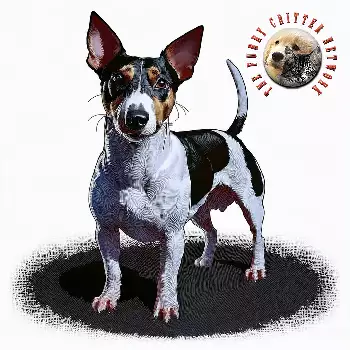
The Decker Rat Terrier is a medium-sized, muscular, well-proportioned dog that represents the upper end of the Rat Terrier size spectrum. Males typically stand 16 to 19 inches at the shoulder and weigh 25 to 40 pounds, while females are slightly smaller at 16 to 17 inches and 22 to 35 pounds. The breed is slightly longer than tall, with a body that conveys both speed and strength - this is not a delicate, racy dog but a solidly built hunting companion with enough substance to work demanding terrain and pursue game far larger than rodents. The overall impression is of a compact, athletic, muscular terrier with clean lines and a confident carriage.

The head is one of the features that most clearly distinguishes the Decker from standard Rat Terriers. The skull is somewhat broader than in smaller Rat Terriers and tends to wedge into the muzzle with a more squared-off appearance. Facial wrinkles are common in Deckers and are considered a characteristic feature of the strain. The muzzle is well-filled under the eyes and tapers slightly from the stop to the nose. The jaws are powerful, reflecting the breed's development as a hunting dog that needed grip strength for game. The eyes are set wide apart and come in shades of dark brown to hazel, expressing an alert, intelligent, engaged demeanor. Ears may be erect, tipped, or button - all three carriage types are acceptable - and contribute to an expression of attentive curiosity.

The body is well-constructed for athletic performance. The chest is deep and moderately broad, reaching to the elbow, providing substantial lung capacity for sustained exertion. The back is level and firm, the loin short and muscular, and the croup slightly sloping. The shoulders are well laid back and the hindquarters are powerful and well-angulated, providing the driving force for the explosive sprinting, jumping, and maneuvering that characterize the breed's hunting style. The legs are strong and well-boned, with round, compact feet that provide grip and stability on varied terrain. The tail may be naturally long, naturally bobbed, or docked - all variations are acceptable.

The coat is short, smooth, dense, and close-lying, with a natural sheen that indicates good health. There is no undercoat, and the coat lies flat against the body, revealing the underlying musculature. The Decker typically displays the pied coloring pattern characteristic of all Rat Terriers - large patches of one or more colors on a white background. Common color combinations include white with black, white with red or tan, tricolor (white, black, and tan), and white with chocolate, blue, lemon, or orange. All Decker Rat Terriers typically have white markings, and solid-colored dogs without white are not characteristic of the strain.

Movement in the Decker should be smooth, efficient, and ground-covering, reflecting the breed's need to work over varied terrain for extended periods. The natural gait includes an easy, free-moving trot with good reach in front and strong drive from the rear. The breed is capable of remarkable speed in short bursts - a capability developed for jumping deer and treeing game - but its movement should also reflect the endurance needed for sustained hunting activity. At a gallop, the Decker displays the explosive athleticism that made it valuable as a hunting companion for pursuing game well beyond the rodent-catching role of standard Rat Terriers.

Affectionate With Family
The Decker Rat Terrier forms exceptionally strong bonds with its family, displaying a level of devotion and physical affection that surprises many people unfamiliar with the breed. These dogs follow their people from room to room, seek out lap time despite their medium size, and express genuine joy at reunions even after brief separations. The breed's dual nature as both hunter and companion means it switches seamlessly between intense outdoor work and gentle indoor companionship.
Good With Young Children
The Decker's sturdier build compared to standard Rat Terriers makes it more suitable for households with young children, as it can tolerate the accidental bumps and enthusiastic handling that come with small kids. The breed is generally patient and playful with children, engaging in games with enthusiasm and monitoring the household with gentle watchfulness. Supervision is still advisable, particularly during energetic play, but the Decker's temperament inclines strongly toward tolerance and protection of young family members.
Good With Other Dogs
The Decker Rat Terrier generally coexists well with other dogs, particularly when raised together or properly introduced. The breed lacks the intense same-sex aggression found in some terrier breeds and tends to be sociable in multi-dog households. However, the Decker's confidence and hunting drive mean it will not back down from confrontations initiated by other dogs, and careful introductions remain important, especially with dogs of significantly different sizes or energy levels.
Shedding Level
The Decker Rat Terrier sheds moderately throughout the year, with seasonal increases during spring and fall. The short, smooth coat produces fine hairs that are relatively easy to manage with regular brushing but will be noticeable on dark clothing and upholstery. The coat is not hypoallergenic, and owners should expect consistent low-level shedding as a permanent feature of life with this breed.
Coat Grooming Frequency
The Decker's short, smooth coat is among the lowest-maintenance coats in the dog world. A weekly brushing with a soft bristle brush or rubber grooming mitt removes loose hair and distributes natural oils, and bathing is needed only occasionally. The coat requires no trimming, clipping, or professional grooming of any kind, making the Decker an exceptionally practical choice for owners who want a clean, easy-care dog.
Drooling Level
The Decker Rat Terrier is an exceptionally clean, dry-mouthed breed with virtually no drooling tendency. The breed's tight, well-fitting lips and moderate muzzle structure produce none of the slobber associated with heavy-jowled breeds. Owners will not find wet spots on furniture, clothing, or floors, and this tidy quality extends to the breed's general demeanor - Deckers are fastidious dogs that keep themselves notably clean.
Coat Type
The Decker carries a single-layer coat that is short, smooth, dense, and close-lying. The coat has a natural sheen that indicates good health and lies flat against the body, revealing the breed's muscular contours. There is no undercoat, no feathering, and no furnishings. This coat type evolved as a practical feature for a working dog that needed ease of maintenance and freedom of movement during active hunting in varied terrain.
Openness To Strangers
The Decker Rat Terrier is moderately friendly with strangers, displaying an initial alertness that gives way to curiosity and acceptance once the family signals approval. The breed is not excessively shy or suspicious, but neither does it rush to greet every newcomer with unbridled enthusiasm. Most Deckers warm up to visitors within a few minutes of introduction, making them sociable enough for family life while retaining enough reserve to function as effective watchdogs.
Playfulness Level
The Decker Rat Terrier has a strong playful drive that persists well into adulthood and even old age. The breed enjoys chase games, fetch, tug-of-war, and interactive puzzle toys, and its athletic build makes it an energetic, enthusiastic play partner. The Decker's hunting heritage means it particularly enjoys games that engage its natural instincts - chasing, searching, and problem-solving activities are especially appealing and provide both physical exercise and mental stimulation.
Watchdog/Protective Nature
The Decker Rat Terrier is naturally alert and will reliably notify its family of unusual activity around the home. The breed is not known as an excessive barker - Decker enthusiasts frequently note that the breed is quieter than many terrier types - but it will vocalize purposefully when something genuinely warrants attention. The breed's confidence and moderate size give it enough presence to serve as a credible deterrent, and its protective instinct toward family members is genuine though not aggressive.
Adaptability Level
The Decker Rat Terrier adapts well to a variety of living situations, from rural farms to suburban homes, provided its exercise needs are met. The breed's famous dual personality - intense and driven outdoors, calm and companionable indoors - makes it more adaptable than its energy level might suggest. Apartment living is possible if the owner commits to daily outdoor exercise, though the breed's ideal environment includes a securely fenced yard where it can run and explore.
Trainability Level
The Decker Rat Terrier is highly intelligent and eager to please, making it more trainable than many terrier breeds. The breed learns new commands quickly and retains training well, responding enthusiastically to positive reinforcement methods. The Decker's hunting heritage gives it a natural desire to work cooperatively with its handler, which translates into a more biddable, responsive companion than the stereotypical independent terrier. Occasional stubbornness surfaces, but it is easily managed with patience and creative motivation.

Decker Rat Terrier History & Development

The Decker Rat Terrier's history begins with a single dog and a single breeder. In the early 1970s, Milton Decker, an avid hunter living near Eugene, Oregon, acquired a three-year-old mixed-breed dog named Henry from a gardening supply store. Henry was the product of a cross between a Smooth Fox Terrier named Frosty Dew and a farm dog named Jock. Decker quickly recognized exceptional qualities in Henry - a calm, stable temperament combined with outstanding natural hunting instincts that included tracking ability, the willingness to jump deer and drive them toward the hunter, and the aptitude for treeing game. Henry was also larger than a typical Rat Terrier, and Decker saw potential in developing a line of dogs that combined Henry's size, temperament, and hunting versatility.

Decker chose Rat Terriers as the breeding partners for Henry, a decision that rooted the new strain firmly in the Rat Terrier's established genetic base while introducing the qualities that made Henry exceptional. The breeding program was deliberate and focused - Decker selected for the calmer temperament, superior hunting instincts, and larger size that Henry represented, while the Rat Terrier crosses provided the breed's characteristic intelligence, trainability, and versatile working ability. The program also incorporated Basenji blood along the way, contributing to the strain's clean, efficient movement and quiet disposition. By the 1980s, the Decker strain was breeding true - the offspring consistently displayed the larger size, broader build, and versatile hunting capability that distinguished them from standard Rat Terriers.

By 1993, Milton Decker was confident enough in the strain's stability and the community of breeders who had adopted his dogs to step back from active development, leaving the continued refinement of the Decker line in the hands of other dedicated breeders. In 1995, the National Rat Terrier Association began listing the Decker line on its pedigrees, providing formal acknowledgment of the strain's distinct identity within the Rat Terrier world. This recognition gave Decker breeders a framework for tracking lineage and maintaining the characteristics that Milton Decker had worked two decades to establish.

The Decker's hunting capabilities extend far beyond the rat-catching role that gave the parent breed its name. Deckers are used extensively in some parts of the country for hunting squirrel, deer, wild pig, cougar, and even bear. As jump dogs for deer, they seek out the game, flush it, and chase it approximately 200 yards while yipping shrilly before returning to their handler - a style of hunting that requires courage, speed, stamina, and the handler-focused temperament to break off the chase and return. The breed's versatility also extends to treeing, tracking, and flushing game birds. This range of hunting applications is the primary reason the Decker community has sought to distinguish the strain from standard Rat Terriers, whose working heritage is primarily oriented toward vermin control.

The question of whether the Decker Rat Terrier constitutes a distinct breed or a strain within the Rat Terrier remains unresolved. The AKC and UKC treat Deckers as Rat Terriers, and the UKC does not permit the Decker name on registration paperwork. However, the Decker Hunting Terrier Registry and the Old Dominion Terrier Club of America both work toward establishing the Decker as an independent breed with its own registry and recognition. The breed's composition includes Rat Terrier, Fox Terrier, Basenji, and other breeds that were incorporated during the development process, giving it a genetic background that is related to but not identical with the standard Rat Terrier's heritage.

Decker Rat Terrier Temperament & Personality

The Decker Rat Terrier's temperament is frequently described as having a dual personality - intense, driven, and focused when working or exercising outdoors, yet calm, affectionate, and companionable when relaxed at home. This ability to shift between high-energy hunting mode and quiet household companion mode is one of the strain's most valued characteristics and was a deliberate breeding goal established by Milton Decker from the beginning. The foundation dog Henry possessed this duality, and Decker selected specifically for breeding stock that could match Henry's ability to be both an eager hunting partner in the field and a gentle, settled companion indoors.

Loyalty and affection toward family are among the Decker's strongest temperament traits. The breed bonds deeply with its household members and expresses that bond through physical closeness, enthusiastic greetings, and a desire to participate in whatever the family is doing. Despite being a medium-sized dog, Deckers frequently attempt to be lap dogs, climbing onto furniture and into laps with a determination that belies their size. The breed's attachment to its people is genuine and consistent - Deckers are not aloof or independent in the way some terrier breeds can be. They thrive on human companionship and do not do well when left alone for extended periods without mental stimulation and social contact.

The Decker's intelligence is immediately apparent to anyone who spends time with the breed. These dogs are quick learners, problem solvers, and environmental observers who notice changes in their surroundings and respond with curiosity and investigation. The breed's hunting heritage demands cognitive ability - a dog that must track, flush, pursue, and tree game across varied terrain needs to make independent decisions while still cooperating with its handler. This intelligence makes the Decker highly trainable and engaging to live with, though it also means the breed requires mental stimulation to prevent boredom-driven destructive behavior.

One of the most appreciated aspects of the Decker's temperament is its relatively low barking tendency. Breed enthusiasts consistently note that Deckers are not yappy dogs - they do not bark excessively or without purpose. When a Decker does vocalize, it typically means something has genuinely caught its attention. This quality distinguishes the Decker from many other terrier breeds that are notorious for excessive, indiscriminate barking, and it makes the Decker a more practical companion for close-quarters living where noise sensitivity is a concern.

Prey drive is present and strong in the Decker, consistent with its development as a hunting dog. Squirrels, rabbits, and other small animals will trigger pursuit behavior, and the breed should always be exercised on leash or in securely fenced areas when small prey animals are present. The Decker's prey drive is more developed and intense than in many standard Rat Terriers, reflecting the strain's selection for hunting ability across a wider range of game. This drive is an asset for owners who hunt with their dogs but requires management in non-hunting contexts to prevent unwanted chases and the potential for escape.

Decker Rat Terrier Family Life & Living Requirements

The Decker Rat Terrier adapts well to family life across a range of living situations, from working farms and rural homesteads to suburban homes with yards. The breed's dual personality - active and driven outdoors, calm and companionable indoors - makes it more versatile than its energy level might suggest. A Decker that receives adequate daily exercise will settle quietly into household routines, resting near its family without demanding constant attention or creating the restless, destructive behavior that characterizes many understimulated terriers. The breed's moderate size at 22 to 40 pounds makes it substantial enough for outdoor work and play yet manageable enough for indoor living.

The Decker's relationship with children is generally excellent, strengthened by the breed's sturdy build, patient temperament, and genuine affection for family members of all ages. The breed is playful and engaging with children, participating enthusiastically in games and outdoor activities while maintaining a gentle, protective awareness of younger family members. The Decker's size is large enough to withstand the accidental rough handling that comes with young children without the fragility concerns of smaller terrier breeds. As always, supervision during interactions between dogs and very young children is advisable, but the Decker's temperament inclines strongly toward tolerance and companionship.

Multi-pet households require consideration of the Decker's prey drive. The breed generally gets along well with other dogs, particularly when properly socialized, and multi-dog households are common among Decker owners. However, the breed's strong hunting instinct means that cats, rabbits, hamsters, and other small household animals may be at risk if the Decker has not been raised with them from puppyhood. Even dogs that coexist peacefully with a household cat may still chase unfamiliar cats outdoors. Small outdoor animals such as squirrels, chipmunks, and rabbits will invariably trigger pursuit behavior.

Fencing is essential for any home with a Decker Rat Terrier. The breed is an accomplished digger and a capable jumper, and an unsecured yard presents a serious escape risk, particularly when prey animals are visible or audible beyond the fence line. Fencing should be at least five feet high, with dig guards along the base to prevent tunneling. Electronic or invisible fencing alone is generally insufficient for a breed with strong prey drive, as the desire to pursue game can override the aversion to the correction stimulus.

The Decker's exercise needs are moderate to high, requiring daily physical activity that includes both structured exercise and opportunities for free running in secure areas. The breed is not suited to a sedentary lifestyle, and owners who cannot commit to daily walks, play sessions, or other physical activities should consider a less active breed. However, the Decker is not as demanding as some sporting or herding breeds that require hours of intense daily exercise - 45 to 60 minutes of varied physical activity typically satisfies the breed's needs and produces the calm, settled indoor companion that makes the Decker such an appealing household dog.

Decker Rat Terrier Training & Exercise Needs

Training the Decker Rat Terrier is a rewarding experience that benefits from the breed's intelligence, eagerness to please, and natural desire to work cooperatively with its handler. The Decker is more trainable than many terrier breeds, displaying a responsiveness and willingness to comply that reflects both its Rat Terrier heritage and the specific selection for handler-focused temperament that Milton Decker emphasized in his breeding program. The breed learns new commands quickly, retains training well, and genuinely enjoys the mental engagement that structured training provides.

Positive reinforcement is the optimal training approach for the Decker. The breed responds enthusiastically to food rewards, verbal praise, and interactive play as motivators, and it learns best in short, engaging sessions that maintain its interest and enthusiasm. Harsh corrections are unnecessary and counterproductive - the Decker's desire to please means that firm but fair guidance produces better results than punishment, and aversive methods can damage the trust-based relationship that makes this breed so cooperative. The occasional stubborn moment will surface, as it does with any terrier, but patient persistence and creative motivation resolve these episodes far more effectively than confrontation.

Socialization during puppyhood is important for developing the Decker's naturally balanced temperament. Exposure to a wide variety of people, environments, sounds, surfaces, and controlled interactions with other dogs and animals during the critical socialization period between 3 and 16 weeks establishes a foundation of confidence and composure that serves the dog throughout its life. The Decker's natural curiosity and sociability make socialization relatively straightforward compared to more reserved or suspicious breeds, but the process should be thorough and ongoing into adolescence.

Exercise requirements for the Decker are moderate to high and should include both physical activity and mental stimulation. A daily routine of 45 to 60 minutes of vigorous exercise - including walks, jogging, fetch, or free running in a secure area - provides the physical outlet the breed needs. Mental stimulation through puzzle feeders, scent games, hide-and-seek, and structured training sessions is equally important and helps satisfy the breed's cognitive needs. The Decker excels in several competitive activities including barn hunt, agility, earthdog, lure coursing, and nosework, all of which channel the breed's natural instincts into productive, structured outlets.

Recall training deserves special emphasis because the Decker's prey drive can override even well-established training when game is sighted. Building a reliable recall requires consistent, high-value reinforcement over many months and should be proofed against distractions gradually and systematically. Even well-trained Deckers should not be trusted off-leash in unfenced areas where prey animals are present, as the hunting instinct is deeply embedded and can produce sudden, intense pursuit behavior that temporarily overwhelms learned commands.

Decker Rat Terrier Health Concerns

The Decker Rat Terrier is a generally healthy, hardy strain that benefits from the genetic diversity introduced through its mixed heritage and the practical health that comes from being bred for working ability rather than exaggerated physical features. The breed's longevity is notable - well-cared-for Deckers routinely live 15 to 18 years, which is exceptional for a dog of their size and places them among the longest-lived of all terrier breeds. This longevity reflects both the strain's genetic soundness and the ongoing attention to health screening within the responsible breeding community.

The Canine Health Information Center recommends several screening tests for Rat Terriers that apply equally to the Decker strain. These include evaluation for patellar luxation, cardiac abnormalities, hip dysplasia, and Legg-Calve-Perthes syndrome. Patellar luxation - displacement of the kneecap from its normal groove - is the most commonly encountered orthopedic condition and ranges from mild, intermittent episodes that cause momentary lameness to chronic displacement requiring surgical correction. Hip dysplasia, while less prevalent in smaller terriers, may occur at slightly higher rates in Deckers due to their larger size and greater body weight. Legg-Calve-Perthes disease, involving deterioration of the femoral head due to disrupted blood supply, typically appears in young dogs and requires surgical intervention.

Eye conditions represent another area of health concern. Primary lens luxation, an inherited condition in which the fibers suspending the lens within the eye degrade and break, is documented in Rat Terriers and can affect Deckers as well. A DNA test is available to identify carriers of the mutation responsible for this condition, and responsible breeders test all breeding stock. If untreated, lens luxation can lead to secondary glaucoma and permanent vision loss. Annual ophthalmologic examination by a board-certified veterinary ophthalmologist is recommended for early detection of this and other eye conditions.

Cardiac evaluation is recommended as part of the CHIC screening protocol. While serious cardiac conditions are not highly prevalent in the breed, screening by a veterinary cardiologist identifies congenital and acquired abnormalities that could affect breeding decisions or require monitoring and management over the dog's lifetime. The breed's exceptional longevity means that age-related cardiac changes may become relevant in senior dogs, and ongoing veterinary monitoring of cardiac health is appropriate throughout the Decker's long life.

Allergies and skin sensitivities occur at moderate rates in the breed. The Decker's short, single-layer coat provides minimal barrier protection against environmental allergens, contact irritants, and insect bites, and the exposed skin can be vulnerable to sunburn in light-colored areas. Food allergies may manifest as skin irritation, digestive upset, or chronic ear infections. Demodectic mange, caused by Demodex mites, can affect the breed particularly during puppyhood or periods of immune stress. Maintaining a high-quality diet, minimizing exposure to known irritants, and seeking veterinary attention promptly when skin problems appear are the most effective management strategies.

Common Health Issues

  • Patellar luxation - Displacement of the kneecap from its normal position in the femoral groove, ranging from mild intermittent slipping to chronic dislocation requiring surgical correction. This is a CHIC-recommended screening test for Rat Terriers, and the condition occurs at moderate rates in the breed.
  • Hip dysplasia - Developmental malformation of the hip joint causing instability, pain, and progressive arthritis. While less common in smaller terriers, the Decker's larger size may increase susceptibility compared to standard Rat Terriers. CHIC recommends hip evaluation for the breed.
  • Legg-Calve-Perthes disease - Avascular necrosis of the femoral head caused by disrupted blood supply to the hip joint, resulting in bone deterioration, pain, and lameness. This condition typically appears in young dogs between five and eight months of age and is treated surgically.
  • Cardiac abnormalities - Various congenital and acquired heart conditions that the CHIC program recommends screening for in Rat Terriers. Cardiac evaluation by a veterinary cardiologist is recommended for breeding stock.
  • Primary lens luxation - An inherited condition in which the fibers suspending the lens within the eye weaken and break, causing the lens to displace. Can lead to secondary glaucoma and vision loss if untreated. A DNA test is available for this condition.
  • Allergies and skin sensitivities - The breed can be prone to environmental and food allergies manifesting as itching, redness, and skin irritation. The short coat provides minimal barrier protection, making the skin more vulnerable to contact irritants, sunburn, and insect bites.
  • Demodectic mange - Infestation by Demodex mites that the breed can be susceptible to, particularly during puppyhood or periods of immune suppression. Generalized demodicosis requires veterinary treatment and monitoring.

Preventive Care & Health Monitoring

  • OFA patellar luxation evaluation - CHIC-recommended screening test; veterinary physical examination of knee joint stability with results registered with OFA.
  • OFA hip evaluation - CHIC-recommended screening for hip dysplasia via radiographic evaluation, particularly important for the Decker's larger size within the Rat Terrier range.
  • Cardiac evaluation - CHIC-recommended screening by a veterinary cardiologist to identify congenital or acquired heart abnormalities. Important for breeding stock.
  • Primary lens luxation DNA test - Genetic testing to identify dogs carrying the mutation responsible for primary lens luxation. Recommended for all breeding stock to reduce incidence in future generations.
  • CERF or OFA eye examination - Annual examination by a board-certified veterinary ophthalmologist to screen for lens luxation, progressive retinal atrophy, and other inherited eye conditions.
  • Dental care and regular veterinary checkups - Brush teeth two to three times weekly. The breed's longevity means dental health maintenance over 15 or more years is particularly important to prevent periodontal disease and its systemic effects.

Decker Rat Terrier Grooming & Maintenance

The Decker Rat Terrier is among the easiest breeds to groom, a characteristic that reflects its working heritage - a hunting dog that spent long days in the field needed a coat that maintained itself with minimal intervention. The short, smooth, close-lying coat requires no trimming, clipping, or professional grooming of any kind. A weekly brushing with a soft bristle brush, rubber curry, or grooming mitt removes dead hair, distributes natural skin oils, and provides an opportunity to inspect the skin for any irritation, parasites, or injuries. During the modest seasonal shedding increases that occur in spring and fall, brushing two to three times per week manages loose hair effectively.

Bathing is needed only occasionally - every four to six weeks or as needed after particularly dirty outdoor adventures. The short coat does not trap dirt or develop odor the way longer, denser coats do, and many Decker owners find that a wipe-down with a damp cloth between baths is sufficient for routine cleaning. When bathing is necessary, a mild, hypoallergenic dog shampoo is appropriate, as the breed's skin can be sensitive to harsh chemicals. Thorough rinsing is important to prevent residue that could cause irritation. Light-colored areas of the coat and skin may benefit from pet-safe sunscreen during extended outdoor activity in sunny conditions.

Ear care requires regular attention because the Decker's ear types - whether erect, tipped, or button - each present different maintenance considerations. Erect ears are well-ventilated and generally less prone to infection, while tipped and button ears can trap moisture and debris. Weekly inspection for redness, odor, wax buildup, or discharge is recommended regardless of ear type, and cleaning with a veterinary-approved ear solution should be performed as needed. After swimming or bathing, drying the ear canals helps prevent moisture-related infections.

Dental care is particularly important for the Decker given the breed's exceptional longevity. A dog that may live 15 to 18 years needs consistent dental hygiene throughout its life to prevent the periodontal disease that can cause pain, tooth loss, and systemic health effects in senior dogs. Brushing teeth two to three times weekly with a dog-specific toothpaste is the most effective preventive measure, supplemented by dental chews and regular veterinary dental examinations. Starting dental care routines during puppyhood establishes tolerance and makes the process easier throughout the dog's long life.

Nail trimming should be performed every two to three weeks or whenever the nails begin to click on hard flooring. The Decker's active lifestyle may provide some natural nail wear on hard surfaces, but regular checks and trimming ensure that overgrown nails do not affect gait or cause discomfort. Overall, the Decker Rat Terrier demands minimal grooming time - perhaps 15 minutes per week for routine maintenance - making it an exceptionally practical choice for owners who value a clean, easy-care companion that directs its maintenance energy toward the activities it truly values: hunting, playing, and spending time with its family.