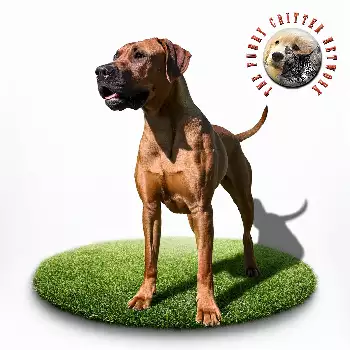
The first thing you notice about a Bordeaux Mastiff is the head. Not the body, not the color, not the size - the head. It is proportionally enormous, heavily wrinkled, with a face that packs more folds, wrinkles, and pendant jowl tissue into a single structure than almost any other breed in existence. The stop is very pronounced, creating a dramatic transition from the broad, wrinkled forehead to the wide, flat muzzle. The muzzle itself is notably wide and deep, with upper lips that hang well below the lower jaw, and the lower lips are also pendulous. The combined result is a face capable of expressing profound gravity and affectionate softness in equal measure.
The skull is very broad and slightly rounded, with a circumference that, in large males, can equal or exceed the dog's height at the withers. The furrowing on the forehead deepens with age and emotion - a concerned or alert Bordeaux Mastiff has deeper, more expressive wrinkles than a relaxed one. The eyes are oval, set wide apart, and range from hazel to dark brown. The mask can be black or brown, creating a frame for the facial expression that is one of the most recognizable elements of the breed's appearance.
The body is massive, powerful, and muscular. The chest is very broad and deep, with well-sprung ribs that give the dog considerable girth. The neck is thick and muscular with a noticeable dewlap - the fold of skin at the throat - adding to the impression of bulk and power. The back is broad and muscular with a very slight slope from the withers to the croup. Males are substantially larger and heavier than females, and large males regularly exceed one hundred thirty pounds on proper frames.
The coat is short, fine, and lies flat against the body. It requires minimal maintenance as a coat but the facial folds and any skin folds on the neck and body require consistent daily cleaning - trapped moisture and debris in skin folds leads to bacterial and yeast infections that cause discomfort and can become serious if neglected. The coat color ranges from fawn - which can be very light, almost buff - through mahogany, which is a deep orange-brown. The isabella coloration is a dilute fawn with a grayish quality. The mask pattern on the face is one of the few points of variation in coloring, with both black-masked and brown-masked (sometimes called red-masked) dogs appearing in the breed.
Despite the breed's imposing presence, movement in a well-constructed Bordeaux Mastiff should be fluid and ground-covering, with good forward reach and strong propulsion from behind. The characteristic rolling gait that some mastiff-type dogs display should not be exaggerated in the Bordeaux. A dog that moves fluidly and without distress is demonstrating sound structure - something that matters enormously in a breed with documented orthopedic concerns.
The tail is thick at the base, tapering to a point, and is carried low at rest with a slight curve upward toward the tip. When the dog is alert or moving, the tail may rise to horizontal. The tail should never curl over the back. The feet are large and compact with thick, tough pads and strong, well-arched toes. The nails are typically dark and require regular trimming - the weight of this dog on overgrown nails causes discomfort and gait alteration that compounds over time.
Male and female Bordeaux Mastiffs differ substantially in size. Males are notably larger, more massive in head and body, and carry significantly more muscle development. A large male in peak condition is a genuinely impressive animal - the kind of dog that stops traffic and turns heads without trying. This size difference matters practically: a male Bordeaux Mastiff that does not have solid obedience training is a significantly more difficult management problem than a female, simply because of the mass differential.
Affectionate With Family
★★★★★
The Bordeaux Mastiff forms deep, devoted bonds with its household. This is not a dog that merely tolerates family - it is actively, genuinely affectionate with the people it belongs to.
Good With Young Children
★★★☆☆
Gentle with children it knows, but its sheer mass makes it capable of accidentally knocking down small children without any aggressive intent whatsoever.
Good With Other Dogs
★★☆☆☆
The Bordeaux Mastiff can be dog-selective, with some individuals showing aggression toward unfamiliar dogs, particularly those of the same sex. Early socialization and management matter.
Shedding Level
★★★☆☆
Despite its short coat, the Bordeaux Mastiff sheds a moderate amount. The fine, short hairs embed in fabric and furniture and require regular vacuuming.
Coat Grooming Frequency
★★☆☆☆
The coat itself requires minimal maintenance - an occasional brushing and bath handles the coat. The facial wrinkles, however, require daily cleaning to prevent skin fold infections.
Drooling Level
★★★★★
This breed drools considerably, especially around food, after drinking, and during warm weather. Owners should expect to keep towels accessible and accept this as a characteristic of the breed.
Coat Type
★☆☆☆☆
The Bordeaux Mastiff's short, fine, smooth coat requires minimal grooming attention, though the skin fold areas between the wrinkles need consistent daily care.
Openness To Strangers
★★☆☆☆
This is a guardian breed that tends toward reserve and watchfulness with unfamiliar people. Proper socialization produces manageable caution; poor socialization can produce problematic wariness.
Playfulness Level
★★★☆☆
Playful in a gentle, affectionate way with its family, though not typically the enthusiastic game-player that lighter, more energetic breeds are. It enjoys interaction but at its own pace.
Watchdog/Protective Nature
★★★★★
The Bordeaux Mastiff is a serious guardian. Its presence alone is a deterrent, and when it perceives a genuine threat, its protective response is substantial.
Adaptability Level
★★☆☆☆
This giant breed needs adequate space, tolerates heat poorly, and requires an experienced owner. It does not adapt easily to environments or handlers it was not prepared for.
Trainability Level
★★☆☆☆
Intelligent but willful, the Bordeaux Mastiff requires experienced, confident handling and consistent training from a very early age. Its size alone makes early obedience training non-negotiable.