Ban

Mastiff

Quick Facts

🐕 Breed Group
Working Group (AKC) / Group 2 - Molossoid Breeds (FCI)
📏 Size Category
Giant
📏 Height
Males: 30 inches minimum (76 cm minimum), Females: 27.5 inches minimum (70 cm minimum)
⚖️ Weight
Males: 160-230 pounds (72-104 kg), Females: 120-170 pounds (54-77 kg)
⏱️ Life Expectancy
6-10 years
🧣 Coat Type
Short, dense double coat with straight outer hair and dense undercoat
🎨 Coat Colors
Fawn, apricot, brindle; all with a black mask
😀 Temperament
Gentle, dignified, loyal, protective, calm, courageous, good-natured
🏃 Exercise Needs
Moderate - daily walks with avoidance of excessive exercise during growth
🎓 Training Difficulty
Moderate - willing to please but can be stubborn; requires patient, consistent handling
👶 Good with Children
Yes - gentle and protective; supervision required due to massive size
🐾 Good with Other Pets
Conditional - generally good when socialized; some same-sex dog aggression possible

Other Names & Breed Recognition

Ban is the root element of the historical English term Bandog or Bandogge, one of the oldest names applied to the large, powerful dogs now registered as the Mastiff. The word derives from the Saxon term "banda" meaning chain or bond, and was used from at least the mid-thirteenth century to describe massive guard dogs that were chained or bound during the daytime and released at night to protect property, estates, and homesteads from intruders. William Shakespeare used the compound form in King Henry VI, Part 2, writing of the "time when screech-owls cry and ban-dogs howl," cementing the term in English literary tradition as a reference to formidable guardian dogs.

The interchangeable use of "Bandog" and "Mastiff" in historical English sources is well documented. In 1570, Dr. Johannes Caius published his classification of English dogs in which he described the Mastiff or Bandogge as "a vast, stubborn, eager dog of heavy body." This conflation of names reflected the practical reality that the large, powerful dogs used for guarding, war, and blood sports in medieval England were identified more by their function than by the precise breed distinctions that modern kennel clubs impose. A Ban or Bandog was, in the most fundamental sense, a big, strong, courageous dog kept on a chain and released to work.

The modern Mastiff, registered with the AKC since 1885 under the Working Group, is the direct descendant of these historical Bandogs. The breed carries one of the longest documented lineages of any dog breed, with references to mastiff-type dogs in Britain dating back thousands of years. The breed is recognized by every major international registry: the AKC, UKC, CKC, FCI, and the Kennel Club of the United Kingdom all maintain the breed under the name Mastiff, sometimes informally expanded to English Mastiff or Old English Mastiff to distinguish it from the many other mastiff-type breeds around the world.

The term Ban, as a standalone word, appears primarily in etymological discussions, in historical texts predating standardized breed naming, and in Shakespeare scholarship. It is not used as a breed designation in any modern kennel club registry. However, understanding that Ban, Bandog, Bandogge, and Mastiff all refer to the same lineage of massive English guardian dogs illuminates the breed's extraordinary continuity across nearly a millennium of documented history.

Ban Organizations & Standards

The Mastiff Club of America, founded in 1929, serves as the AKC parent club for the breed in the United States. The club maintains the official breed standard, promotes responsible breeding through its Code of Ethics, coordinates national and regional specialty shows, and supports breed rescue efforts. Members committed to the Code of Ethics agree to conduct health testing before breeding, to refuse sales to pet stores and puppy brokers, and to provide lifelong support for dogs they produce. The club publishes educational materials on health testing, puppy selection, and the realities of owning a giant breed.

The AKC breed standard describes the Mastiff as a large, massive, symmetrical dog with a well-knit frame, conveying the impression of grandeur and dignity. The standard specifies minimum heights of 30 inches for males and 27.5 inches for females, with no upper height limit. Weight should be proportional to height and typically ranges from 160 to 230 pounds, though larger individuals are not uncommon. The head is described as massive, broad, and somewhat rounded between the ears, with the skull being flat in profile. The muzzle is short, broad under the eyes, and blunt in profile. A black mask covering the muzzle, ears, nose, and eye area is mandatory in all color varieties. Accepted colors are fawn, apricot, and brindle, all requiring the characteristic black mask.

The breed participates in the OFA Canine Health Information Center program, and CHIC requirements include OFA hip evaluation, OFA elbow evaluation, cardiac examination by a board-certified cardiologist, OFA eye examination, and DNA testing for cystinuria and PRA. These comprehensive health testing requirements reflect the breed's susceptibility to multiple hereditary conditions and the breed community's commitment to reducing their incidence through informed breeding decisions.

The FCI recognizes the Mastiff under Group 2, Section 2.1 as a Molossoid breed of the Mastiff type, and the breed standard maintained in collaboration with the Kennel Club as the breed's country of origin. The UKC places the breed in its Guardian Dog Group, and the CKC classifies it in the Working Dog Group. Across all registries, the essential character described is a dog that is massive in size, noble in bearing, and gentle in temperament, a description that would be immediately recognizable to the medieval keepers who first chained their Ban-dogs during daylight hours and relied on them to guard the estate through the night.

Kennel Club Recognition

  • American Kennel Club (AKC): Recognized in 1885, Working Group
  • FCI: Recognized, Group 2 - Pinscher and Schnauzer
  • United Kennel Club (UKC): Recognized, Guardian Dog Group
  • Canadian Kennel Club (CKC): Recognized, Working Dogs
  • The Kennel Club (UK): Recognized, Working

Ban Physical Description

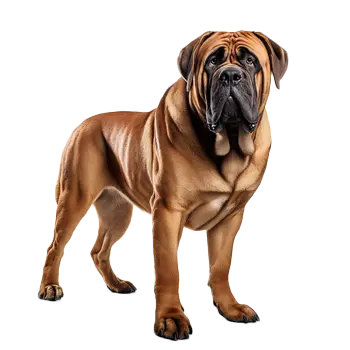
The Ban is one of the largest and heaviest dog breeds in existence, commanding immediate attention through sheer physical scale. Males stand a minimum of 30 inches at the shoulder, with many individuals reaching 32 to 36 inches or taller, and typically weigh between 160 and 230 pounds at maturity. Females are slightly smaller but still tremendously impressive, standing at least 27.5 inches and weighing 120 to 170 pounds. The record-holding Mastiff, a dog named Zorba, weighed an astounding 343 pounds. The body is massive, with great depth and breadth, particularly between the forelegs, which are set wide apart. The overall impression should be one of grandeur and dignity, with the dog's massive proportions appearing symmetrical and well-balanced rather than merely bulky.

The head is the breed's most distinctive anatomical feature and occupies a significant portion of the standard's description. It is massive, broad between the ears, and somewhat rounded when viewed from the front. The skull is flat in profile, with a slight furrow running up the center of the forehead. The stop is well defined but not abrupt. The muzzle is short, approximately half the length of the skull, broad under the eyes, and blunt and squared when viewed from any angle. The nose is broad and always black. The lips are pendulous, forming the characteristic flews that contribute to the breed's dignified expression but also to its prolific drooling. The eyes are medium-sized, set wide apart, and brown, with the darker shades preferred. The ears are small in proportion to the skull, V-shaped with rounded tips, set high on the head, and lie close to the cheeks.

The coat is short, dense, and close-lying, with a straight outer coat and a dense, shorter undercoat. Three color varieties are recognized: fawn, ranging from light silver to dark golden; apricot, a warmer, richer shade; and brindle, which presents dark striping over a fawn or apricot base. All three varieties require a black mask covering the muzzle, nose, ears, and eye area. The black mask is a defining breed characteristic, and its absence disqualifies the dog from the show ring.

Movement in the Ban reflects its massive construction. The gait should be powerful and effortless, with good reach in front and driving extension behind. Despite the breed's enormous bulk, a well-structured Mastiff moves with surprising smoothness, covering ground efficiently without wasted motion. The tail is thick at the base, wide at the root, tapering to the end, hanging straight in repose and forming a slight curve when the dog is in motion, but never carried over the back.

Affectionate With Family
The Ban forms deep, enduring bonds with its family and expresses affection through constant physical proximity, gentle leaning, and a devotion that belies its enormous size. Despite its medieval reputation as a fearsome guardian, the modern Mastiff is one of the most affectionate giant breeds, seeking human contact with an almost desperate sincerity that transforms a 200-pound dog into an oversized lap companion.
Good With Young Children
The Ban is remarkably patient and gentle with children, often positioning itself protectively near the youngest family members and tolerating handling that would provoke less patient breeds. However, the sheer physical mass of this dog makes supervision essential with small children, as an accidental nudge or tail sweep from a dog of this size can easily knock over a toddler without any aggressive intent whatsoever.
Good With Other Dogs
When properly socialized from puppyhood, the Ban generally coexists peacefully with other dogs, showing a calm, confident demeanor that avoids unnecessary conflict. However, same-sex aggression can develop in intact males, and the breed's massive size means that even minor disagreements between dogs can become dangerous situations. Introductions to new dogs should be conducted carefully on neutral ground.
Shedding Level
The short, dense double coat sheds moderately year-round with heavier seasonal shedding during spring and fall transitions. While the individual hairs are short, the breed's enormous body surface area means the total volume of shed hair is substantial. Regular brushing keeps loose hair manageable but will not eliminate it entirely from furniture and clothing.
Coat Grooming Frequency
The Ban's short coat is low-maintenance despite the breed's massive size. Weekly brushing with a rubber curry brush or grooming mitt removes loose hair and distributes natural oils. Bathing is needed only occasionally, though the logistics of bathing a dog that can exceed 200 pounds present practical challenges that many owners address through professional grooming services or outdoor bathing stations.
Drooling Level
The Ban is a prolific drooler, producing substantial amounts of saliva that increase around mealtimes, during exercise, in warm weather, and when the dog is excited or stressed. The breed's pendulous flews and loose lip structure make drooling an inescapable reality of ownership. Strategic placement of towels, waterproof covers on furniture, and acceptance of a slightly moist lifestyle are standard adaptations for Mastiff households.
Coat Type
The double coat features a short, straight outer layer that lies close to the body and a dense undercoat that provides insulation. The coat is practical and functional, requiring no trimming, stripping, or professional grooming to maintain its correct texture. This low-maintenance coat was well suited to the breed's historical role as an outdoor guardian that required minimal care between working duties.
Openness To Strangers
The Ban is naturally reserved and watchful with unfamiliar people, positioning itself between its family and approaching strangers while assessing the situation with quiet intensity. This wariness is a fundamental breed trait developed through centuries of guardian work and is not a socialization deficiency. Well-socialized individuals accept introduced guests with composed tolerance but maintain a baseline alertness that never fully relaxes in the presence of unknown people.
Playfulness Level
The Ban is not a particularly playful breed, especially after reaching maturity. Puppies and adolescents show moderate play drive, engaging in short bursts of activity punctuated by extended rest periods. Adult Mastiffs tend toward a dignified, calm demeanor that prefers quiet companionship over sustained interactive play. The breed's sheer mass also limits the type and duration of physical games it can comfortably participate in.
Watchdog/Protective Nature
The Ban's protective instincts are among the most deeply ingrained of any breed, reflecting millennia of selection for estate guardianship and territorial defense. The breed's approach to protection relies primarily on its imposing physical presence and its instinct to position itself between its family and perceived threats. A Mastiff that feels its family is genuinely threatened will escalate from observation through positioning to physical intervention with a measured proportionality that reflects the breed's intelligence.
Adaptability Level
The Ban requires careful environmental management to thrive. The breed does not tolerate extreme heat well, needs substantially more living space than most breeds, produces significant drool and shed hair, and has physical care requirements including joint-appropriate flooring and sturdy, elevated feeding stations. The breed's relatively short lifespan and susceptibility to orthopedic conditions also demand owners who are prepared for significant veterinary commitment.
Trainability Level
The Ban is intelligent and generally willing to please its owner, making it more responsive to training than many independent guardian breeds. However, the breed matures slowly and can show a stubborn streak during adolescence that requires patient, consistent handling. Positive reinforcement methods are essential, as the breed is sensitive to harsh corrections. Given the dog's eventual massive size, basic obedience training must begin in puppyhood before the animal outweighs its handler.

Ban History & Development

The history of the Ban stretches back further than almost any other identifiable dog type, with archaeological and literary evidence placing massive guardian dogs in Britain for at least two thousand years. Roman accounts from the invasion of Britain in 55 BCE describe encountering large, powerful dogs that fought alongside the native Britons, and Roman writers including Virgil and Gratius referred to British dogs of extraordinary size and courage. These ancient dogs, known collectively as Pugnaces Britanniae, were prized enough that Romans exported them to Rome for use in gladiatorial combat against lions, bears, and other animals in the arena.

The medieval period saw the consolidation of these massive British dogs into the type that would become known as the Ban or Bandog. The term first appears in written English around 1250 to 1300, derived from the Saxon word "banda" meaning chain. The practice of chaining a large, fierce dog during daylight hours and releasing it at night to guard property was a standard security measure across medieval England. The dogs used for this purpose were selected for size, strength, courage, and territorial aggression, traits that would be refined through centuries of functional breeding. Johannes Caius's 1570 classification of English dogs explicitly equated the Mastiff with the Bandog, describing both as vast, heavy-bodied, stubborn dogs of great ferocity when provoked.

The breed's history includes periods of martial use, blood sport participation, and aristocratic estate guardianship. Henry VIII reportedly gifted 400 Mastiffs to the Spanish King Charles V for use in warfare. The breed was used extensively in bull baiting, bear baiting, and other blood sports until these practices were outlawed in England in 1835. The ban on blood sports ironically contributed to the breed's transformation from a fierce working animal to the gentle giant we know today, as breeders shifted their selection criteria from aggression and fighting ability to temperament and companion suitability.

The modern breed's lineage can be traced to the early nineteenth century, with significant input from the now-extinct Alpine Mastiff that added size and substance to the breeding population. The Mastiff nearly went extinct in England after World War II, with the breeding population reduced to a handful of dogs. The breed was revived through imports from the United States and Canada, where larger populations had been maintained. The AKC recognized the Mastiff in 1885, making it one of the earliest registered breeds in American kennel history. Since its post-war recovery, the breed has steadily grown in popularity and is now well-established internationally.

Ban Temperament & Personality

The Ban's temperament represents one of the most dramatic transformations in breed character anywhere in the dog world. The medieval Bandog, chained by day and released at night to confront intruders, poachers, and predators, was selected specifically for territorial aggression, physical courage, and a willingness to engage threats without hesitation. The modern Mastiff, by contrast, is one of the gentlest, most even-tempered giant breeds in existence, a dog whose defining behavioral characteristic is the startling mismatch between its physically imposing presence and its mild, affectionate nature.

With its family, the Ban is profoundly devoted, affectionate, and emotionally sensitive. The breed forms deep bonds with all household members and demonstrates its attachment through constant proximity, gentle physical contact, and an almost anxious attentiveness to its people's whereabouts and emotional states. Many owners describe their Mastiff as a "gentle giant" or a "200-pound lapdog," references to the breed's persistent desire to be physically close to its people despite its utterly impractical size for lap sitting. The breed's emotional sensitivity means it responds to household tension with visible distress and thrives in calm, stable environments where its need for connection is met consistently.

The breed retains its guardian instincts at a temperamental level, meaning it is naturally watchful, territorial, and protective without requiring the overt aggression that characterized its medieval ancestors. A Mastiff that perceives a genuine threat to its family will typically respond by positioning itself between the threat and its people, using its massive body as a physical shield rather than launching an attack. This measured, proportional protective response is a hallmark of the well-bred modern Mastiff and reflects centuries of selection for stable, reliable temperament alongside the breed's inherent guardian drive.

The breed's calm, dignified demeanor can mislead newcomers into thinking the Mastiff is inactive or unresponsive, when in fact the dog is quietly monitoring its environment with an awareness that misses very little. The breed is not demonstratively enthusiastic in the way many sporting or herding breeds are, preferring to express its engagement through steady attention, gentle tail wagging, and quiet companionship rather than through exuberant physical displays. This reserved expressiveness is part of the breed's character and should not be mistaken for indifference.

Ban Family Life & Living Requirements

The Ban requires living accommodations that account for its extraordinary size, its tendency to produce substantial amounts of drool, and its need for daily exercise without overexertion. The breed is surprisingly adaptable to indoor living provided it has adequate floor space to move comfortably and to stretch out during its considerable rest periods. A Mastiff at full extension occupies a remarkable amount of floor space, and households should assess whether their living areas can accommodate a dog of this scale without constant collision between dog, furniture, and family members.

Furniture and household infrastructure deserve practical consideration before bringing a Ban into the home. The breed's massive weight requires sturdy flooring, as slippery surfaces can cause joint injuries in a dog that already carries significant orthopedic risk. Elevated feeding stations are recommended to reduce bloat risk, and these stations must be substantial enough to accommodate the breed's large head and wide stance. Water bowls should be oversized, as the breed drinks large volumes and will leave drool-contaminated water that requires frequent changing. Many Mastiff owners resign themselves to drool on walls, ceilings, furniture, and clothing as an inevitable aspect of life with the breed.

The breed's relationship with children is one of its strongest family attributes. The Ban is typically patient, gentle, and protective with children of all ages, often developing a particularly strong bond with the youngest family members. The primary concern is not temperament but physics: a dog that weighs more than most adults can easily knock over a small child through normal movement, tail wagging, or enthusiastic greeting behavior. Teaching both children and dog to interact calmly and carefully prevents accidents that result from the breed's size rather than from any behavioral failing.

The breed's relatively short lifespan of six to ten years is a reality that prospective owners must confront honestly. The emotional and financial commitment of Mastiff ownership is compressed into a shorter timeline than most breeds, and the breed's susceptibility to serious health conditions including cancer, heart disease, and joint disorders means that veterinary costs can be substantial. Families choosing the Ban should prepare for the possibility of significant medical expenses and for the emotional weight of losing a deeply bonded companion sooner than might be expected.

Ban Training & Exercise Needs

Training the Ban must begin in puppyhood before the dog reaches its eventual massive adult size, as a 200-pound dog that has not learned basic obedience is unmanageable regardless of how gentle its temperament may be. The breed is intelligent and generally willing to please its handler, making it more responsive to training than many independent guardian breeds. However, the Mastiff matures slowly, both physically and mentally, and adolescent dogs may show a stubborn streak that requires patient, consistent handling. Training sessions should be kept short, positive, and engaging, as the breed loses interest quickly with repetitive drills.

Positive reinforcement methods are essential for this breed. The Ban is sensitive to harsh corrections, which can damage the trust relationship between dog and handler and may produce either defensive anxiety or stubborn shutdown in response. Food rewards, warm praise, and gentle physical affection are effective motivators. Leash manners deserve particular emphasis, as a Mastiff that pulls on leash is simply uncontrollable for most handlers. Loose-leash walking training should begin with the very first puppy walks and be reinforced consistently through the dog's adolescence until the behavior is thoroughly established.

Socialization is critically important for a breed of this size and protective nature. Exposing the puppy to diverse people, environments, other animals, and novel situations during the critical developmental window between eight and sixteen weeks establishes the behavioral foundation that determines whether the adult dog will be a confident, socially appropriate companion or a reactive, potentially dangerous liability. Given the breed's natural wariness of strangers, socialization should emphasize positive experiences with unfamiliar people, controlled interactions with other dogs, and habituation to the sights and sounds of everyday environments.

Exercise requirements for the Ban are moderate and must be carefully managed, particularly during the growth phase. Puppies and adolescents should receive controlled, low-impact exercise that avoids excessive stress on developing joints. Repetitive jumping, extended stair climbing, and sustained high-impact running should be avoided until skeletal maturity, which in giant breeds may not occur until eighteen to twenty-four months of age. Adult Mastiffs benefit from daily walks of moderate duration, which provide cardiovascular benefit and mental stimulation without placing excessive stress on their joints. The breed is not suited to vigorous athletic activities, endurance running, or agility competition.

Ban Health Concerns

The Ban faces a constellation of health challenges that are common to giant breeds and that collectively contribute to the breed's relatively short lifespan of six to ten years. The fundamental biological reality is that dogs of extreme size age faster, develop degenerative conditions earlier, and have shorter productive lifespans than smaller breeds. Understanding and proactively managing these health concerns is essential for maximizing both the length and quality of the breed's life.

Hip and elbow dysplasia are among the most common orthopedic concerns in the breed, affecting a significant percentage of the population despite screening efforts. The combination of rapid growth during puppyhood, enormous adult body weight, and genetic predisposition creates conditions that favor abnormal joint development. Screening radiographs through OFA at age two provide baseline assessments for breeding decisions, and environmental management including appropriate nutrition, controlled exercise during growth, and lifelong weight management helps minimize the functional impact of dysplasia on individual dogs.

Gastric dilatation-volvulus, commonly known as bloat, represents the most acute life-threatening condition relevant to the breed. The Ban's deep, broad chest conformation places it firmly in the highest-risk category for this emergency. Prevention through feeding management is essential: dividing daily food into two or three smaller meals, using slow-feeder bowls to prevent rapid eating, providing elevated feeding stations, and enforcing rest periods of at least one hour after meals all reduce the likelihood of occurrence. Prophylactic gastropexy, a surgical procedure that anchors the stomach to prevent torsion, is increasingly recommended for all Mastiffs and can be performed during routine spay or neuter surgery.

Dilated cardiomyopathy is a progressive heart condition that affects a notable number of Mastiffs, producing gradual weakening and enlargement of the heart muscle that eventually leads to congestive heart failure. Annual cardiac screening by a board-certified veterinary cardiologist, including echocardiography, helps detect the condition in its early stages when medical management may slow progression and extend functional life. Cystinuria, an inherited metabolic disorder that produces bladder and kidney stones, is another breed-specific concern for which DNA testing is available and should be performed on all breeding stock.

Cancer represents the leading cause of death in the breed, with osteosarcoma (bone cancer), lymphoma, and mast cell tumors occurring at elevated rates compared to the general dog population. Early detection through regular veterinary examinations, prompt investigation of any lumps, bumps, or unexplained lameness, and awareness of the breed's cancer predisposition enable the earliest possible intervention when treatment options are most effective.

Common Health Issues

  • Hip dysplasia - Abnormal development of the hip joint that is extremely common in giant breeds, producing progressive cartilage deterioration, chronic pain, and arthritis. OFA screening of breeding stock is essential, and puppies should be raised on large-breed specific growth formulas with controlled calcium and phosphorus ratios to support proper skeletal development.
  • Elbow dysplasia - Developmental abnormalities of the elbow joint producing forelimb lameness, common in giant breeds that place tremendous stress on their joints during growth and daily activity. Radiographic screening of breeding stock helps reduce incidence, and weight management throughout the dog's life minimizes stress on affected joints.
  • Gastric dilatation-volvulus (bloat) - A life-threatening emergency in which the stomach fills with gas and may rotate on its axis, common in giant, deep-chested breeds. Without immediate veterinary intervention, the condition is rapidly fatal. Prophylactic gastropexy during spay or neuter surgery is strongly recommended, and feeding management including multiple smaller meals and rest periods after eating reduces risk.
  • Dilated cardiomyopathy - Progressive weakening and enlargement of the heart muscle that reduces the organ's ability to pump blood effectively, producing exercise intolerance, coughing, breathing difficulty, and eventually congestive heart failure. Annual cardiac screening by a board-certified veterinary cardiologist is recommended for all dogs in the breed.
  • Cystinuria - An inherited metabolic disorder causing excessive excretion of the amino acid cystine in the urine, leading to the formation of cystine bladder and kidney stones. DNA testing is available and should be performed on all breeding stock. Affected dogs require dietary management and increased water intake to reduce stone formation.
  • Progressive retinal atrophy (PRA) - A group of inherited degenerative retinal diseases causing progressive vision loss, beginning with night blindness and advancing to complete blindness. DNA testing for specific PRA mutations is available and should be performed on breeding stock to prevent affected offspring.

Preventive Care & Health Monitoring

  • OFA hip and elbow evaluation for all breeding stock - Radiographic screening of hips and elbows at age two or older with results submitted to OFA. Only dogs with acceptable scores should be used for breeding. PennHIP evaluation is an alternative that can be performed earlier.
  • Cardiac evaluation by a board-certified veterinary cardiologist - Annual echocardiographic screening is recommended for all breeding animals and advisable for companion dogs. Early detection of dilated cardiomyopathy allows medical management that may extend the dog's functional lifespan.
  • DNA test for cystinuria before breeding - Genetic testing identifies carriers and affected dogs, allowing breeding decisions that prevent affected offspring. Request documentation from breeders showing both parents' test results.
  • Bloat prevention feeding protocol and prophylactic gastropexy - Feed two to three smaller meals daily using elevated feeding stations and slow-feeder bowls. Enforce rest periods after meals. Discuss prophylactic gastropexy with your veterinarian during planned spay or neuter surgery.
  • Large-breed puppy growth management - Feed a large-breed specific puppy formula that moderates growth rate through controlled calcium and phosphorus ratios. Avoid excessive exercise on developing joints, particularly repetitive impact activities such as jumping and stair climbing during the first eighteen months.
  • Weight management throughout life - Maintain ideal body condition through measured feeding and regular body condition scoring. Obesity in giant breeds dramatically accelerates joint deterioration, compresses the already shortened lifespan, and increases the risk of cardiovascular disease. Monthly weight monitoring is recommended.

Ban Grooming & Maintenance

The Ban's grooming requirements are modest in terms of coat care but substantial in terms of the ancillary maintenance that accompanies life with a giant, drool-producing breed. The short, dense double coat requires only weekly brushing with a rubber curry brush, grooming mitt, or short-bristled brush to remove loose hair and distribute natural skin oils. During seasonal shedding periods in spring and fall, increasing brushing frequency to every other day helps manage the temporarily elevated volume of loose hair. Despite the coat's short length, the breed's enormous body surface area means the total volume of shed hair is considerable.

Drool management is the single most labor-intensive grooming task for Ban owners and one that receives less attention in breed literature than its practical impact warrants. The breed's pendulous flews produce substantial saliva that drapes in strings from the jaws, is deposited on walls and furniture when the dog shakes its head, and transfers to clothing, skin, and anything else the dog contacts. Strategic drool towels positioned around the home, waterproof covers on furniture, and accepting that drool is a permanent feature of the living environment are standard adaptations. Wiping the dog's face and flews after meals and water consumption reduces the volume deposited around the home.

Bathing the Ban presents logistical challenges that many owners address through creative solutions. A dog that weighs 160 to 230 pounds cannot be easily lifted into a bathtub, and most residential bathing facilities are not designed for animals of this size. Outdoor bathing with a hose and gentle dog shampoo is practical in warm weather, while professional grooming facilities with walk-in tubs accommodate the breed's size year-round. Bathing should be infrequent, typically every six to eight weeks, to preserve the coat's natural oils.

Facial wrinkles and skin folds require regular cleaning and inspection to prevent moisture-related bacterial and yeast infections. The deep folds around the muzzle, under the eyes, and along the jowls trap moisture, food particles, and bacteria that can produce irritation, odor, and secondary infection if left unattended. Daily wiping of facial folds with a clean, dry cloth or veterinary-approved wipe keeps these areas clean and healthy. Dental care, nail trimming, and ear cleaning follow standard recommendations for all breeds, though the breed's massive jaws and large nails require sturdy tools and a cooperative temperament that should be established through handling practice during puppyhood.