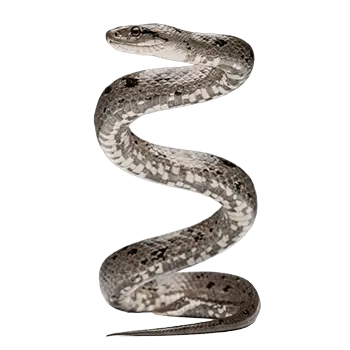

The Gray Rat Snake first entered the written record through the observations of European naturalists and explorers who documented the fauna of colonial and early republican America. Travelers' accounts from the seventeenth and eighteenth centuries frequently mentioned encounters with large, non-venomous serpents in the forests and settlements of the mid-Atlantic and southeastern regions, and while these early descriptions rarely distinguished between the various rat snake forms with any taxonomic precision, they established the species in the broader literary imagination of the New World. Writers such as Mark Catesby, whose Natural History of Carolina, Florida and the Bahama Islands appeared between 1729 and 1747, included detailed illustrations and accounts of serpents that likely encompassed Gray Rat Snakes among the species depicted.
The nineteenth century saw a proliferation of natural history writing aimed at both scientific and popular audiences, and rat snakes featured regularly in these works. State geological and natural history surveys, which were conducted across much of the eastern United States during the mid-1800s, produced systematic catalogs of local reptile fauna that included descriptions of rat snake populations, their habitats, and their interactions with human communities. These publications, while primarily scientific in intent, reached audiences beyond the academic world and contributed to a growing public awareness of the diversity and ecological roles of native snake species.
The tradition of literary naturalism that flourished in America during the late nineteenth and early twentieth centuries also drew on the Gray Rat Snake and its relatives as subjects. Writers in the mold of John Burroughs, who combined close observation of the natural world with reflective prose, occasionally described encounters with rat snakes in the rural landscapes of the Northeast and Appalachia. These accounts typically emphasized the snake's grace, its skill as a climber, and its role in the web of relationships that connected predator and prey in the eastern forests, presenting the animal in terms that encouraged appreciation rather than fear.
Scientific literature on the Gray Rat Snake expanded dramatically during the twentieth century as herpetology matured as a professional discipline. Monographs, journal articles, and field guides produced by researchers at universities and natural history museums documented the species' taxonomy, distribution, ecology, and behavior in increasing detail. Works such as Roger Conant's field guides to the reptiles and amphibians of eastern North America became standard references for both professionals and amateurs, and their treatment of rat snakes helped to establish these animals as recognizable and important components of the regional fauna in the minds of a broad readership.