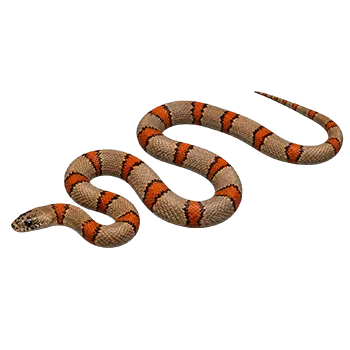

The Gray-Banded Kingsnake has occupied a position of outsized prominence in herpetological literature relative to its modest size and limited geographic range. From the mid-twentieth century onward, the species has been the subject of numerous books, monographs, journal articles, and magazine features that collectively constitute one of the most extensive bodies of popular and semi-technical writing devoted to any single North American colubrid species. This volume of attention reflects not just scientific interest in the animal's biology but the deep cultural fascination that the species has inspired among writers who are themselves participants in the herpetoculture community.
Among the most significant works dedicated to the species are monograph-length treatments that combine field natural history, captive husbandry guidance, and personal narratives drawn from decades of experience with the snake in its native Trans-Pecos habitat. These works occupy a distinctive literary niche that blends rigorous observational detail with the kind of evocative landscape writing more commonly associated with nature essay traditions. The remote and dramatic desert settings in which the Gray-Banded Kingsnake is encountered lend themselves to vivid descriptive prose, and many authors have used the species as a vehicle for broader reflections on the relationship between human curiosity and the natural world.
The species has also been a consistent presence in the periodical literature of the reptile hobby. Magazines such as Reptiles, The Vivarium, and various herpetological society newsletters have published extensive coverage of Gray-Banded Kingsnake husbandry, breeding, and field observation over several decades. These articles have served as both practical references for keepers and as a running chronicle of the species' status within the hobby, documenting shifts in breeding trends, the emergence of new color variants, and the evolving regulatory landscape governing wild collection.
Academic literature on the Gray-Banded Kingsnake, while less voluminous than the popular and hobbyist press, has produced important contributions to understanding the species' taxonomy, ecology, and evolutionary relationships. Peer-reviewed papers addressing the species' phylogenetic placement within Lampropeltis, the genetic basis of its color pattern variation, and the population structure of wild populations across its range have appeared in journals including Herpetologica, Copeia, and the Journal of Herpetology. These scholarly works provide the scientific scaffolding that supports the broader cultural narrative surrounding the species.